


- Treat campus event handout printing what works best as a spec-and-approval decision, not just a price lookup.
- Use a reviewed PDF and one clear owner to reduce rework on campus event handout printing what works best.
- Match shipping speed to the real in-hands date so student and campus printing jobs do not absorb unnecessary rush cost.
- Ask for line-item clarity on quantity, stock, sides, finishing, and timing before you compare quotes.
- Use the FAQ and checklist sections as a repeatable playbook for the next order.
For campus event handout printing what works best, the cleanest orders happen when you define the audience, final use, deadline, and handoff format before you ask anyone to quote or print.
You are here because details matter: a small assumption error can turn into a large rework story. We keep the tone expert and direct, with checkpoints you can reuse on future orders.
This kind of job works best when the setup matches the audience and the way the piece will be used after printing. A packet for internal use should not be built the same way as a client-facing leave-behind.

Why this use case is different for campus event handout printing what works best
Campus Event Handout Printing What Works Best behaves differently from a generic copy order because the audience, handling, and timing expectations are more specific. Matching the setup to real use is what keeps the order useful.
The best use-case workflows are boring in a good way. They are easy to repeat, easy to explain, and resistant to last-minute confusion.
Color, stock, and finishing should be chosen for function first. If the upgrade does not improve readability, trust, or handling, it is usually the wrong place to spend extra.
Repeat jobs benefit from a simple reorder brief. Save the winning file, the quantity pattern, and the finishing notes so the next run starts with proven decisions.

Recommended setup for campus event handout printing what works best
The best setup for campus event handout printing what works best usually begins with audience and handling. Once you know who will use it and how long it must last, stock, color, sides, and finishing become easier to choose.
Think about how many people will touch the piece, how long it must last, and whether anyone needs to write on it. Those details shape the right spec faster than broad category labels.
A small proof run or one-sample check is often worth it for stakeholder-heavy jobs. It is much easier to settle disagreements with a real printed example in hand.
This kind of job works best when the setup matches the audience and the way the piece will be used after printing. A packet for internal use should not be built the same way as a client-facing leave-behind.
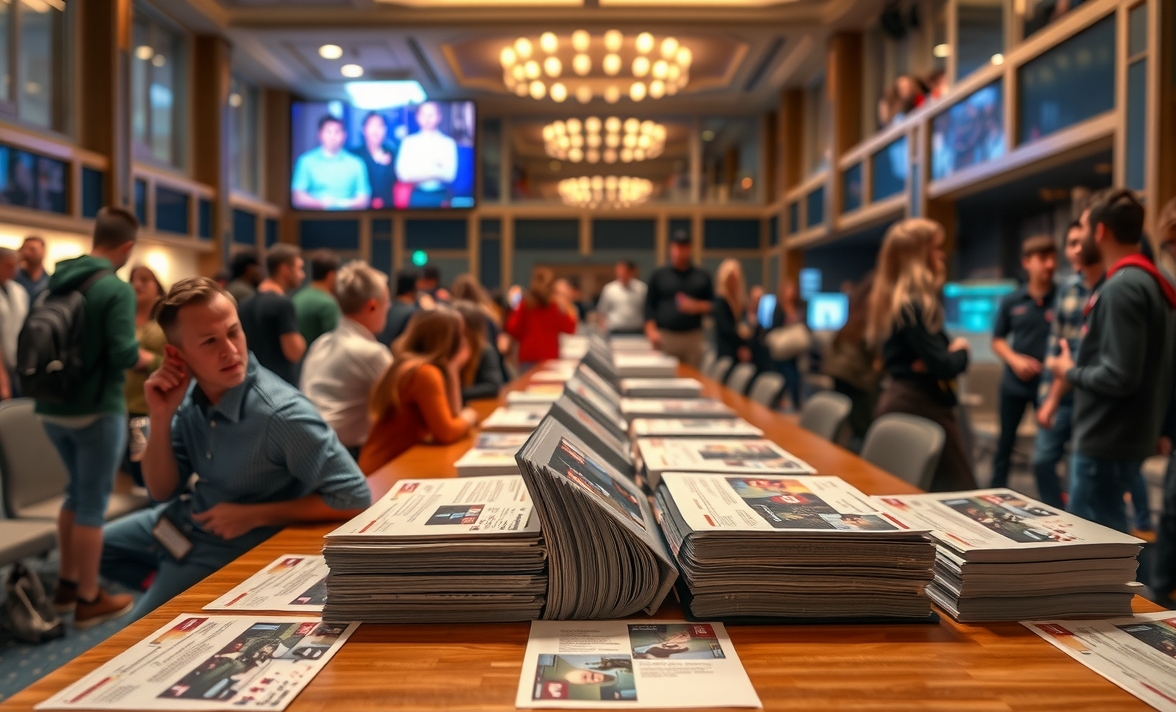
Planning anchors for campus event handout printing what works best
Internal planning anchors show that mixing color covers with black-and-white interiors is often a stronger student budget move than stripping color everywhere or rushing separate mini-runs.
Repeat jobs benefit from a simple reorder brief. Save the winning file, the quantity pattern, and the finishing notes so the next run starts with proven decisions.
The best use-case workflows are boring in a good way. They are easy to repeat, easy to explain, and resistant to last-minute confusion.
Color, stock, and finishing should be chosen for function first. If the upgrade does not improve readability, trust, or handling, it is usually the wrong place to spend extra.
Recommended setup matrix
| Decision area | Recommended default | When to upgrade | Main caution |
|---|---|---|---|
| File handoff | Reviewed PDF | When editable collaboration is still active | Editable files invite version drift |
| Stock and sides | Match function first | When presentation or durability truly matters | Premium choices add cost fast |
| Timeline | Standard production plus ground | When the in-hands date justifies it | Rushing everything is rarely the best move |

Quantity tier visualizer
Illustrative per-page pressure by tier—bars are relative, not quotes.
Mistakes that create rework for campus event handout printing what works best
The most expensive mistakes on campus event handout printing what works best are usually preventable: unclear specs, late edits, mismatched shipping assumptions, or overbuilding the piece before the goal is clear.
Repeat jobs benefit from a simple reorder brief. Save the winning file, the quantity pattern, and the finishing notes so the next run starts with proven decisions.
The best use-case workflows are boring in a good way. They are easy to repeat, easy to explain, and resistant to last-minute confusion.
Color, stock, and finishing should be chosen for function first. If the upgrade does not improve readability, trust, or handling, it is usually the wrong place to spend extra.
- Freeze the final approved PDF before quoting or rerunning.
- State quantity, stock, sides, finishing, and deadline in one place.
- Confirm destination ZIP and actual in-hands timing before choosing shipping.
- Use a small proof or sample whenever readability or finishing is high-stakes.
- Archive the approved spec so the next order is easier to repeat.

Questions to ask before ordering for campus event handout printing what works best
Approval is where campus event handout printing what works best either becomes predictable or becomes risky. Ask the last few questions before signing off, not after the quote has already been routed into production.
Think about how many people will touch the piece, how long it must last, and whether anyone needs to write on it. Those details shape the right spec faster than broad category labels.
A small proof run or one-sample check is often worth it for stakeholder-heavy jobs. It is much easier to settle disagreements with a real printed example in hand.
This kind of job works best when the setup matches the audience and the way the piece will be used after printing. A packet for internal use should not be built the same way as a client-facing leave-behind.
- Freeze the final approved PDF before quoting or rerunning.
- State quantity, stock, sides, finishing, and deadline in one place.
- Confirm destination ZIP and actual in-hands timing before choosing shipping.
- Use a small proof or sample whenever readability or finishing is high-stakes.
- Archive the approved spec so the next order is easier to repeat.

Current savings path (expires end of 2026)
A qualifying discount path is active through the end of 2026 for eligible copy-style orders. Mention it during quote intake and include full specs so support can confirm whether the order profile qualifies.
Use it as a planning advantage, not a guess: the cleanest savings come when the file is final, the spec is stable, and the shipping method matches the real deadline.
Pre-selected pages from the color copy catalog
Quality color copies designed for the industries below. Each page includes live pricing, paper options, and free design setup.
-
 500 Economical 8.5x11 · 70lb · Text Special Education Advocate
Standard bond stock — reliable for everyday document runs.
View pricing & options →
500 Economical 8.5x11 · 70lb · Text Special Education Advocate
Standard bond stock — reliable for everyday document runs.
View pricing & options →
-
 1000 Low-cost 8.5x14 · 80lb · Text Special Education Teacher
Solid 80lb stock balances quality and affordability.
View pricing & options →
1000 Low-cost 8.5x14 · 80lb · Text Special Education Teacher
Solid 80lb stock balances quality and affordability.
View pricing & options →
-
 2500 Budget 11x17 · 100lb · Text Speech Coach
Heavyweight 100lb stock for a premium, durable result.
View pricing & options →
2500 Budget 11x17 · 100lb · Text Speech Coach
Heavyweight 100lb stock for a premium, durable result.
View pricing & options →
-
 5000 Discount 4.25x5.5 · 80lb · Gloss Text Surf Instructor
Gloss text weight — vibrant color with a lighter feel.
View pricing & options →
5000 Discount 4.25x5.5 · 80lb · Gloss Text Surf Instructor
Gloss text weight — vibrant color with a lighter feel.
View pricing & options →
-
 100 Inexpensive 5.5x8.5 · 100lb · Gloss Text Swim Coach
Gloss text weight — vibrant color with a lighter feel.
View pricing & options →
100 Inexpensive 5.5x8.5 · 100lb · Gloss Text Swim Coach
Gloss text weight — vibrant color with a lighter feel.
View pricing & options →
-
 250 Low-price 8.5x11 · 80lb · Matte Text Tennis Coach
Matte text weight — easy to read, easy to annotate.
View pricing & options →
250 Low-price 8.5x11 · 80lb · Matte Text Tennis Coach
Matte text weight — easy to read, easy to annotate.
View pricing & options →
-
 500 Low-priced 8.5x14 · 100lb · Matte Text Test Prep Coach
Matte text weight — easy to read, easy to annotate.
View pricing & options →
500 Low-priced 8.5x14 · 100lb · Matte Text Test Prep Coach
Matte text weight — easy to read, easy to annotate.
View pricing & options →
-
 1000 Bargain 11x17 · 65lb · Cover Tutoring Center Manager
Standard bond stock — reliable for everyday document runs.
View pricing & options →
1000 Bargain 11x17 · 65lb · Cover Tutoring Center Manager
Standard bond stock — reliable for everyday document runs.
View pricing & options →
-
 2500 Best-value 4.25x5.5 · 80lb · Cover University Admissions Officer
Solid 80lb stock balances quality and affordability.
View pricing & options →
2500 Best-value 4.25x5.5 · 80lb · Cover University Admissions Officer
Solid 80lb stock balances quality and affordability.
View pricing & options →
-
 5000 Cost-effective 5.5x8.5 · 100lb · Cover Yoga Instructor
Heavyweight 100lb stock for a premium, durable result.
View pricing & options →
5000 Cost-effective 5.5x8.5 · 100lb · Cover Yoga Instructor
Heavyweight 100lb stock for a premium, durable result.
View pricing & options →
-
 100 Cheap 4.25x5.5 · 20lb · Bond Beautician
Standard bond stock — reliable for everyday document runs.
View pricing & options →
100 Cheap 4.25x5.5 · 20lb · Bond Beautician
Standard bond stock — reliable for everyday document runs.
View pricing & options →
Glossary
- Preflight: a final check on file dimensions, fonts, margins, and resolution before production.
- Duplex: printing on both sides of the sheet.
- Stock: the paper type, finish, and weight selected for the job.
- Turnaround: the production window before shipping or pickup.
- Line-item quote: pricing broken into the decisions that actually change the total.
How to use this guide
Use this page to lock specs, compare options, and move into quoting with fewer surprises. It is written for student organizers printing event handouts and focuses on the decisions that change print results, turnaround, and total cost.
Relevant links and next steps
- Color and black-and-white copies
- Request a quote
- Free pre-press and design help
- Track an order
- Guideline templates for print-safe setup
- Bulk flyer templates and format ideas
- Related: Student Printing Guide Save Money on Course Packs
- Related: How to Print Research Posters and Handouts
- Related: How to Print Group Project Materials Quickly
- Related: Affordable Bulk Copies for School Projects
- Related: Legal Document Printing Clean Clear Compliant
- Related: Document Printing Checklist Before You Order
Authoritative references
Lock specs and request pricingHelpful templates and guideline files
Use these internal resources to move faster without losing print-safe structure.
- Letterhead templates and stationery options
- Letterhead overview and branded paper options
- Guideline template library for print-safe setup
- Copies setup guide and ordering hub
- 9x12 boutique flyer layout reference
- 3.5x8.5 narrow handout reference
- 4.25x5.5 compact flyer reference
- 6x9 promotional sheet reference
- 8x10 information sheet reference
FAQ (12)
1) What setup works best for this kind of print job?
Start with the constraint that matters most to student organizers printing event handouts: final use, deadline, readability, or budget. That first decision usually makes the rest of the order easier to judge. This kind of job works best when the setup matches the audience and the way the piece will be used after printing. A packet for internal use should not be built the same way as a client-facing leave-behind. Think about how many people will touch the piece, how long it must last, and whether anyone needs to write on it. Those details shape the right spec faster than broad category labels. A small proof run or one-sample check is often worth it for stakeholder-heavy jobs. It is much easier to settle disagreements with a real printed example in hand. Archive the approved PDF and final spec after the job closes. That one habit makes the next order faster, easier to compare, and less likely to drift.
2) Which audience detail changes the best print setup?
The best answer usually appears once you separate what is fixed from what is optional. For student organizers printing event handouts, that means deciding which specs are non-negotiable before discussing upgrades. A small proof run or one-sample check is often worth it for stakeholder-heavy jobs. It is much easier to settle disagreements with a real printed example in hand. This kind of job works best when the setup matches the audience and the way the piece will be used after printing. A packet for internal use should not be built the same way as a client-facing leave-behind. Think about how many people will touch the piece, how long it must last, and whether anyone needs to write on it. Those details shape the right spec faster than broad category labels. If the job is urgent, separate truly time-sensitive pages from everything else. That gives support more room to protect both budget and quality.
3) How should I balance speed and readability?
Treat this as an approval question, not just a technical one. The right answer depends on who will use the piece, how fast it is needed, and what would make a rerun painful. Think about how many people will touch the piece, how long it must last, and whether anyone needs to write on it. Those details shape the right spec faster than broad category labels. A small proof run or one-sample check is often worth it for stakeholder-heavy jobs. It is much easier to settle disagreements with a real printed example in hand. This kind of job works best when the setup matches the audience and the way the piece will be used after printing. A packet for internal use should not be built the same way as a client-facing leave-behind. If you need support, send one message with the approved PDF, quantity, stock preference, finishing needs, and in-hands date so quoting stays practical instead of speculative.
4) What quantity pattern usually makes sense for repeat jobs?
A practical answer starts with the actual job, not with generic advice. Match the file, deadline, handling, and audience before you lock any assumption in place. This kind of job works best when the setup matches the audience and the way the piece will be used after printing. A packet for internal use should not be built the same way as a client-facing leave-behind. Think about how many people will touch the piece, how long it must last, and whether anyone needs to write on it. Those details shape the right spec faster than broad category labels. A small proof run or one-sample check is often worth it for stakeholder-heavy jobs. It is much easier to settle disagreements with a real printed example in hand. When in doubt, ask for a quick pre-press review before the job scales. Early clarity is almost always cheaper than fixing a rushed assumption later.
5) How do I keep the piece useful without overbuilding it?
Start with the constraint that matters most to student organizers printing event handouts: final use, deadline, readability, or budget. That first decision usually makes the rest of the order easier to judge. A small proof run or one-sample check is often worth it for stakeholder-heavy jobs. It is much easier to settle disagreements with a real printed example in hand. This kind of job works best when the setup matches the audience and the way the piece will be used after printing. A packet for internal use should not be built the same way as a client-facing leave-behind. Think about how many people will touch the piece, how long it must last, and whether anyone needs to write on it. Those details shape the right spec faster than broad category labels. Archive the approved PDF and final spec after the job closes. That one habit makes the next order faster, easier to compare, and less likely to drift.
6) What file or design issue causes the most trouble?
The best answer usually appears once you separate what is fixed from what is optional. For student organizers printing event handouts, that means deciding which specs are non-negotiable before discussing upgrades. Think about how many people will touch the piece, how long it must last, and whether anyone needs to write on it. Those details shape the right spec faster than broad category labels. A small proof run or one-sample check is often worth it for stakeholder-heavy jobs. It is much easier to settle disagreements with a real printed example in hand. This kind of job works best when the setup matches the audience and the way the piece will be used after printing. A packet for internal use should not be built the same way as a client-facing leave-behind. If the job is urgent, separate truly time-sensitive pages from everything else. That gives support more room to protect both budget and quality.
7) Which finishing choice usually fits best?
Treat this as an approval question, not just a technical one. The right answer depends on who will use the piece, how fast it is needed, and what would make a rerun painful. This kind of job works best when the setup matches the audience and the way the piece will be used after printing. A packet for internal use should not be built the same way as a client-facing leave-behind. Think about how many people will touch the piece, how long it must last, and whether anyone needs to write on it. Those details shape the right spec faster than broad category labels. A small proof run or one-sample check is often worth it for stakeholder-heavy jobs. It is much easier to settle disagreements with a real printed example in hand. If you need support, send one message with the approved PDF, quantity, stock preference, finishing needs, and in-hands date so quoting stays practical instead of speculative.
8) How should I quote the job when several stakeholders are involved?
A practical answer starts with the actual job, not with generic advice. Match the file, deadline, handling, and audience before you lock any assumption in place. A small proof run or one-sample check is often worth it for stakeholder-heavy jobs. It is much easier to settle disagreements with a real printed example in hand. This kind of job works best when the setup matches the audience and the way the piece will be used after printing. A packet for internal use should not be built the same way as a client-facing leave-behind. Think about how many people will touch the piece, how long it must last, and whether anyone needs to write on it. Those details shape the right spec faster than broad category labels. When in doubt, ask for a quick pre-press review before the job scales. Early clarity is almost always cheaper than fixing a rushed assumption later.
9) What should I prototype or sample first?
Start with the constraint that matters most to student organizers printing event handouts: final use, deadline, readability, or budget. That first decision usually makes the rest of the order easier to judge. Think about how many people will touch the piece, how long it must last, and whether anyone needs to write on it. Those details shape the right spec faster than broad category labels. A small proof run or one-sample check is often worth it for stakeholder-heavy jobs. It is much easier to settle disagreements with a real printed example in hand. This kind of job works best when the setup matches the audience and the way the piece will be used after printing. A packet for internal use should not be built the same way as a client-facing leave-behind. Archive the approved PDF and final spec after the job closes. That one habit makes the next order faster, easier to compare, and less likely to drift.
10) How do I decide where color really matters?
The best answer usually appears once you separate what is fixed from what is optional. For student organizers printing event handouts, that means deciding which specs are non-negotiable before discussing upgrades. This kind of job works best when the setup matches the audience and the way the piece will be used after printing. A packet for internal use should not be built the same way as a client-facing leave-behind. Think about how many people will touch the piece, how long it must last, and whether anyone needs to write on it. Those details shape the right spec faster than broad category labels. A small proof run or one-sample check is often worth it for stakeholder-heavy jobs. It is much easier to settle disagreements with a real printed example in hand. If the job is urgent, separate truly time-sensitive pages from everything else. That gives support more room to protect both budget and quality.
11) What should I archive after the run is complete?
Treat this as an approval question, not just a technical one. The right answer depends on who will use the piece, how fast it is needed, and what would make a rerun painful. A small proof run or one-sample check is often worth it for stakeholder-heavy jobs. It is much easier to settle disagreements with a real printed example in hand. This kind of job works best when the setup matches the audience and the way the piece will be used after printing. A packet for internal use should not be built the same way as a client-facing leave-behind. Think about how many people will touch the piece, how long it must last, and whether anyone needs to write on it. Those details shape the right spec faster than broad category labels. If you need support, send one message with the approved PDF, quantity, stock preference, finishing needs, and in-hands date so quoting stays practical instead of speculative.
12) How do I make the next order easier to repeat?
A practical answer starts with the actual job, not with generic advice. Match the file, deadline, handling, and audience before you lock any assumption in place. Think about how many people will touch the piece, how long it must last, and whether anyone needs to write on it. Those details shape the right spec faster than broad category labels. A small proof run or one-sample check is often worth it for stakeholder-heavy jobs. It is much easier to settle disagreements with a real printed example in hand. This kind of job works best when the setup matches the audience and the way the piece will be used after printing. A packet for internal use should not be built the same way as a client-facing leave-behind. When in doubt, ask for a quick pre-press review before the job scales. Early clarity is almost always cheaper than fixing a rushed assumption later.