
Professionally designed for 4" x 9" flyers. Fully editable & free!
Preparing Templates…
Bike owners seek reliable mechanics who understand their passion. High-quality motorcycle repair marketing materials showcase your expertise, highlight essential services, and drive urgent bookings for your shop.
When you need a compact way to reach customers, the 4x9 flyer prints format fits perfectly in saddlebags, toolboxes, and at rider meetups without overwhelming the reader with too much text.
You can effectively use these custom motorcycle repair flyers to reach enthusiasts after breakdowns or routine tune-ups, directing them to a quick online quote for their next service.
Printed on durable 80lb gloss book paper, our glossy paper flyers resist grease and stay vibrant even in busy shop environments.
Essential for mechanics targeting riders who value precision, speed, and long-term trust.
Lead with core strengths: engine diagnostics, brake repairs, and customization. Keep the offer simple—'free diagnostic' or 'emergency repair quote'—and place the CTA near your service highlights.
List three key services and a warranty snapshot. Use bold contrasts so contact details stand out in dim garages.
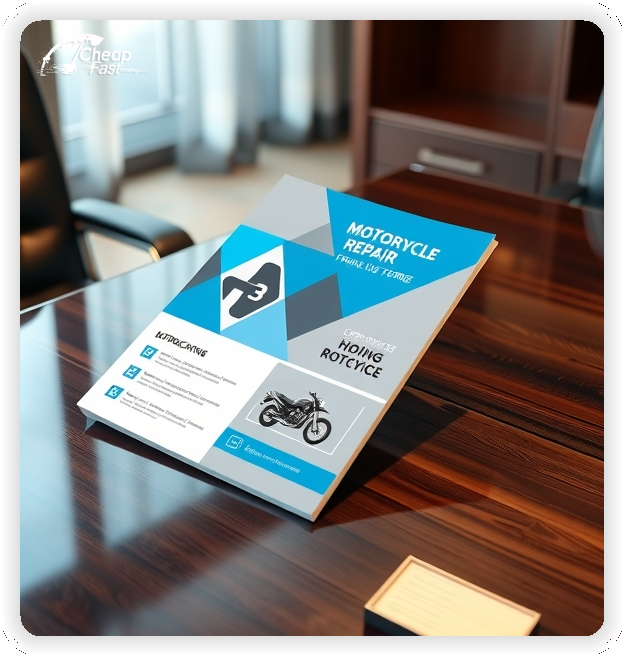
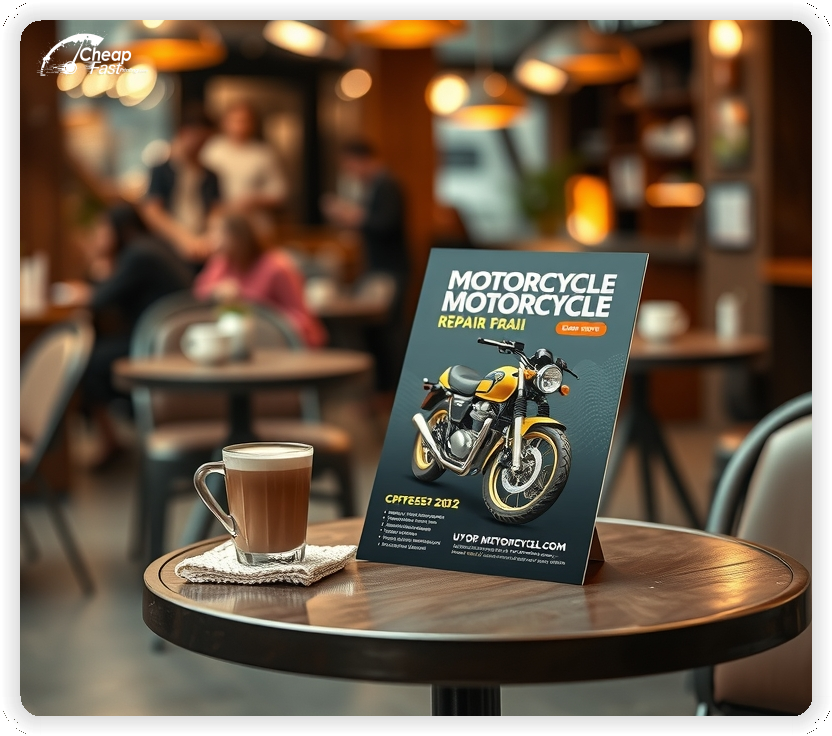
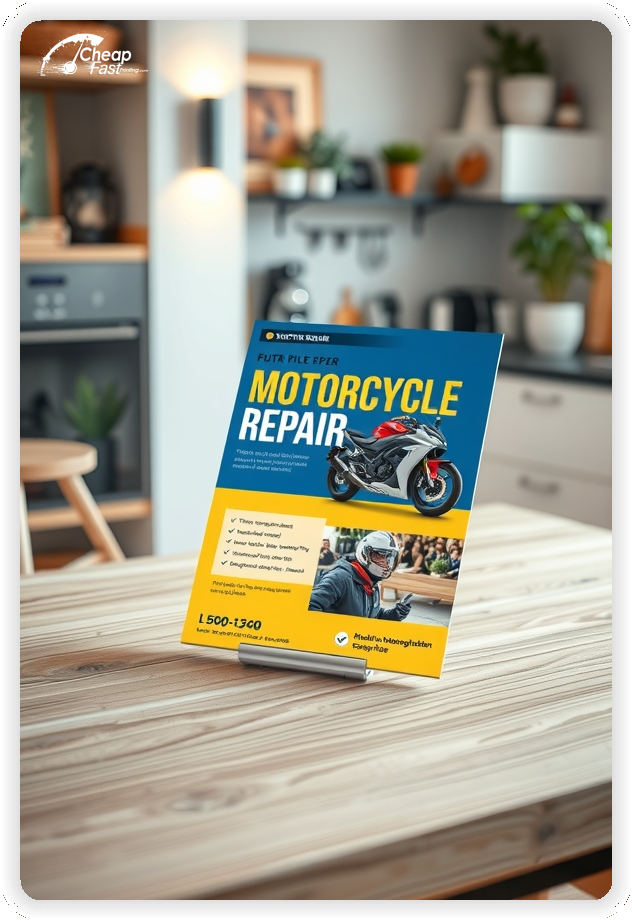

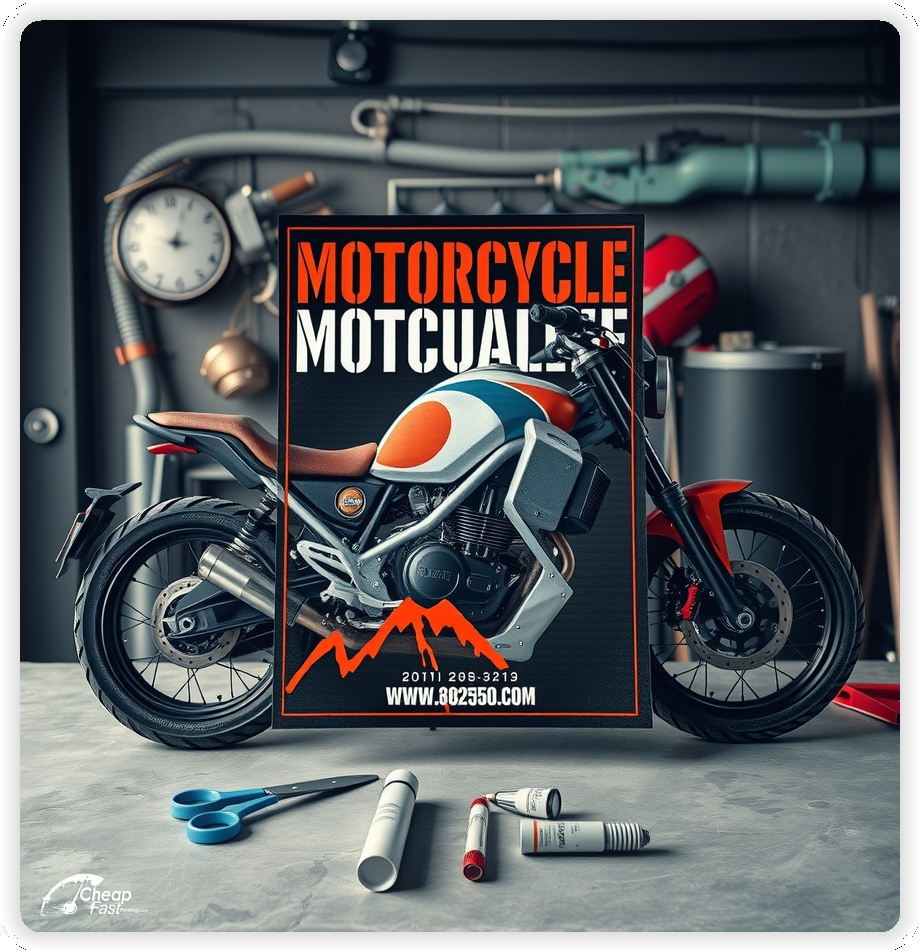

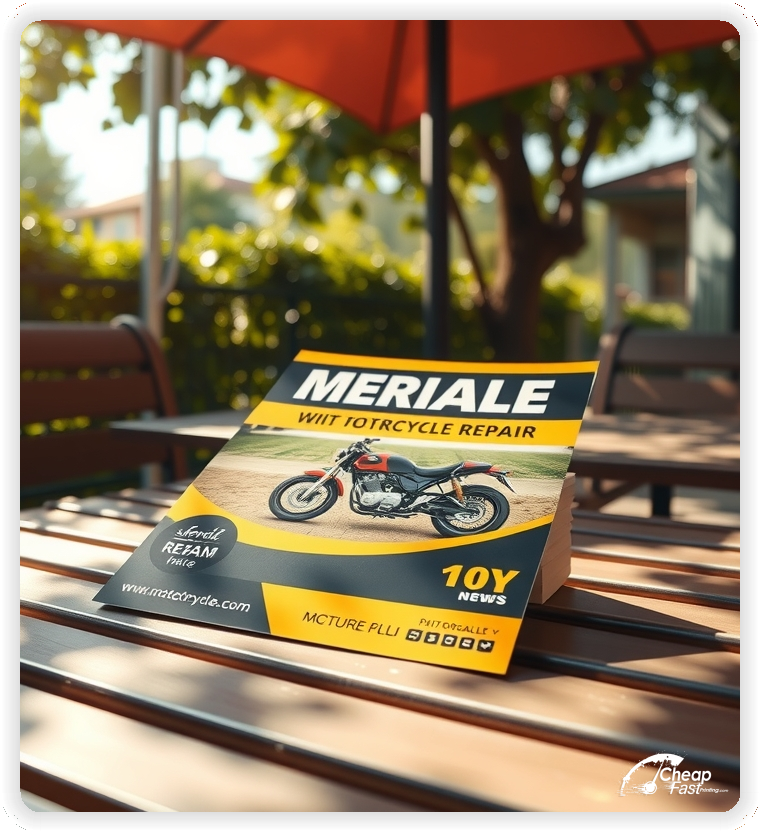
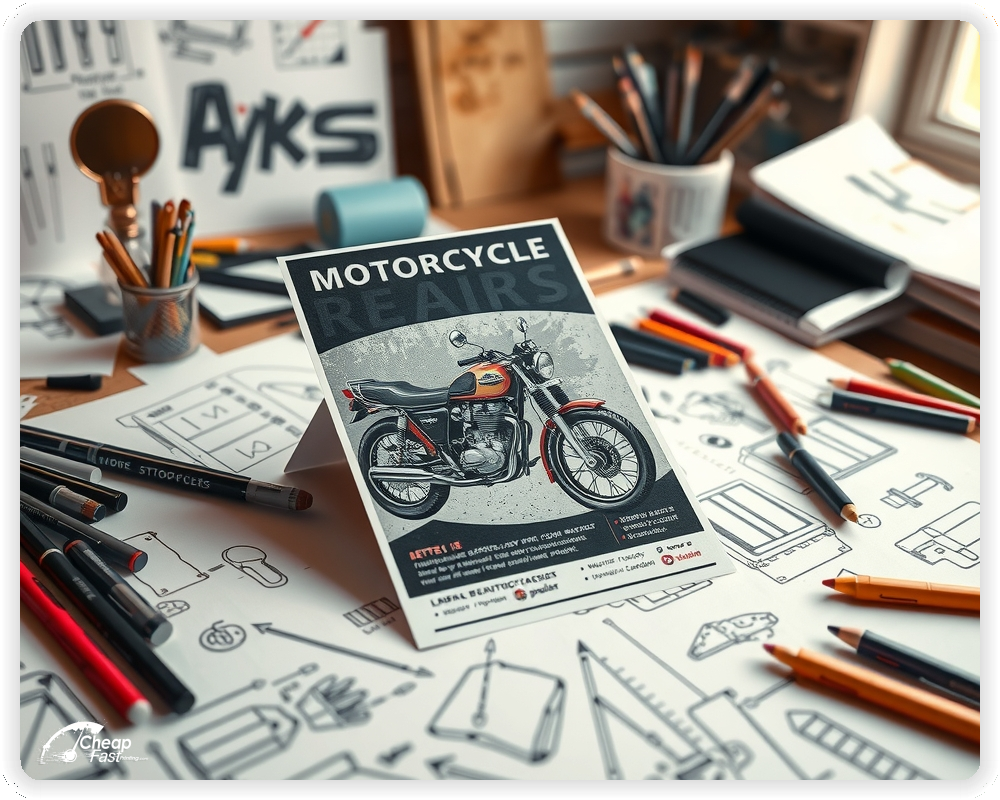
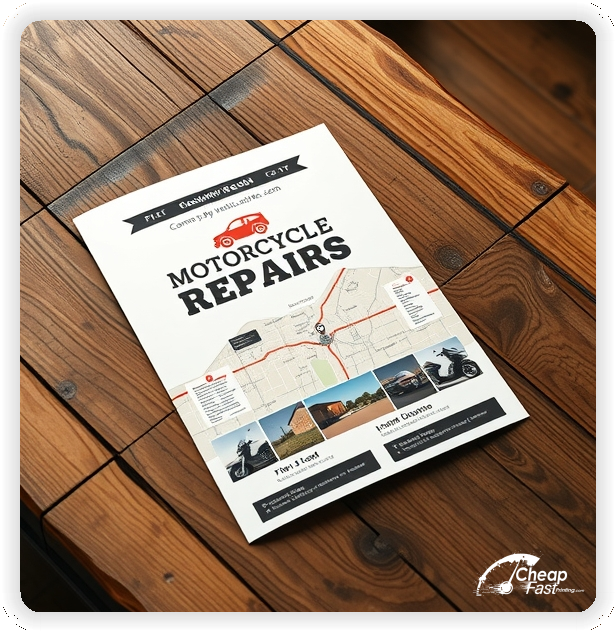
Riders scan for credibility. Highlight engine expertise, brake systems, and a frictionless quote process.
Direct copy helps riders book repairs swiftly.
Image: Professional mechanic in a well-lit garage, tools organized, with a vintage motorcycle on the lift. Alt text: Professional mechanic performing diagnostics.
This visual builds immediate trust and shows your shop's capabilities.
4x9 flyer prints fit saddlebags, toolboxes, and counter displays without folding issues.
The size keeps service lists readable while reserving space for a powerful CTA.
Use top for the service promise, middle for repairs and warranties, bottom for contact and QR.
As motorcycle repair handouts, the format remains legible in rider packs and on garage boards.
Proven for quick scans during bike shows or club meetings.
Garage-ready pieces need toughness. Glossy paper flyers on 80lb gloss book paper resist smudges and keep service lines clear.
High-contrast panels protect marketing materials readability in low light.
When copy is concise, the gloss elevates the professional vibe.
Image: Close-up of glossy flyer with sharp text and vibrant motorcycle image, held against a workbench. Alt text: Durable glossy mechanic marketing sample.
This demonstrates the quality that lasts through shop use.
Use one clear offer: 'Free diagnostic within 24 hours' or 'Emergency repair quote today.'
Keep details on the website so the flyer focuses on action and urgency.
Essential for converting breakdowns into loyal customers.
Focus routes around bike shops, riding trails, and enthusiast events.
Pair door-to-door drops with garage counters, club newsletters, and parts stores.
Consistent placements keep custom repair handouts visible when riders need fixes.
Image: Rider at a motorcycle event, handing out flyers to a group. Alt text: Distributing custom bike handouts at a rally.
This shows effective outreach in real rider communities.
Include one line per major service and a parts warranty note.
Move full specs to the quote page so this piece stays scannable.
Reliable for building rider confidence quickly.
Riders want confidence in your technical skills. A short line about ASE certification, years of experience, or specialized training builds immediate trust.
Keep credentials brief and focused. Your website can provide full staff bios and detailed shop history.
A short trust line near the CTA supports decision confidence without adding unnecessary clutter to the layout.
Accessibility is key for broken-down bikes. Add a short line about your shop location, parking availability, or emergency towing services.
Keep the note brief so the service highlights remain the main focus of the piece.
Clear access notes reduce last-minute questions and support higher show rates for scheduled maintenance.
Service plan options can be summarized in one line, such as “seasonal maintenance plans available.”
Keep detailed pricing on your booking page so the flyer remains easy to scan for busy riders.
This approach keeps the shop message professional while still signaling long-term value to the customer.
Seasonal checks are strong for high-demand periods like spring rollouts. Use a short callout for a weekend clinic or a beginner maintenance series.
Keep dates short and direct readers to a registration page for full details on the event.
Event callouts add urgency while keeping your core repair offers visible to every reader.
Place flyers at parts stores, local cafes, rider hangouts, and community boards with permission.
Ask front desks for the most visible spots and refresh placements when boards rotate regularly.
Consistent placement supports brand awareness and brings steady inquiries for service estimates.
Each flyer should lead to one action. A QR code to a short estimate request page reduces friction for the rider.
Keep the landing page focused on services, your new customer offer, and a simple contact form.
This flow converts better than long pages because it keeps the decision path clear and fast.
Interest rises during spring resets, pre-summer trips, and fall winterization shifts.
Plan a primary run for each peak season and a smaller follow-up run to keep momentum year-round.
When changes happen quickly, new print runs support a timely campaign refresh for your shop.
Match the flyer headline and offer to the online quote page to reduce confusion for the customer.
Use the same service names and time blocks so the experience feels consistent across channels.
Alignment across professional marketing pieces and print improves conversion because the message stays identical.
Test two CTAs with identical layouts to see which repair offer drives more scans.
Track results carefully, then scale the winner for your next big distribution run.
This is a proven method for efficient marketing optimization without extra design costs.
Use bulk orders for rally booths, club meetings, and large-scale rider events.
Keep visuals consistent and CTAs identical across the entire 500 motorcycle repair flyers batch.
Reliable for widespread rider reach and building a local reputation fast.
New customers need clear guidance. Use one line that explains what to bring and how to prep the bike for drop-off.
Keep the text short, and link to a full FAQ on the estimate page for more details.
This reduces anxiety and supports smoother first-visit experiences for every rider.
Use language that reflects your shop vibe, such as professional, rugged, or precision-focused.
Keep tone consistent across the service list and offer blocks so the piece feels cohesive and authentic.
Aligned tone helps the flyer feel genuine and builds a stronger brand impression over time.
Use a short reminder line such as “loyalty rewards available” or “returning customer discounts.”
Do not add a full list of pricing tiers. The goal is to encourage ongoing maintenance visits.
Retention messaging supports steady shop traffic without overshadowing the primary new customer offer.
Cleanliness and safety are vital for high-performance bikes. A short line about sterile work environments and high-quality OEM parts improves customer confidence.
Keep the note brief and place it near your shop's trust signals for maximum impact.
Short safety notes support booking decisions without requiring a long list of shop policies.
Shops often stand out through their connection to the local community. A short line about local roots or community bike nights builds lasting connections.
Keep it to one line and allow your website to tell the deeper story of your shop's history.
This creates a sense of belonging for the rider without adding heavy copy to the 4x9 motorcycle repair flyers.
Mechanics rely on professional, premium visuals. 80lb gloss book paper reinforce that perception by keeping lines crisp and colors clean.
When the piece looks polished, your shop feels more professional and trustworthy to new customers.
High-quality print also helps a simple design look intentional rather than sparse on a busy bulletin board.
Many riders discover independent shops through neighborhood boards or local hangouts. A clear, professional flyer supports discovery when digital ads miss local foot traffic.
For local outreach, express motorcycle repair flyers keep your distribution consistent across different routes.
This supports awareness while your online quote page captures the actual service booking.
Use a direct CTA such as “Get your repair quote” or “Schedule your diagnostic.”
Keep the CTA short and place it near your contact info so the next step is clearly visible to the reader.
Clear CTAs help riders decide quickly and support higher booking rates for urgent service needs.
Spacing matters in professional branding. Use generous margins around your service menu and offer blocks.
Keep text blocks short and separate them with simple dividers to improve readability.
A balanced layout keeps attention on your shop's core services and makes the entire piece feel refined.
Emergency services attract riders who want peace of mind. A short line such as “roadside assistance available” adds value without overwhelming the main message.
Keep details on your estimate page so the flyer remains focused on your primary repair services.
This message supports premium offerings while keeping your introductory diagnostic offer clear.
Fleet and group ride support can be a strong growth channel. A short line about business fleet services or group discounts signals flexibility to your local clubs.
Use a brief callout and direct inquiries to a dedicated business contact form on your site.
This adds a professional option for local organizations without crowding the primary service schedule.
Shops that offer specialized tuning or advanced diagnostics can include a short line about their equipment capabilities.
Keep the technical details on a separate landing page and let the flyer serve as a professional introduction.
This adds depth to your shop profile and builds credibility among serious enthusiasts and racers.
If your shop is busy, mention limited repair slots and recommend booking ahead for peak riding seasons.
Use a short line such as “advance booking suggested for weekend repairs.”
This sets clear expectations and helps reduce customer frustration during busy months.
Some shops offer a selection of parts, accessories, and gear. A short line about your in-shop retail area can improve visit value.
Keep the focus on repairs and use the retail note as a secondary detail on the back of the flyer.
This supports shop revenue without shifting the primary message away from essential bike maintenance.
Short challenges and multi-week series build attendance habits. Use a short line such as “spring prep special” or “winter storage package.”
Keep dates and details on your website to preserve the visual clarity of the flyer.
Seasonal prep messaging can improve repeat visits and long-term customer loyalty.
New riders often want to know what to expect. A short line about drop-off times, part sourcing, or diagnostic windows can reduce anxiety.
Keep guidance brief and place it near the contact info so it reads as part of the service flow.
This small detail supports smoother first visits and higher customer satisfaction scores.
Inclusive language makes your shop feel welcoming to a wider audience of riders. A short note such as “all makes and models welcome” or “transparent flat-rate pricing” helps customers feel comfortable.
Keep the note short and avoid long technical explanations on the flyer itself.
Clear inclusivity messaging supports shop growth and encourages first-time service bookings.
Keep routes tight and repeat regularly.
Use distinct QR for tracking results.
Essential for measurable success.
Detailed rebuilds for high-mileage bikes. Document tolerances, part matching, and break-in procedures.
A precise rebuild improves power and reliability.
Image: Engine components laid out for rebuild. Alt text: Motorcycle engine rebuild process.
This demonstrates meticulous repair work.
Your flyer has about 3 seconds to make an impression before it's tossed or kept. Don't bury the lead. Ensure your main headline and primary offer are visible from arm's length. Use high-contrast colors and bold typography to guide the eye exactly where you want it.
Target the Right Neighborhoods: Success isn't just about design; it's about distribution. Focus your efforts on neighborhoods that match your ideal customer profile. For local businesses, a tight radius around your location often yields the highest ROI.
Upload artwork for custom motorcycle repair flyers with a strong CTA and tough gloss paper.
Proofing checks contrast, bleed, and spacing so service lines and the CTA remain clear in garages.
We also verify the QR destination and contact lines so custom shop flyers perform without issues.
Confirm the estimate form loads fast on mobile for saddlebag scans.
Review bleed around engine diagrams—uneven crops signal sloppy work. Keep headline contrast above accessibility thresholds to protect visibility in dim shops.
Prefer clean fonts and consistent weights. Gloss finishes reduce glare near tools and often improve photo sharpness.
Use the 4x9 flyer template to keep margins consistent and reserve space for a powerful CTA and service list.
Templates protect alignment for QR placement, phone lines, and warranty notes so the piece scans cleanly after printing.
Lock safe zones and gutters to prevent edge crowding on compact formats.
Provide art at 300 DPI with 0.125" bleed and verify contrast ratios for legibility.
A stable layout helps staff update offers without redesigns and supports multi-route prints with minimal changes.
Loading Free Editable Designs...
Please wait while we prepare the template library.
Choose stock and finish that survive shop handling. 80lb gloss book paper protects corners and keeps service lines clear.
Test one offer and scale the winner with controlled spend. Clear, glossy prints attract more rider inquiries than bargain runs.
Use cost control wisely while preserving readability and trust.
Readable glossy paper flyers with a consistent CTA deliver stronger estimates than cheap prints with crowded text.
Compare by QR scans, booked repairs, and close rate rather than paper cost alone.
Use one clear headline, one offer, and one primary CTA (call, scan, or order). Add the essentials: phone, website/QR, service area, hours (if relevant), and a trust signal like years in business or a short review snippet.
Keep the layout scannable: one hero image or icon, short bullets, and high-contrast CTA text that’s readable at arm’s length.
Yes. 4" x 9" balances visibility and readability without feeling cramped. It gives enough space for a strong headline, a benefits list, and a CTA while staying easy to hand out or place on counters and boards.
Prioritize spacing and hierarchy over extra copy so the main message lands in 3–5 seconds.
80 lb. Gloss Book with Gloss affects how the flyer feels and how colors read. Gloss tends to boost color and photos, matte reduces glare and feels more premium for text-heavy layouts, and uncoated is great for writing on.
If your design uses lots of fine text, choose clarity and contrast first; paper upgrades won’t fix a crowded layout.
500 works well when you want consistent visibility across multiple placements (counters, boards, partner locations, events) over a few weeks. Bulk also lowers unit cost so you can test a message and keep the winner running.
Track performance, then reprint the best offer instead of changing everything at once.
If price is your main hook, feature one simple offer (“ off” or “Starting at ) and keep the fine print minimal. If you have variable pricing, use a short value statement and send details to a landing page.
A clean offer + simple CTA typically outperforms a long price list.
Use a QR code to a dedicated landing page and add UTM tags for each route or partner. Track scans, form fills, and calls to identify the placements that actually convert.
For non-QR audiences, include a short, memorable URL or a trackable phone extension.
Start where your customers already are: complementary businesses, community boards, local events, and targeted neighborhoods. Ask partners for the most visible spot and refresh before your flyer gets buried.
Use a consistent route and restock winners; small, repeated placements usually beat one big drop.
Submit a print-ready PDF (CMYK) at 300 DPI with 0.125" bleed and safe margins around important text. Keep thin lines above 0.5 pt and make QR codes at least ~0.8" square for reliable scanning.
Use vector logos when possible and limit your fonts to maintain a clean, professional look.
Request a proof so you can confirm spelling, margins, and QR/URL accuracy before production. Proofing is the easiest way to prevent expensive reprints.
Double-check phone numbers and offer terms first—those are the most common issues.
Match your flyer headline and offer to the landing page headline so visitors feel they’re in the right place. Keep the CTA consistent and make the page fast to load and easy to complete on mobile.
If you run ads, retarget QR visitors with the same offer to improve conversions.
Plan steady supply for event booths, garage counters, and club newsletters. Smaller top-up runs match riding seasons without waste.
Track QR scans by distribution and restock where response is highest. Use consistent visuals so riders recognize your brand quickly.
Garage-ready glossy paper flyers help mechanics stay visible across events.
Use bulk motorcycle repair flyers to stock rally booths across rider networks.
Log placements and refresh cadence so the targeted loop stays active while offers remain aligned.
For breakdown-driven demand, deploy urgent runs and follow with steadier cadence for maintenance season.
Keep one standard layout and rotate offer lines seasonally. Consistency builds rider recall while allowing controlled testing.
Bundle reorders with planned restock windows to reduce shipping costs and maintain availability during peak riding periods.