Professionally designed for 6" x 6" flyers. Fully editable & free!
Preparing Templates…
These pieces work when the offer, the photo, and the next step are visible in three seconds. Use one promise, one price cue, and one call path so homeowners know exactly how to schedule.
A compact 6x6 format keeps the message easy to scan on doors, counters, and community boards. Choose a matte finish for sunlight legibility and color swatch clarity.
Print pieces that match your landing page headline and your crew’s actual schedule so the message stays consistent across print and digital.
Start with a small test, then scale the winning offer across neighborhoods after response proves itself.
Well‑placed local drops build recognition while repeat runs allow steady coverage without budget strain.
Lead with one before‑and‑after image, a single offer, and a clear booking line. Homeowners decide faster when the path is singular and the benefit is obvious.
Keep copy short and use strong contrast so the flyer reads outdoors. A visible phone number or short URL should sit next to the CTA.
Match the flyer headline to the estimate page headline so the customer feels continuity from first glance to booking.

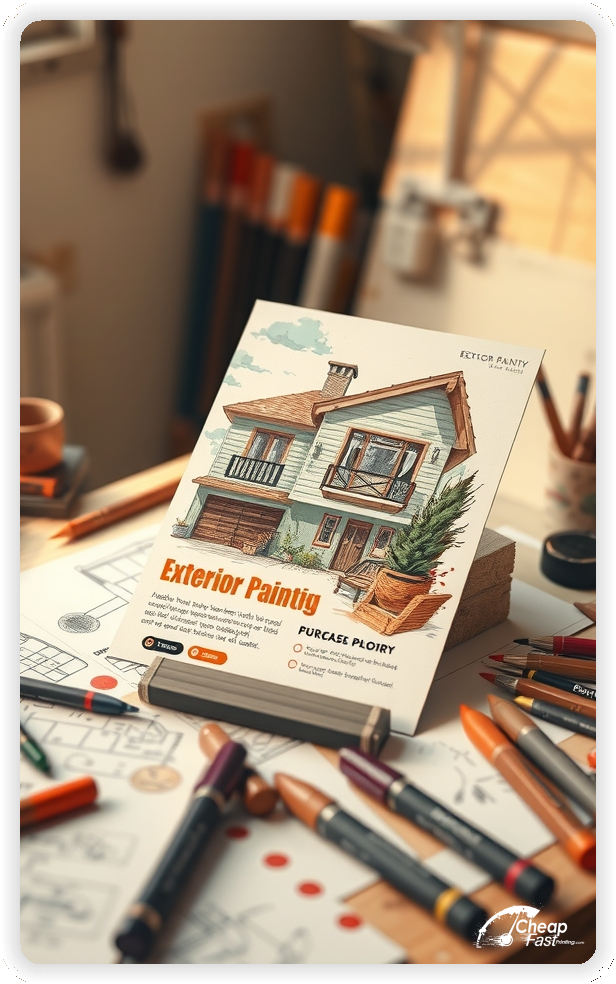


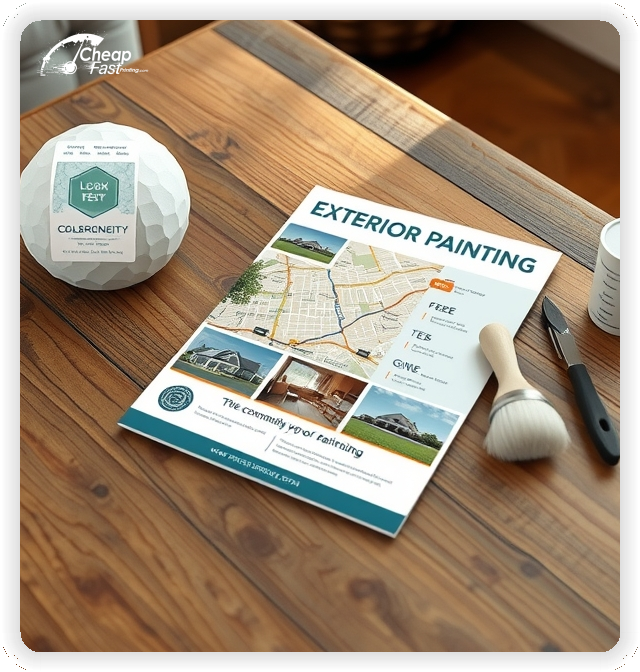

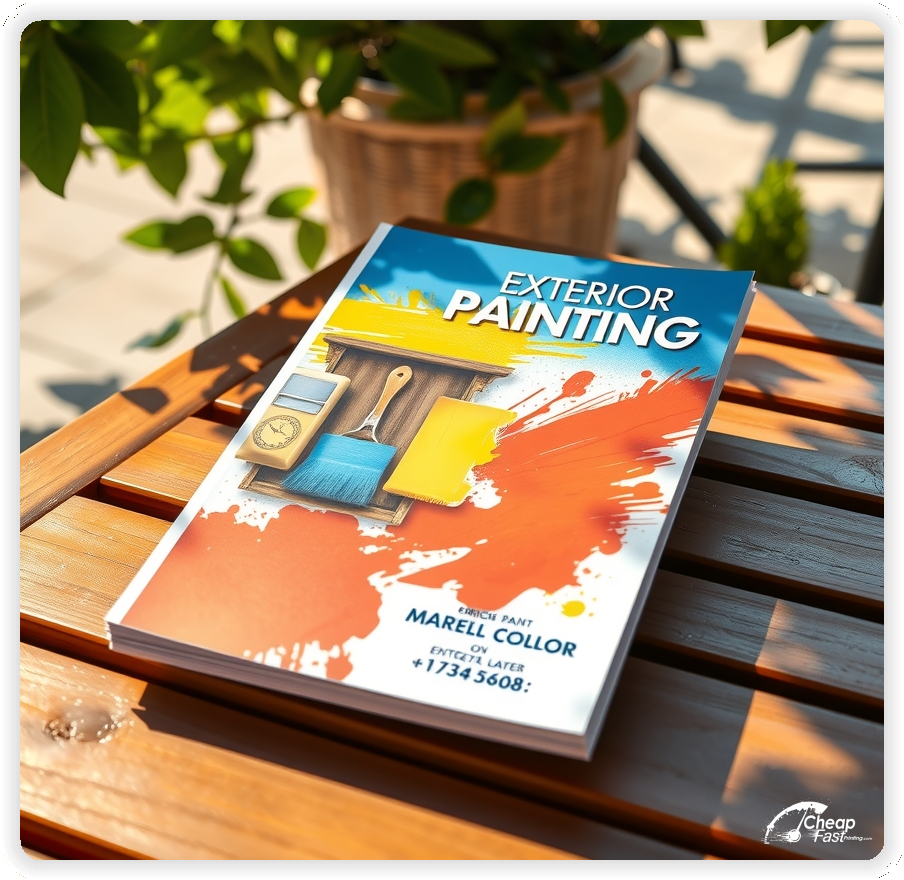


High response comes from clarity, not more text. Strong exterior painting flyers printing follows a simple structure that answers the buyer’s first questions.
This structure keeps the message scannable on porches, counters, and partner racks.
A square layout keeps photos and swatches balanced. 6x6 exterior painting flyers hold one hero image, a short offer, and a clear CTA without crowding.
The smaller size speeds distribution and makes repeat drops more affordable. It also fits most countertop displays without curling or bending.
Choose matte paper flyers when the flyer will sit in bright light or next to glass. Matte reduces glare and keeps type readable at arm’s length.
For photo‑heavy designs, increase contrast and avoid tiny text. This ensures the offer and phone number stay crisp on door‑to‑door drops.
Use one offer with a simple time window to create urgency. Examples include “Spring refresh special” or “Exterior trim discount.”
Place the offer above the CTA so the next step is visible immediately. Avoid stacking multiple discounts on the same piece.
Use outdoor photos shot in similar lighting so the transformation is clear. Keep the after photo brighter and slightly tighter to increase perceived quality.
Use three‑hundred‑dpi images at final size so edges and trim lines stay crisp in print.
Swatches should be high contrast and labeled with short names. Pair three to five swatches with a photo so readers can imagine a full exterior refresh.
Keep trim, siding, and door color examples separate so homeowners understand the scope of work.
Spring: highlight refreshes, pressure washing, and trim prep. Summer: promote siding, deck stains, and high‑durability coatings.
Fall: focus on weatherproofing and gutters. Winter: sell estimates and scheduling for early spring slots.
Target two to four tight neighborhoods that match your ideal homeowner profile. Repeat the same route before expanding so recognition builds.
Use one offer per neighborhood so response can be measured by QR or short URL.
Pair door drops with EDDM to reinforce the same offer. Keep the headline consistent so homeowners remember the piece when they see it again.
Time drops for weekends or early evenings when decision‑makers are home.
Use one action: call, text, or scan to book. A short QR landing page should confirm the offer and collect address, surface type, and preferred time.
Keep the CTA block high contrast so it reads quickly in outdoor light.
Avoid long price tables. Use a simple entry line like “exteriors from $X” and clarify that final price depends on surface and prep.
This keeps calls qualified while maintaining clarity and trust.
Include one line for licensing, insurance, and local ownership. Add a short guarantee statement if it is real and easy to honor.
Place the trust line near the CTA so it supports the decision moment.
Place stacks at paint retailers, hardware stores, realtors, and HOA offices. Co‑branded placement improves credibility.
Track each partner with a route code to learn where leads originate.
Cluttered layout: reduce to one offer and three bullets. Low contrast: increase type weight and color separation.
Unclear CTA: keep one phone and one URL. No tracking: add a short code per route.
Random drop: map streets and document outcomes for each route.
Test one variable per run: photo style, headline, or price point. Give each variant at least two hundred fifty pieces in comparable zones.
If you are testing a new offer, start with 100 exterior painting flyers before committing to higher volume.
Track redemptions by code to isolate winners, then scale the best version into larger runs.
Match the flyer to a fast‑loading mobile page with one form. Ask for address, preferred time, and surface type.
Send an automatic confirmation and a short prep checklist so crews stay organized and no‑shows drop.
Prepare a short script for common questions and a single path to schedule. Keep the offer language consistent from the flyer to the call.
Track outcomes in a simple log so future print runs improve.
Outdoor pieces encounter moisture and sun. Aqueous reduces fingerprints under mixed lighting, while UV adds a protective film.
When showcasing stucco, wood, or brick, keep swatches distinct so textures read at a glance.
Offer two or three appointment windows instead of an open range. Clear options reduce decision friction and keep crews on time.
End with one scheduling path to avoid confusion.
Use one testimonial line near the CTA to build trust. Keep names concise and avoid long stories.
A short guarantee or satisfaction line can reinforce credibility.
A crew printed six thousand squares with a spring refresh offer and repeated drops for three weekends. Results improved when the same headline appeared in each neighborhood.
The single CTA and high‑contrast layout increased estimate calls without deeper discounts.
Create a short checklist before canvassing: current offer, booking window, route codes, and the line staff should use.
After each shift, record placements and outcomes so the next run improves.
Respect posting guidelines for community boards and retailer counters. Keep stacks tidy and avoid blocking signage.
For canvassing, follow local rules and use door hooks where permitted.
Warm tones emphasize offers while cool neutrals communicate premium quality. Use high‑contrast swatches so siding and trim read clearly.
Keep numerals large and type simple to improve readability from the walkway.
Multiple offers confuse fast readers. Use one primary offer and one next step, then repeat it across all placements.
Recognition drives response. Repeat the same streets before expanding so homeowners see the message more than once.
Upload artwork for fast turnarounds on 6x6 80lb matte text runs. We keep the CTA clear so homeowners schedule quickly.
Proofing checks the details that impact response.
A quick proof prevents a full run from being wasted on a small typo.
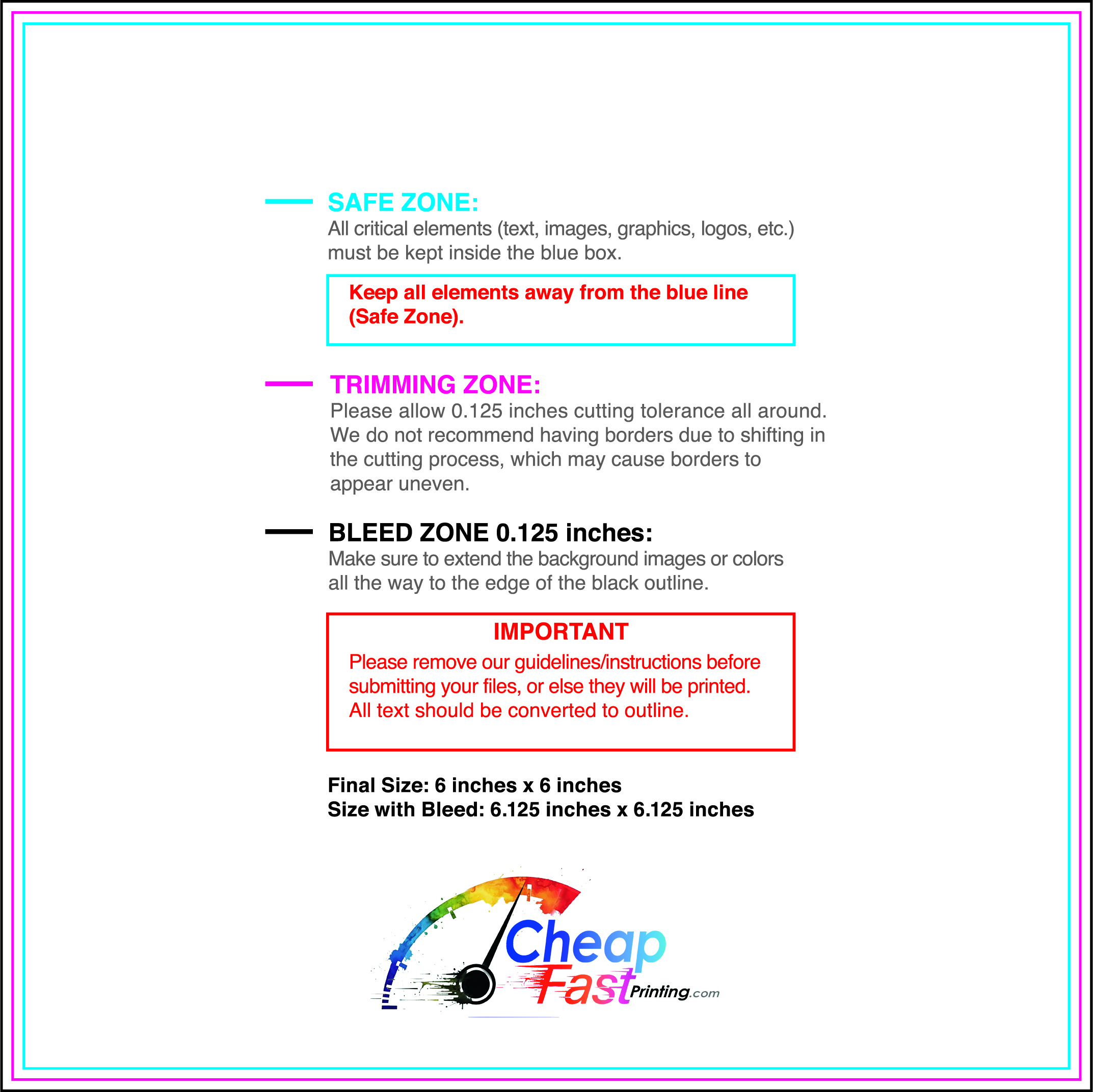
Use 6x6 templates to keep margins, bleed, and safe zones correct. Templates protect QR placement and phone lines across reorders.
Reusing the same layout builds recognition while you swap seasonal offers.
Loading Free Editable Designs...
Please wait while we prepare the template library.
The cheapest flyer is not the best value if it does not generate calls. Compare by estimate requests, booked jobs, and route density growth.
Keep your exterior painting marketing materials aligned with the same offer language so response data stays clean.
Track response by neighborhood and scale the best‑performing areas with repeat runs.
Use one clear headline, one offer, and one primary CTA (call, scan, or order). Add the essentials: phone, website/QR, service area, hours (if relevant), and a trust signal like years in business or a short review snippet.
Keep the layout scannable: one hero image or icon, short bullets, and high-contrast CTA text that’s readable at arm’s length.
Yes. 6" x 6" balances visibility and readability without feeling cramped. It gives enough space for a strong headline, a benefits list, and a CTA while staying easy to hand out or place on counters and boards.
Prioritize spacing and hierarchy over extra copy so the main message lands in 3–5 seconds.
80 lb. Matte Text with Matte affects how the flyer feels and how colors read. Gloss tends to boost color and photos, matte reduces glare and feels more premium for text-heavy layouts, and uncoated is great for writing on.
If your design uses lots of fine text, choose clarity and contrast first; paper upgrades won’t fix a crowded layout.
100 works well when you want consistent visibility across multiple placements (counters, boards, partner locations, events) over a few weeks. Bulk also lowers unit cost so you can test a message and keep the winner running.
Track performance, then reprint the best offer instead of changing everything at once.
If price is your main hook, feature one simple offer (“ off” or “Starting at ) and keep the fine print minimal. If you have variable pricing, use a short value statement and send details to a landing page.
A clean offer + simple CTA typically outperforms a long price list.
Use a QR code to a dedicated landing page and add UTM tags for each route or partner. Track scans, form fills, and calls to identify the placements that actually convert.
For non-QR audiences, include a short, memorable URL or a trackable phone extension.
Start where your customers already are: complementary businesses, community boards, local events, and targeted neighborhoods. Ask partners for the most visible spot and refresh before your flyer gets buried.
Use a consistent route and restock winners; small, repeated placements usually beat one big drop.
Submit a print-ready PDF (CMYK) at 300 DPI with 0.125" bleed and safe margins around important text. Keep thin lines above 0.5 pt and make QR codes at least ~0.8" square for reliable scanning.
Use vector logos when possible and limit your fonts to maintain a clean, professional look.
Request a proof so you can confirm spelling, margins, and QR/URL accuracy before production. Proofing is the easiest way to prevent expensive reprints.
Double-check phone numbers and offer terms first—those are the most common issues.
Match your flyer headline and offer to the landing page headline so visitors feel they’re in the right place. Keep the CTA consistent and make the page fast to load and easy to complete on mobile.
If you run ads, retarget QR visitors with the same offer to improve conversions.
Plan print runs around seasonal demand and route capacity. Start with a tight route, then scale once response is proven.
For steady coverage, bulk exterior painting flyers keep partner stacks and routes stocked without gaps.
When budgets are tight, cheap exterior painting flyers help you keep frequency without sacrificing clarity.