Professionally designed for 9" x 12" flyers. Fully editable & free!
Preparing Templates…
Plumbing decisions are often urgent and trust-based. A focused flyer explains your service capability, your emergency availability, and the reasons neighbors should trust you in their homes.
The 9x12 format provides ample room for a comprehensive service menu, seasonal coupons, and clear trust signals without crowding the layout.
Effective plumbing marketing uses print to reach homeowners before the emergency happens, earning a spot on the fridge or in the junk drawer for when disaster strikes. The flyer should guide readers to a phone number or a quick online scheduling page.
When the message is professional and reassuring, the plumbing business becomes the neighborhood's go-to expert.
Lead with trust and availability. A clear 24/7 badge or 'Same Day Service' promise converts better than a generic logo.
Keep the coupons valuable—dollar amounts often work better than percentages for repairs.
Use a clean design with high contrast so the phone number is the most visible element on the page.
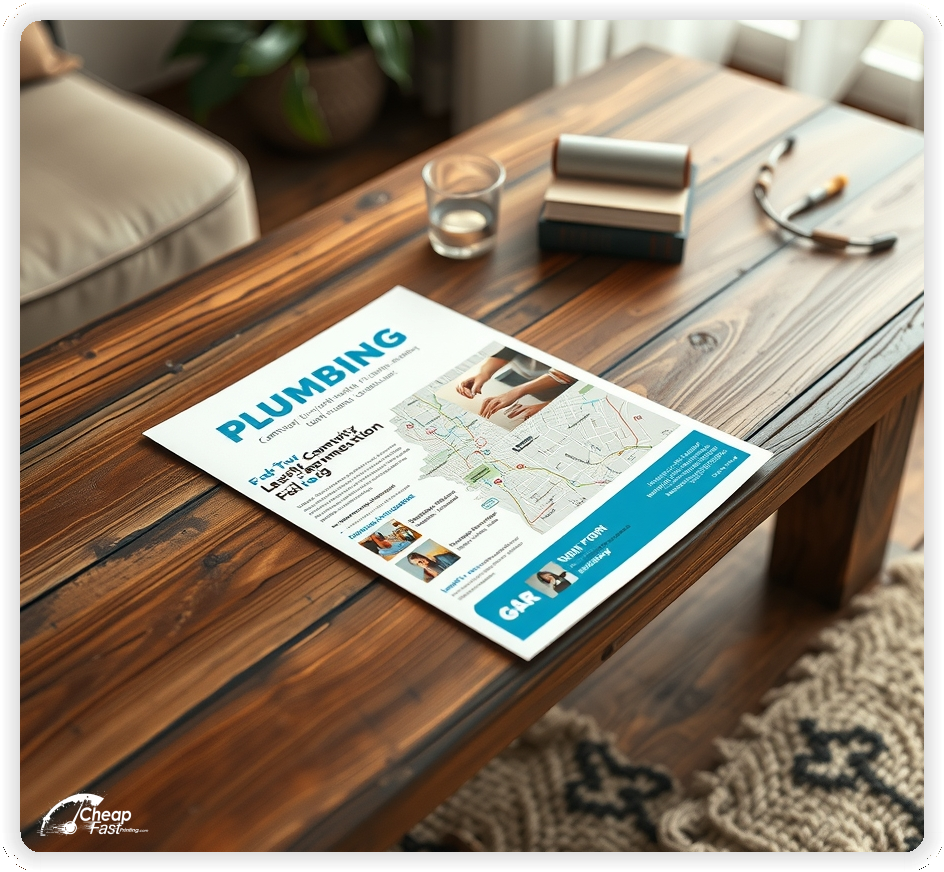
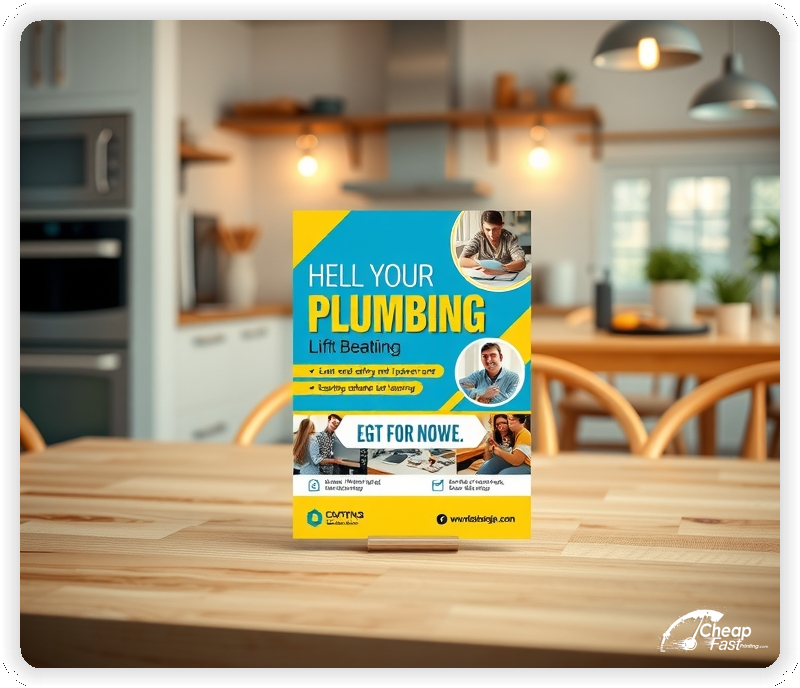



These flyers must make the service feel professional and reliable. Homeowners respond best to a clear list of capabilities and strong trust indicators.
This structure builds confidence while making the contact info impossible to miss.
9x12 custom flyers create room for a detailed service list and multiple coupons without looking cluttered.
For contractors requesting 9x12 plumbing flyers, this size stands out in the mail and fits perfectly in standard presentation folders or door hanger bags.
Use the front for the emergency hook and main offer, and the back for a detailed checklist of services and maintenance plans.
As 9x12 marketing handouts, the size feels substantial, signaling an established and professional business.
Plumbing flyers often live in drawers or on fridges for months. Premium quality prints on thicker stock ensure they survive until they are needed.
Use gloss finish to make colors pop and give the flyer a high-end feel, which helps justify premium service rates.
For door-to-door canvassing, paper flyers with a gloss coating resist moisture and humidity better than uncoated stocks.
When the paper feels substantial, the homeowner assumes the workmanship will be substantial too.
A focused coupon removes the hesitation to call a new provider. Examples include '$50 Off Any Repair' or 'Free Camera Inspection with Cleanout'.
Keep the terms simple and the expiration date reasonable to create urgency without frustration.
Clear offers improve lead generation because homeowners feel they are getting a deal on a necessary expense.
Service lists must be easy to scan. Group services by category: Drains, Water Heaters, Fixtures, Sewer Line.
Use bullet points and simple icons to break up the text.
Readable menus are essential for plumbing marketing because customers may not know the technical terms but recognize their symptoms.
Homeowners fear hiring the wrong contractor. A clear display of your Master Plumber License number builds immediate authority.
Add badges for 'Bonded & Insured', 'Background Checked', or 'Drug Tested' to reassure safety-conscious residents.
A short trust line near the phone number supports decision confidence during a stressful emergency.
If you offer 24/7 service, make it the loudest part of the flyer. Use red or orange visual cues to signal urgency.
This captures the panic calls where price is secondary to speed.
Focused emergency positioning improves conversion rates during nights and weekends.
Preventative maintenance is a great way to fill low-demand seasons. Promote 'Winterization Checks' in fall or 'Sump Pump Testing' in spring.
Keep the seasonal message timely and relevant to the local climate.
This approach keeps the schedule full with non-emergency work.
Water heater replacements are high-value jobs. Use a dedicated section to explain the benefits of tankless upgrades or efficient models.
Include a financing mention (e.g., '0% Interest for 12 Months') to make the expense feel manageable.
This targets homeowners looking for upgrades, not just repairs.
Clogged drains are the most common entry point for new customers. A competitive 'Main Line Clear' price gets your foot in the door.
Use this as a loss leader or low-margin service to build a relationship for future big-ticket repairs.
Consistent drain specials keep the phone ringing with new customer opportunities.
Distribute flyers in neighborhoods with housing stock aged 20+ years, where pipes and heaters are failing.
Tailor the message to address 'aging galvanized pipes' or 'sewer line replacements'.
Targeted distribution supports higher ROI by reaching homes that actually need the work.
Even in emergencies, some customers prefer to book online. A QR code to a 'Schedule Now' page captures this traffic.
Keep the landing page form short and mobile-optimized.
This flow converts the tech-savvy homeowner who avoids phone calls.
Match the flyer design to your truck wrap and uniforms. Visual consistency builds subconscious trust.
Use the same logo, colors, and mascot if you have one.
Alignment across marketing materials online, on trucks, and in print improves brand recall.
Promote your 'Diamond Club' or service membership. List the benefits: priority scheduling, 15% discount, free annual inspection.
Selling memberships on the flyer turns a one-time repair into a recurring revenue stream.
This builds the value of the business and secures customer loyalty.
When you have a truck in a neighborhood, flyer the surrounding 50 homes. 'We're working for your neighbor' is a powerful endorsement.
Use affordable custom printing to keep these 'cloverleaf' campaigns cost-effective.
This creates a sense of ubiquity and local dominance.
Include a snapshot of your 5-star Google rating or a testimonial from a local resident.
Homeowners trust their neighbors more than your marketing copy.
Social proof reduces the perceived risk of hiring a stranger.
If you use flat-rate pricing, say 'Upfront Pricing—No Surprises'. If you charge hourly, emphasize 'No Trip Charge with Repair'.
Clarity on pricing structure prevents sticker shock and arguments later.
Transparency builds trust before you even arrive at the door.
Highlight high-tech services like slab leak detection or camera inspections if you offer them.
These differentiate you from the 'handyman with a wrench'.
Specialized services justify higher rates and attract higher-value customers.
Promote low-flow toilets and efficient fixtures to eco-conscious homeowners.
Mention potential utility rebates available in your area.
This positions your company as modern and environmentally responsible.
Large plumbing disasters are often unexpected expenses. highlighting 'Financing Available' helps close the sale.
List accepted credit cards and financing partners prominently.
This removes the financial barrier to immediate service.
Design the flyer so it includes a 'Kitchen Sink Reference' section (e.g., shut-off valve locations) or calendar.
Make the piece useful so it stays in the home longer.
When the layout offers utility, the flyer can promote plumbing business for months or years.
Your flyer needs to be worthy of the refrigerator door. Include a useful chart, local emergency numbers, or a 'valuable for one year' coupon. If it's just an ad, it's trash. If it's a resource, it's a keeper. Use high-quality paper that feels permanent.
Target the Right Age of Home: New builds have warranties; 15-year-old homes have bursting pipes. Focus your distribution on subdivisions built between 1990 and 2005 for maximum repair volume.
Most plumbing calls are reactive. The goal is to be the brand they remember when the pipe bursts. Plan distribution to create top-of-mind awareness. Pick territories with aging infrastructure, repeat drops every quarter, and use EDDM for saturation.
Pair saturation drops with targeted 'neighbor' mailings around your current job sites. A 'pardon our dust' or 'we are in the area' flyer has a high open rate. Use the same phone number but different tracking codes to measure the source.
Your flyer needs to be worthy of the refrigerator door. Include a useful chart, local emergency numbers, or a 'valuable for one year' coupon. If it's just an ad, it's trash. If it's a resource, it's a keeper. Use high-quality paper that feels permanent.
Target the Right Age of Home: New builds have warranties; 15-year-old homes have bursting pipes. Focus your distribution on subdivisions built between 1990 and 2005 for maximum repair volume.
Upload artwork and keep the focus on trust and emergency availability for custom plumbing flyers.
Proofing checks numbers, license details, and spelling so your authority remains intact.
Proof review also confirms the QR destination and financing terms so the flyer works without errors.
Verify that the scheduling page loads quickly on mobile for emergency customers.
Confirm that coupon expiration dates are correct and legally compliant.
Check that the service list aligns evenly and looks organized.
Confirm that trust badges are high-resolution and legible.
Use the 9x12 template to keep margins consistent and reserve space for the service menu and coupons.
Templates also protect the coupon area so trimming doesn't void the offer.
Consistent spacing keeps contact details visible and supports quick approvals.
A stable grid helps staff update seasonal specials without redesigns.
Consistent templates also support multi-truck fleet updates with minimal editing.
They also preserve alignment for QR placement and license numbers across every run.
It also keeps headers aligned across neighborhood campaigns cleanly.
Loading Free Editable Designs...
Please wait while we prepare the template library.
Focused layouts outperform crowded pieces because the service offer stays clear.
Consistent templates reduce design time and keep the brand aligned across the fleet.
Compare response by average ticket size and lifetime value rather than only print cost.
When the brand stays consistent, homeowners trust the contractor faster and approve estimates with less friction.
Tracking calls by coupon code helps refine the next print cycle.
Review call-to-book ratios to understand which neighborhoods generate the best jobs.
Use one clear headline, one offer, and one primary CTA (call, scan, or order). Add the essentials: phone, website/QR, service area, hours (if relevant), and a trust signal like years in business or a short review snippet.
Keep the layout scannable: one hero image or icon, short bullets, and high-contrast CTA text that’s readable at arm’s length.
Yes. 9" x 12" balances visibility and readability without feeling cramped. It gives enough space for a strong headline, a benefits list, and a CTA while staying easy to hand out or place on counters and boards.
Prioritize spacing and hierarchy over extra copy so the main message lands in 3–5 seconds.
70 lb. Opaque Smooth White with Uncoated affects how the flyer feels and how colors read. Gloss tends to boost color and photos, matte reduces glare and feels more premium for text-heavy layouts, and uncoated is great for writing on.
If your design uses lots of fine text, choose clarity and contrast first; paper upgrades won’t fix a crowded layout.
100 works well when you want consistent visibility across multiple placements (counters, boards, partner locations, events) over a few weeks. Bulk also lowers unit cost so you can test a message and keep the winner running.
Track performance, then reprint the best offer instead of changing everything at once.
If price is your main hook, feature one simple offer (“ off” or “Starting at ) and keep the fine print minimal. If you have variable pricing, use a short value statement and send details to a landing page.
A clean offer + simple CTA typically outperforms a long price list.
Use a QR code to a dedicated landing page and add UTM tags for each route or partner. Track scans, form fills, and calls to identify the placements that actually convert.
For non-QR audiences, include a short, memorable URL or a trackable phone extension.
Start where your customers already are: complementary businesses, community boards, local events, and targeted neighborhoods. Ask partners for the most visible spot and refresh before your flyer gets buried.
Use a consistent route and restock winners; small, repeated placements usually beat one big drop.
Submit a print-ready PDF (CMYK) at 300 DPI with 0.125" bleed and safe margins around important text. Keep thin lines above 0.5 pt and make QR codes at least ~0.8" square for reliable scanning.
Use vector logos when possible and limit your fonts to maintain a clean, professional look.
Request a proof so you can confirm spelling, margins, and QR/URL accuracy before production. Proofing is the easiest way to prevent expensive reprints.
Double-check phone numbers and offer terms first—those are the most common issues.
Match your flyer headline and offer to the landing page headline so visitors feel they’re in the right place. Keep the CTA consistent and make the page fast to load and easy to complete on mobile.
If you run ads, retarget QR visitors with the same offer to improve conversions.
Plan a steady supply for door hangers and presentation folders. Large runs reduce unit cost significantly.
Predictable inventory supports aggressive cloverleafing campaigns.
Track which territories drive the most big-ticket installs and prioritize saturation there.
Use smaller top-up runs to test new offers without committing to 10k pieces.
Balance EDDM and targeted drops to keep the schedule full.
Use job logs to identify neighborhoods that perform well and double down there.
For saturation pushes, cheap plumbing flyers can keep marketing costs low while you scale.