Print vs Digital Marketing for Local Businesses: Which
March 20, 2026
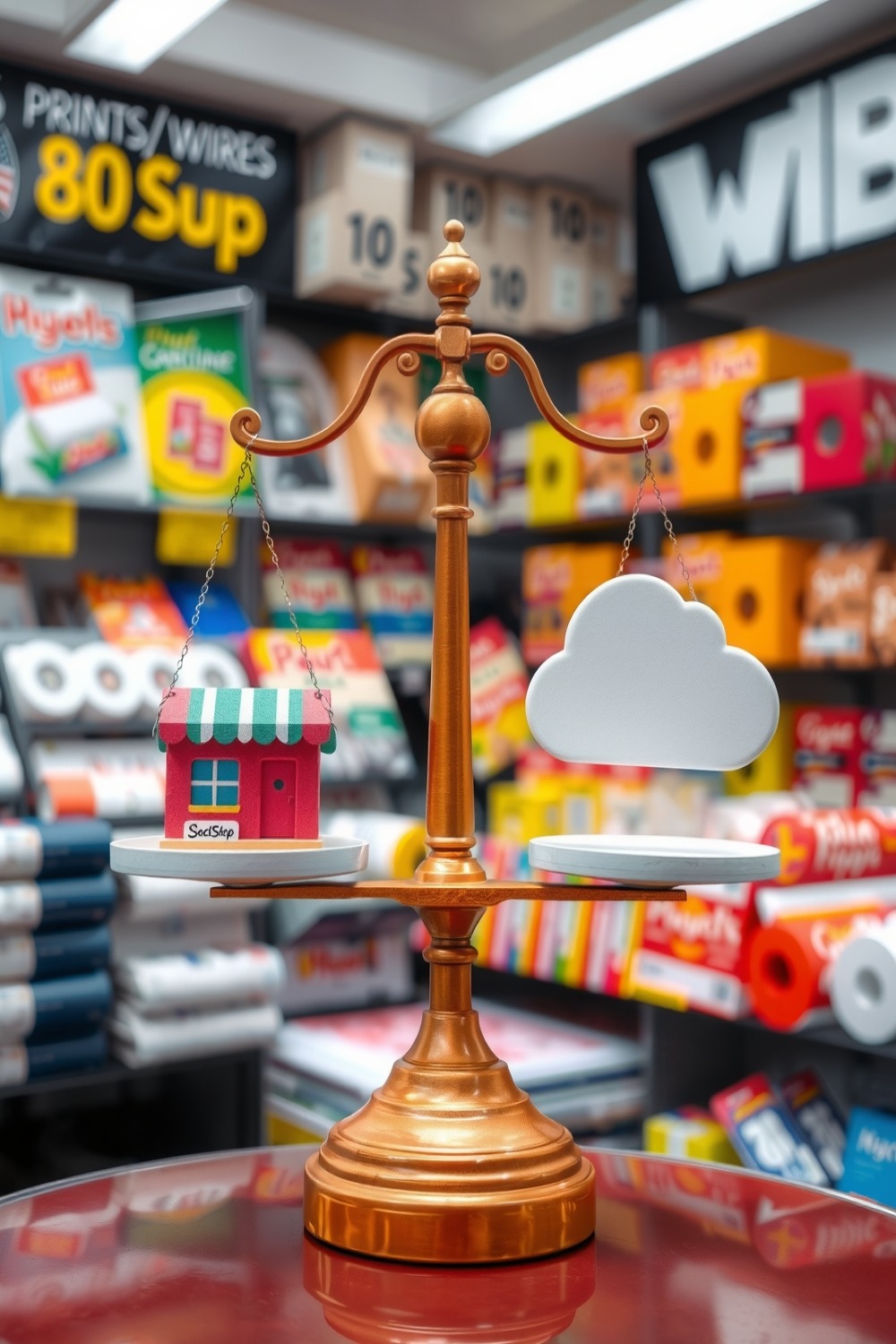
Print Marketing
🖨️ Flyers & Direct Mail
Physical presence. 79% recall. Geographic precision. Retained for 17 days avg.
VS
Digital Marketing
📱 Ads, Email & Social
Wide reach. Real-time data. Retargeting. Scroll-past risk in crowded feed.
The question every local business owner eventually asks: “Should I be spending my marketing budget on printed
flyers or digital advertising?” In 2026, this is a false choice — but it’s an important one to understand,
because the answer determines how effectively you allocate your marketing spend and whether you’re leaving
local customers unreached.
This guide provides a data-driven, head-to-head comparison of print marketing (specifically flyer and
postcard distribution) against the primary digital channels local businesses use: Facebook/Instagram ads,
Google Local ads, and email marketing. We examine each channel across six critical performance dimensions,
then provide an interactive calculator to model your own campaign ROI.
Head-to-Head: 6 Critical Performance Dimensions
⚖️ Print vs Digital Budget Comparison Calculator
Enter your monthly marketing budget to see modeled reach, impressions, and
conversions for print vs digital — for your local business.
🖨️ Print Campaign
—
📱 Digital Campaign
—
The Integrated Strategy Recommendation
The highest-performing local marketing strategy divides budget roughly 60% digital / 40% print for
brand-new businesses (digital builds faster awareness), and shifts to 50/50 or even 60% print / 40%
digital for established local businesses with a defined geographic customer base. Use digital for
tracking and reach; use print for trust, retention, and street-level geographic saturation that no
algorithm can match.
Channel-by-Channel Breakdown for Local Businesses
Channel
Avg CPM
Geographic Control
Trust Rating
Tracking
Best For
Flyer Distribution
$30–$80
Block-level ✅
High ✅
QR/Promo
Restaurants, salons, contractors, events
Direct Mail Postcard
$200–$400
Zip/Route ✅
High ✅
URL/Code
Real estate, professional services, retail
Facebook/Instagram Ads
$5–$25
Radius ✅
Low
Full ✅
Brand awareness, event promotion, retargeting
Google Local Ads
$50–$200 (CPC)
Radius
Medium
Full ✅
Intent-based searches (“near me”)
Email Marketing
$0–$20
List-based
Medium
Full ✅
Existing customer retention, loyalty
SMS Marketing
$30–$80
List-based
Medium
Click tracking
Flash sales, appointment reminders
The QR-Bridge: Turning Print into a Trackable Digital Campaign
The most significant evolution in print marketing over the past five years is the QR code bridge — a
technique that makes printed materials fully trackable in a digital analytics framework. The model works
like this:
Design a flyer with a prominent QR code that links to a campaign-specific landing page
(unique URL for each print batch)
Track landing page visits via Google Analytics — every scan is a measurable digital
event tied to the print campaign
Capture email or phone on the landing page to trigger digital follow-up sequences
Set up retargeting audiences from landing page visitors to serve Facebook/Google ads to
people who physically received and scanned your flyer
Close the loop — you can now attribute specific revenue back to a specific flyer
distribution run
This QR-bridge approach removes the “untrackable” objection to print marketing entirely and creates a
genuinely integrated campaign where print and digital each strengthen the other’s performance.
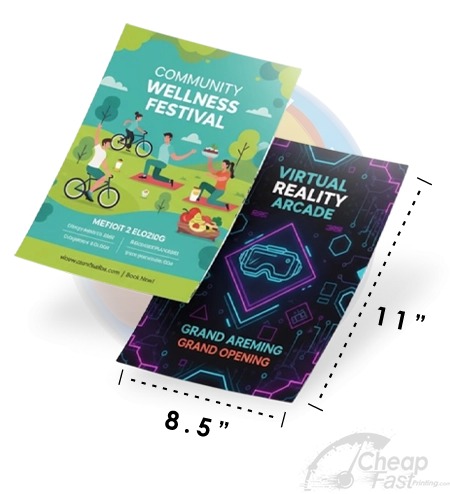
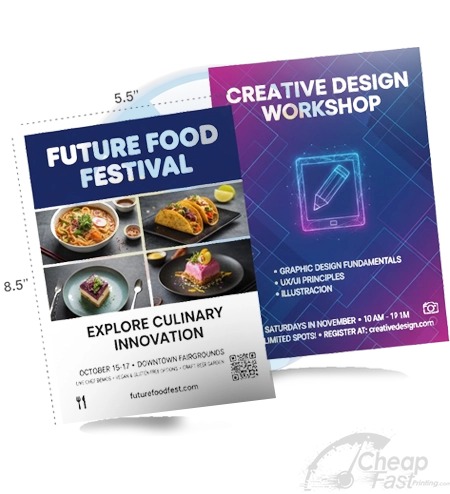
Browse 6 Print-Ready Formats for Integrated Campaigns
Yes — physical mail and printed materials have a 79%
recall rate versus 44% for digital ads (USPS 2025). Print’s effectiveness has increased as
digital ad fatigue grows — consumers now see 4,000–10,000 digital ads per day.
Q2How does flyer distribution compare to Google Ads for local businesses?
For hyper-local geographic reach, high-volume flyer
distribution delivers impressions at $0.03–$0.08 per contact vs Google Ads at $1–$5+ per click.
Flyers also deliver a tangible physical presence that digital ads cannot replicate.
Q3What is the ROI of flyer printing compared to Facebook ads?
On a $300 budget: 5,000 local flyers at $0.06/unit
delivers 5,000 physical impressions with high retention. $300 in Facebook ads delivers
3,000–8,000 digital impressions at 0.5–2% CTR. Flyers deliver physical retention that digital
cannot match.
Q4Do younger consumers respond to print marketing?
Yes — 84% of Millennials say printed materials feel more
personal than email, and 73% prefer physical coupons for redemption at local businesses.
Physical print is perceived as higher-effort, communicating that the business values the
relationship.
Q5Can print and digital marketing campaigns work together?
Absolutely. The QR-bridge model: print flyers with QR
codes → campaign-specific landing page → email capture → digital retargeting ads. This creates a
measurable digital trail from a physical print campaign.
Q6What type of local business benefits most from flyer printing?
Any business with a clearly defined local service area
and physical location: restaurants, salons, gyms, real estate agents, contractors, medical
practices, tutoring services, cleaning companies, and retail shops.
Q7What is CPM in print marketing vs digital?
Print CPM: $30–$80 for high-volume flyer distribution.
Facebook/Instagram local CPM: $5–$25. However, a physical flyer creates an in-hand contact that
is categorically different from a 2-second scroll-past impression.
Q8How long does a printed flyer stay in a customer’s home?
Households retain relevant print pieces for an average of
17 days. In contrast, the average email is archived or deleted within seconds. A retained flyer
can generate multiple impression opportunities from a single printed piece.
Q9Should I stop digital marketing and only use print?
No. The strongest recommendation is an integrated
strategy: print for geographic saturation and physical brand presence; digital for tracking,
retargeting, and scaled reach. Neither replaces the other.
Q10What is the best flyer size for direct comparison with a Facebook ad?
The 4×6 postcard (100lb gloss or 14pt cardstock) is the
closest physical analog to a Facebook/Instagram sponsored post — short headline, hero image, one
CTA. It can also be mailed at postcard rates, creating a combined campaign at very low
integrated cost.
🔒 Secured by 256-Bit SSL | Data Protection Guaranteed | 10,000+ Happy Customers | A+ Rating