


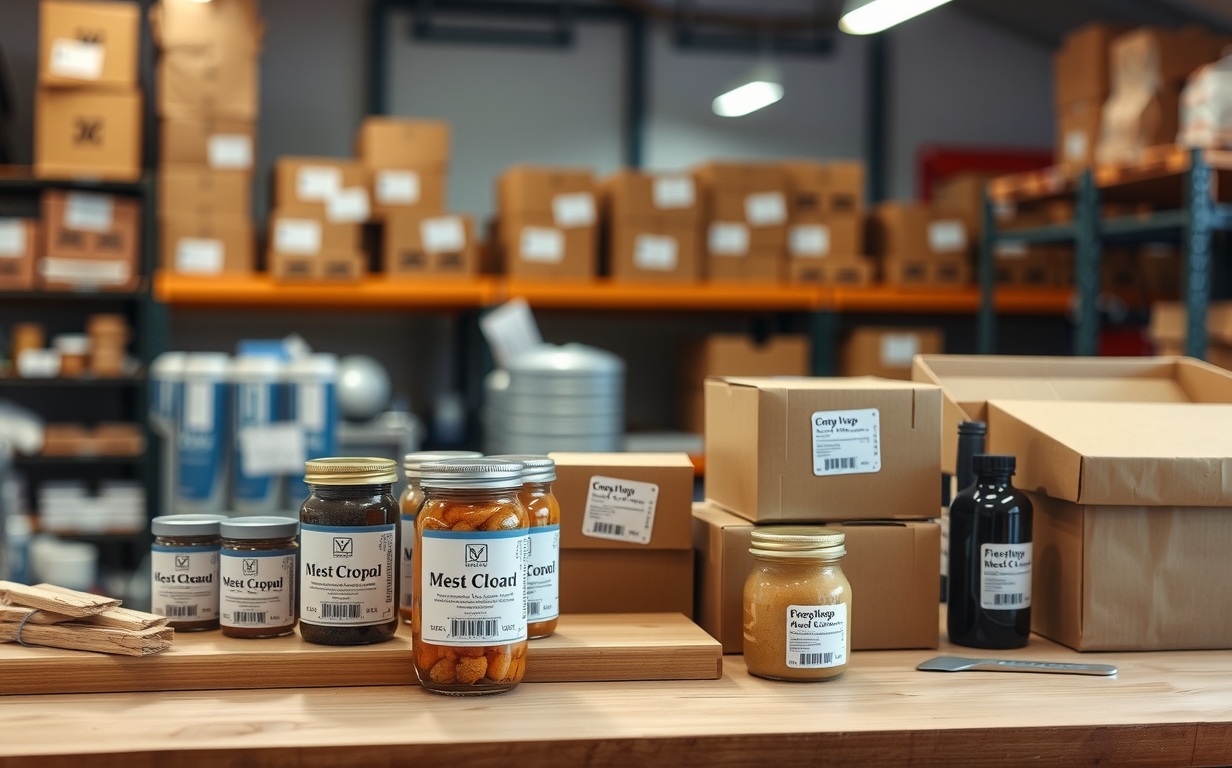
When people search for labels printing near me, they are usually not chasing theory. They need something practical. They may be labeling jars, bottles, retail packaging, shipping materials, event favors, or short-run products for a launch. The search sounds simple, but the order can go wrong fast when the buyer chooses based on distance alone instead of fit. A nearby option that uses the wrong stock, the wrong finish, or a weak artwork setup can create more delay than a smarter order placed with the right production path.
This is why the best starting point is the label job itself. Ask what surface the label touches, whether moisture or friction matters, how many versions exist, whether hand application or machine application is involved, and how much room the design truly needs. After that, compare printers. At CheapFastPrinting’s sticker and label product hub, the goal is to turn that confusion into a cleaner next step instead of pushing a generic “cheap” answer that later becomes expensive through waste, reprints, or weak packaging presentation.
Article Snapshot
The best labels printing near me choice is the one that fits your surface, environment, artwork, and schedule. Buyers save more money by reducing errors than by chasing the lowest headline price.
Narrow the decision to one finished size, one shape, one material direction, and one quantity scenario before asking for production. That one discipline usually makes the quote more accurate and the order safer.
Quick Answer on Labels Printing Near Me
Labels printing near me works best when the buyer uses the search as a starting point, not the final filter. Local can help when timing is urgent, proofing needs to move quickly, or the buyer wants a nearby relationship. Online can be better when the production path is stronger, the template support is clearer, or the pricing structure makes more sense for repeat orders. The smart choice is the option that reduces unknowns before the job starts.
That means a buyer should not begin by asking, “Who is closest?” The better question is, “What conditions must this label survive, and what mistakes would be expensive if I approve the wrong file today?” Once that is clear, you can compare local convenience, production consistency, proof speed, and shipping reality in a way that actually protects the order.

What buyers should identify before they compare printers
If the label goes on glass, plastic, cardboard, kraft paper, shrink wrap, or refrigerated packaging, the surface changes the decision. If the label will sit in sunlight, inside a bathroom, in a freezer, or on a shelf that gets constant handling, the finish changes the decision. If the label contains ingredients, warnings, barcodes, or lot details, the layout space changes the decision. Those factors come before “near me” because they define what a successful order even looks like.
Why “near me” can still be useful
The phrase still has value. It signals urgency, preference for easy communication, and a desire to shorten the path between question and answer. For some buyers, a local option helps with confidence. For others, the better path is a dependable online workflow that offers cleaner file prep, consistent production, and clear next steps. The search term is useful, but only when it leads into a better decision framework.
What Buyers Need to Know First
Most weak label orders fail early. The buyer approves artwork too quickly, assumes every adhesive behaves the same, or picks a size by visual guess instead of measuring the real container. Those mistakes are common because label ordering feels small. In reality, labels touch branding, compliance, shelf visibility, application speed, and customer trust all at once.
Surface, environment, and handling matter more than the phrase
If a label must survive refrigeration, moisture, or oils, the material decision matters more than the search phrase that brought the buyer to the page. If the label is part of a premium retail package, finish and appearance matter more than saving a few cents per piece. If the job is operational, like shipping or warehouse labeling, readability and adhesive behavior may matter more than visual beauty. The safest order starts by ranking those priorities honestly.
Local speed only helps if the file is ready
Even a nearby printer cannot rescue a confused file. If the art has no bleed, if safe areas are ignored, if the QR code sits too close to the trim, or if the copy block is oversized for the label face, the schedule gets weaker before production begins. That is why good template support matters. The buyer who confirms the file first often beats the buyer who chooses the closest vendor but sends unstable art.
Before you compare any quote, confirm four things: real container size, required shape, likely environment, and whether the label must feel premium or simply perform reliably. Those four answers remove most of the avoidable confusion.
How to Evaluate the Best Option
Once the job conditions are clear, compare the options by fit. Ask whether the printer gives you a practical template path, whether the proofing process is clear, whether the file-prep expectations are realistic, and whether the production route matches the label’s real use. A cheaper option is not better if it forces a reprint, looks crowded after trimming, or creates a package that feels weaker than the product inside it.
| Decision area | What to compare | What usually goes wrong |
|---|---|---|
| Size and shape | Real container measurements, shape fit, room for required text | Buyers choose a visually nice size that becomes cramped once compliance text or barcodes are added. |
| Material and finish | Moisture resistance, write-on need, brand feel, expected handling | A finish is picked for appearance only, then performs badly in real use. |
| Artwork prep | Bleed, safe area, resolution, readable hierarchy, proof clarity | The file looks acceptable on screen but trims too tightly or reads poorly on the final label. |
| Timing path | Proof speed, production window, shipping expectations after completion | The buyer treats shipping estimates like guarantees and leaves no room for proof or carrier variation. |
How to compare labels by use case instead of guesswork
A product label for a bottle, a mailing label, a barcode label, and a candle label may all seem similar at a glance, yet each one has a different failure point. Bottle labels reveal curvature and moisture issues. Mailing labels expose readability and adhesion concerns. Barcode labels punish low contrast or poor placement. Candle labels highlight texture, premium feel, and space discipline. Fit-based comparison is what turns a search into a solution.

What a strong proofing process should help you catch
A useful proof should help you spot hierarchy problems, trim risk, cramped text, weak contrast, and any mismatch between the label face and the container. It should also force the buyer to ask one more question: if this label prints exactly as shown, does it actually solve the job? Proofing is not only about whether the art looks attractive. It is about whether the finished piece will work in the field.
That is also why it helps to move from the educational guide into a real next-step product path once the buyer is ready. If you want to compare active options after reading, go to the labels and stickers product page, then keep the file-prep logic grounded with the full guideline-template library.
Real Image Set for This Article


Specs, Timing, and Budget Considerations
Budget questions matter, but labels become cheaper in the right way when the buyer reduces waste. A quote can look attractive and still produce costly reprints if the wrong material is chosen, the order size is unrealistic, or the artwork is never tested against the actual package. Smart budget planning for labels is really risk planning in disguise.
How quantity changes the smartest order
Higher quantities can lower unit pricing, but that does not automatically mean “buy as many as possible.” If the product formula, branding direction, packaging supplier, or legal wording may change soon, a huge order can lock the buyer into an outdated label. The smarter move is to align the order size with how stable the design truly is. That is often more valuable than chasing the lowest theoretical per-piece cost.
Decision Safety Checklist
| Question | Why it matters | Safer next move |
|---|---|---|
| Will the design change soon? | Large orders become waste if branding or regulations shift. | Use a smaller test run before committing deeper. |
| Does the container surface create risk? | Curves, moisture, and texture change how the label performs. | Test the file and material direction against the real package. |
| Is the schedule tight? | Rush orders amplify proof and shipping mistakes. | Reduce unknowns before production and confirm transit after completion. |
| Does the label need to feel premium? | Cheap-looking print can weaken shelf confidence. | Compare finish and tactile feel, not just price. |
Use the template step to remove avoidable errors
One of the easiest ways to reduce risk is to use a real guideline template before ordering. This protects bleed, safe area, and basic placement logic. It also makes it easier to tell whether the finished size supports the content you want on the label. Templates do not make every design good, but they remove a large chunk of preventable error.
Template and Guideline Resources
Use these real label template assets when you want to move from “I understand the topic” to “I can prepare the file safely.” The goal is not to overwhelm the buyer with every shape. It is to provide a few direct paths that make the next step clearer.
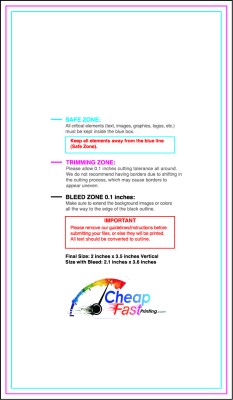
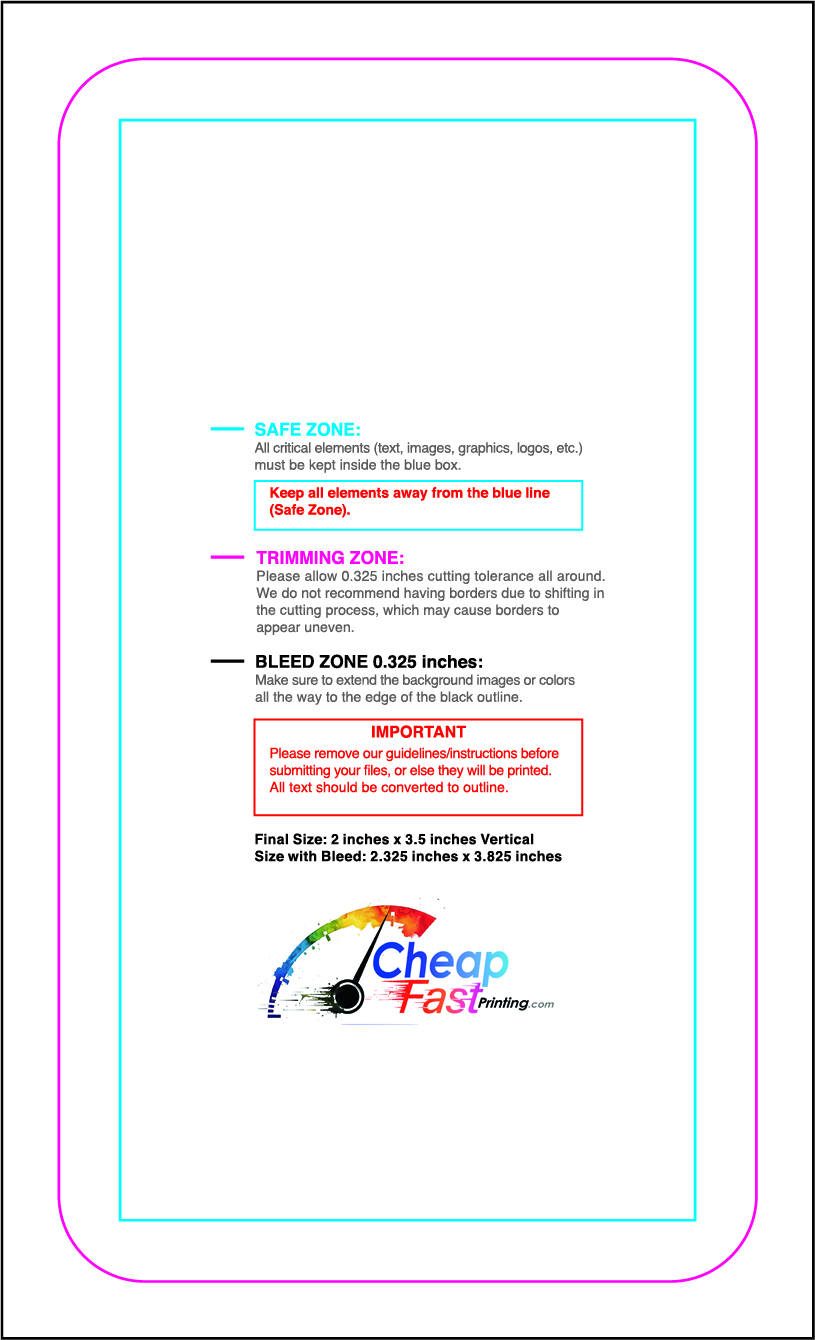
Useful when buyers want a familiar narrow shape for bottles, jars, packaging inserts, or small retail applications where space is limited but hierarchy still matters.
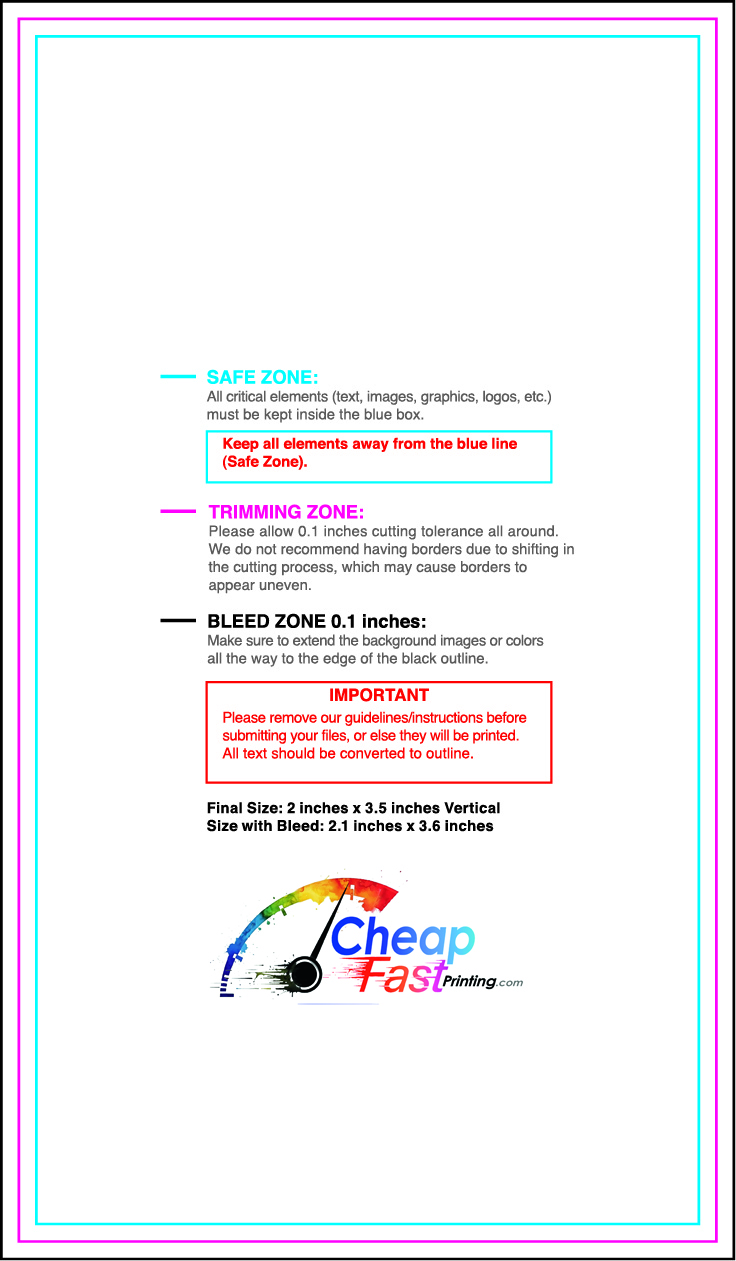
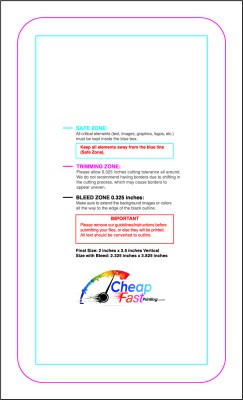
Helpful when the buyer wants a slightly softer label look without losing the vertical orientation that works well on slim products and compact branded packaging.
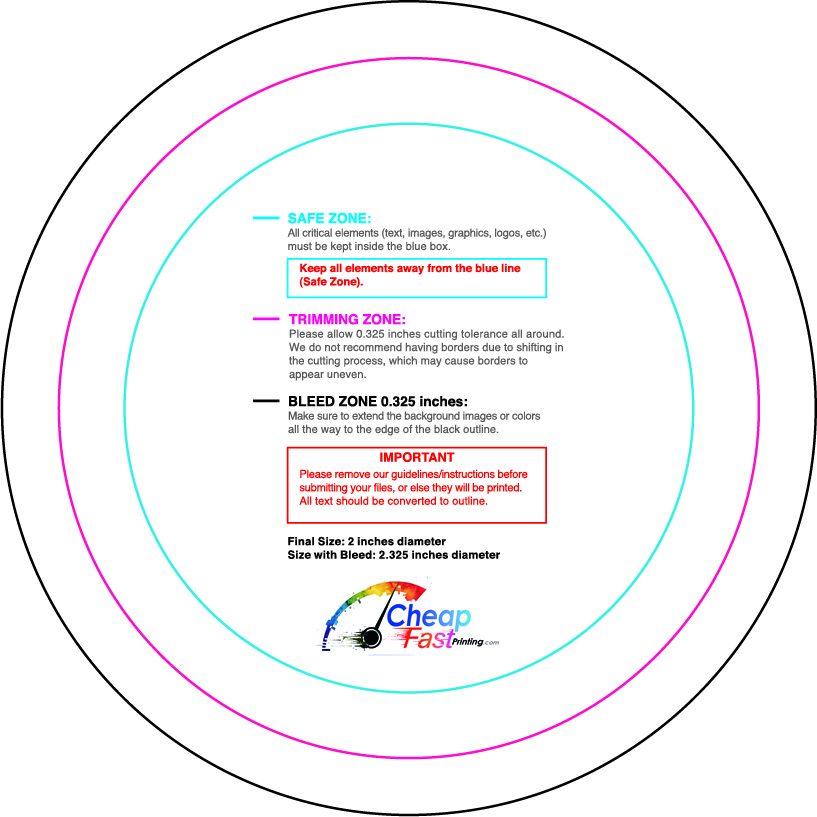
Useful for lids, seals, badge-style branding, thank-you stickers, and compact package moments where a round format supports the design better than a rectangle.
- Explore the live labels product page when you are ready to compare active options after measuring the actual package.
- Browse the full print-safe guideline library if you want more sizes, shapes, and file-prep references.
How Ground Shipping Timing Changes by State and Distance
Once a labels order leaves production, economical ground shipping from core regions such as New York, Rhode Island, Ohio, Texas, and California can often reach many destinations in about one to three business days. That does not mean every order always will. Production completion, route volume, carrier conditions, weather, and the final destination still matter. The useful message is not “guaranteed fast.” The useful message is that low-cost ground can still be surprisingly efficient after the job is complete.
For example, an order moving toward Albany, New York may behave differently from a shipment moving toward Miami, Florida depending on which production region releases the package and when the carrier scan occurs. That is why schedule planning should separate two realities: production timing and transit timing. Buyers who blend those into one promise often create preventable stress. Buyers who treat them as two separate checkpoints usually plan more safely.
If the job is schedule-sensitive, confirm live production timing first, then confirm the likely shipping window after release. That sequence is more reliable than making decisions from a generic “near me” assumption.
Common Mistakes to Avoid
Most label frustration comes from a few predictable mistakes. The first is picking a size before confirming how much information truly needs to fit. The second is assuming any glossy or matte finish will work on any container. The third is treating the proof as a visual formality instead of a real decision checkpoint. The fourth is trying to save money by ordering too deeply before the label has proven itself in the field.
Another common mistake is using “near me” as a shortcut for safety. Proximity does not automatically mean better communication, better setup, or better performance. A stronger workflow, a clearer template path, and more disciplined proofing can easily beat a closer option that never challenges the file or the job assumptions.
If you are narrowing a real order right now, measure the container, choose the likely shape, open the closest template match, and compare one quantity scenario that feels realistic instead of extreme. That is the fastest way to make the next conversation productive.
Frequently Asked Questions
Q1What should buyers know first about labels printing near me?Open
They should know the job conditions first. The surface, the environment, the quantity, the amount of required information, and the visual goal matter more than the search phrase itself. A label that must survive moisture, refrigeration, friction, or curved packaging needs a different decision path than a simple indoor hand-applied label.
The smartest first move is to identify what failure would hurt the order most. If poor adhesion would be disastrous, evaluate material and surface fit first. If the packaging must look premium to sell, evaluate finish and hierarchy first. If the schedule is tight, evaluate proof readiness and production timing first. That sequence turns a vague local search into a real solution path.
Q2How do I choose the right labels setup for this topic?Open
Start by matching the setup to the use case. Product packaging, jar labels, mailing labels, barcode labels, candle labels, and event labels may all look related, but they solve different problems. The right setup must support the surface, the environment, the readability need, and the application method at the same time.
A useful next step is to narrow the order to one realistic scenario: one package type, one size range, one shape, and one quantity direction. From there, test the artwork inside a real template. That usually reveals whether the setup is truly practical or only looks fine in theory.
Q3What details affect quality the most?Open
Size discipline, safe area, bleed, material choice, contrast, adhesive fit, and finish usually affect label quality more than buyers expect. A cheap-looking result often comes from one structural mistake rather than from the entire print process. Cramped copy, weak contrast, or a poor match between label and surface can undermine an otherwise decent order.
That is why quality should be judged by usability and outcome, not just by whether the print appears sharp. If the label peels, wrinkles, becomes hard to read, or feels wrong for the brand, the order was not high quality even if the presswork itself was clean.
Q4How do budget and quantity change the decision?Open
Budget and quantity change risk. Larger runs may lower the unit price, but they also increase the cost of being wrong. If branding, legal wording, packaging dimensions, or seasonal messaging might shift soon, ordering too deeply can waste more money than it saves.
A safer approach is to ask what is stable right now. If the design is still evolving, a smaller proof-oriented batch may be the smarter spend. If the product line is stable and the label setup is already proven, a larger order can make sense. The best budget decision is the one that protects the buyer from preventable waste.
Q5What mistakes should I avoid before ordering?Open
Do not approve the label before checking how it sits on the real package. Avoid choosing a size by eye only, assuming every adhesive works the same, or packing too much copy into a face area that needs breathing room. Buyers also get into trouble when they trust a screen preview more than a structured template or a careful proof.
The quickest fix is to slow down just enough to test the file against reality. Measure the container, open the guideline file, confirm the hierarchy, and ask what the label must survive after it is applied. Those checkpoints usually prevent the most expensive errors.
Q6How does turnaround time affect planning?Open
Turnaround matters because every unknown becomes more dangerous when the schedule tightens. A rushed label job can still succeed, but the art must be ready, the size must be settled, and the material path should not be a guess. Proof delays, missing bleed, or last-minute copy changes are more harmful than the print window itself.
The safest rush plan is simple: reduce the number of open questions before production begins, then confirm shipping after the job is complete. That protects the timeline much better than assuming a local search automatically guarantees a faster finish.
Q7When should I choose a premium option instead of a basic one?Open
Choose the premium path when the label directly shapes how the product feels to the buyer. Shelf presence, tactile quality, moisture resistance, or finish quality can justify a stronger option when the label is part of the brand experience instead of just an identifier. A low-cost label on a premium product can weaken trust quickly.
The right question is not whether premium sounds nice. It is whether the upgraded material or finish solves a real business problem. If it helps the product sell better, look cleaner, survive use, or feel more aligned with the price point, the premium route may be the more economical decision over time.
Q8What information helps me get an accurate quote faster?Open
Provide the finished size, intended shape, quantity, container or surface type, artwork status, timing goal, and any special requirements like refrigeration, oil exposure, write-on use, or scannable barcodes. That detail lets the quote respond to the real job instead of offering a vague baseline that still leaves major decisions unresolved.
If possible, also say whether the design is final or still evolving. That helps the production path match the level of risk in the order. The faster the quote becomes specific, the faster it becomes useful as a decision tool rather than a rough placeholder.
Q9How do I know this option fits my project goals?Open
A good option supports the actual goal behind the label. That could mean stronger shelf presentation, clearer compliance, faster fulfillment, easier application, or a more premium customer experience. If the option only looks good because the price is low, but creates stress or weakness during real use, it does not truly fit the project.
The easiest self-check is to ask what success looks like after the label is applied. If the label must sell the product, build confidence, or survive rough handling, judge the option against that result. That mindset often makes the best choice clearer.
Q10What is the smartest next step after researching labels printing near me?Open
The smartest next step is to stop browsing broadly and narrow the order. Pick the most likely finished size, choose the closest shape, decide whether the job needs a basic or premium feel, and open a relevant template. That converts the research phase into something practical.
Then compare one realistic quantity scenario and move into a live product path. When the buyer reaches that point with fewer unknowns, the conversation about cost, timing, and production becomes much more useful.
Q11How should buyers estimate labels delivery timing for Albany, New York with economical ground shipping?Open
They should estimate it after production is complete, not before. Once the job is released to the carrier, many ground routes from New York, Rhode Island, Ohio, Texas, and California can move efficiently, but actual timing still depends on carrier routing, release time, and real network conditions.
The safer wording is that ground can often be quick after completion, not that every order is guaranteed inside the same window. Buyers who keep production and transit as separate checkpoints make better timing decisions and avoid unnecessary disappointment.
Q12Can a labels order often reach Miami, Florida in about 1 to 3 business days once production is complete?Open
It can happen on many routes, but buyers should still treat it as conditional instead of automatic. Production origin, carrier cutoffs, route congestion, weather, and the day the order actually enters transit all shape the result. That is why timing claims should stay careful and contextual.
The solution-oriented way to plan is to confirm the live production status first, then confirm the most likely ground window when the shipment is ready to move. That protects the schedule better than building a promise around the phrase “near me.”