

Choosing the right paper for your promotional flyers is one of the most impactful decisions in your entire printing process — and one that many businesses delegate to default settings without thinking through the implications. The paper specification you select determines not just how the flyer looks once printed, but how it feels in a recipient’s hand, how long it survives in its distribution environment, how accurately colors reproduce, and — most importantly — what your brand communicates through touch alone before the first sentence is read.
This guide provides a systematic decision framework for promotional flyer paper selection, organized around the four primary decision factors that should drive your choice: campaign context, budget constraints, distribution method, and brand positioning.
Answer 3 questions to get your recommended paper specification instantly.
The 4 Factors That Determine the Right Promotional Flyer Paper
Every paper specification decision flows from the same four underlying factors. Get clarity on these before touching the order form:
Factor 1: Campaign Context
Event promotion and restaurant marketing are image-driven contexts where visual vibrancy is everything — these demand UV Gloss coated papers. Corporate financial and legal service promotions are trust-driven contexts where text legibility and professional restraint matter more than color pop — these demand matte coatings. Mapping your context correctly to coating type prevents the most common paper mismatch.
Factor 2: Budget Tier
Professional printing does not require premium cardstock for every campaign. 80lb Gloss Text at $0.05/unit and 14pt Cardstock at $0.20+/unit are both legitimate professional choices — but for entirely different campaign types. Over-specifying premium paper for a 10,000-unit door-drop campaign wastes significant budget. Under-specifying economy paper for a luxury real estate listing presentation undermines your brand.
Factor 3: Distribution Method
The physical journey your flyer takes determines the minimum durability required. A flyer handed personally at an indoor event needs minimal durability. A flyer mailed USPS needs enough rigidity to survive postal handling. A flyer stapled to an outdoor board for two weeks needs UV coating and moisture resistance. Your distribution context sets the floor on material requirements.
Factor 4: Brand Positioning
Every flyer is a physical brand ambassador. A luxury real estate brand handing out 80lb economy flyers at an open house is communicating something contradictory about its positioning. A startup community event distributing 14pt premium cardstock is spending money that would be better invested in higher distribution volume. The paper must match the brand tier consistently.
Step-by-Step Paper Selection Process
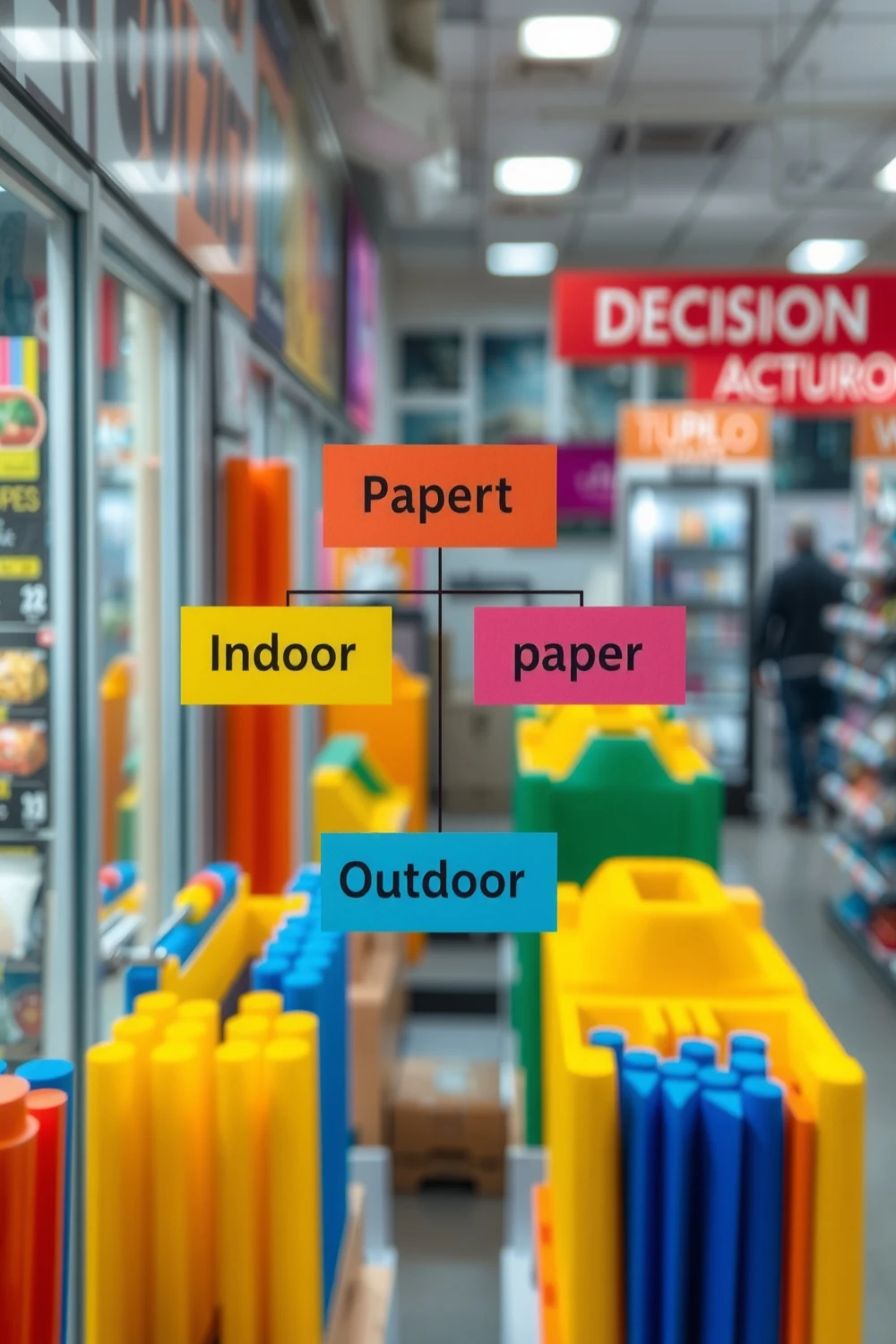
Identify Your Distribution Environment
Indoor? Outdoor? Mailed? Handed? The environment determines durability requirements. Outdoor and mail require UV gloss minimum. Indoor display can use either coating.
Identify Your Design Type
Photography and bold graphics → UV Gloss. Text-heavy corporate content → Matte. Mixed → Choose Silk with satin sheen for the balanced middle ground.
Set Your Campaign Quantity
Higher quantities = correct to use economy paper since the distribution context (wide-area drops) inherently reduces per-unit value expectations. Lower quantities = acceptable to upgrade to premium paper since each individual flyer carries more brand weight.
Confirm Brand Positioning
Does your paper choice match your brand tier? Premium brand on economy paper = brand damage. Economy brand on premium paper = budget waste. Align consistently.
Order with Free Design Review
Upload your file to CheapFastPrinting. Our team verifies your paper spec against your design, confirms it is print-ready, and issues a digital proof — all at zero additional cost.
Matching Paper to Budget: Economy, Standard, and Premium
- Economy (80lb Gloss, $0.05–$0.07/unit at 5,000): Perfect for door-drop campaigns, event handbills, insert programs. Adequate quality for most promotional contexts at maximum volume.
- Standard (100lb Gloss with UV, $0.07–$0.12/unit at 1,000): The professional sweet spot. Used for the vast majority of professional business flyer campaigns — restaurants, retail, events, real estate standard listings.
- Premium (14pt Cardstock, $0.15–$0.25/unit at 1,000): Reserved for campaigns where individual flyer quality is a brand statement. Luxury real estate, premium events, executive presentations, restaurant menus.
How Distribution Method Dictates Paper Choice
The three distribution circumstances that override all other paper considerations:
- USPS Direct Mail: Requires minimum thickness for postal handling (14pt cardstock for postcard format). Thin paper crumples, bends, and arrives damaged. USPS size and weight standards must also be met for postcard bulk mailing rates.
- Outdoor Posting: Requires UV coating for moisture and UV light resistance. Without coating, outdoor flyers degrade visibly within 24–48 hours depending on weather exposure.
- High-Traffic Hand Distribution: Requires sufficient weight to survive multiple handlings without corner damage. 80lb minimum; 100lb preferred. Flyers handled many times by multiple people before reaching their final reader need inherent durability.
Browse 6 Paper-Matched Promotional Flyer Formats