


When most retailers think about hang tags, they picture simple price markers dangling from merchandise. But folded hang tags printing transforms these humble labels into powerful storytelling devices. Within the first glance at your product, a well-designed multi-panel tag can educate customers, reinforce brand values, and even drive repeat purchases through hidden coupons or loyalty codes.

We’ve worked with hundreds of brands who initially dismissed the extra cost of folded tags, only to discover that the additional panels paid for themselves through reduced customer service calls about care instructions and increased social media engagement when customers photographed the “unfolding experience.” The question isn’t whether these booklet-style tags work, but rather when they justify the investment over standard single-panel options.
Anatomy of a Folded Tag: Understanding the Multi-Panel Advantage
Unlike traditional hang tags that display information on one or two flat surfaces, folded hang tags printing creates a miniature brochure attached directly to your product. The most common configurations include bi-fold designs (four printable panels) and tri-fold formats (six panels), though custom accordion styles can extend even further for luxury applications.
The magic happens in how these panels reveal information progressively. The front cover establishes immediate visual identity with your logo and perhaps the price point. The first interior spread might showcase your brand story or sustainability commitments. The back panel typically houses practical information like care symbols, size charts, or QR codes linking to extended content.
Real-World Impact: A boutique clothing brand we partnered with reduced fit-related returns by 23% simply by adding a detailed size comparison chart to the inside panel of their folded hang tags. Customers could reference the measurements at home before washing, preventing the “I thought it would fit differently” scenarios that plague online apparel sales.
The physical act of unfolding creates a tactile engagement point that single-panel tags cannot replicate. Luxury brands particularly leverage this “reveal moment” to mirror the experience of opening a gift or discovering something precious. Each fold transition becomes an opportunity to deepen the customer’s connection with your product before they’ve even made the purchase decision.
When Folded Tags Justify Their Premium: Strategic Use Cases
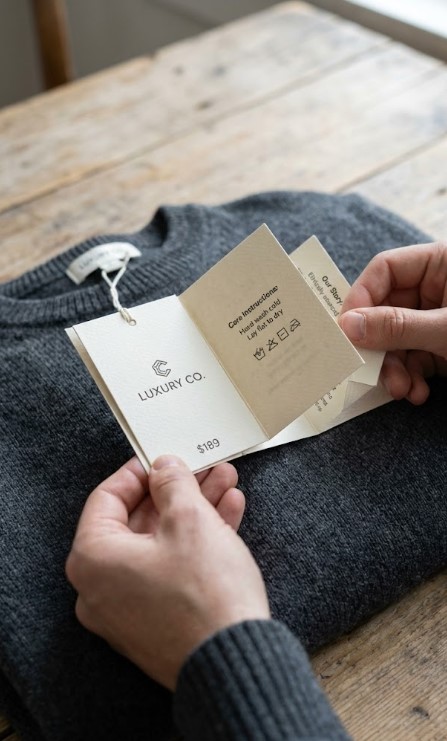
Not every product category benefits equally from the investment in folded hang tags printing. The decision should align with your specific business objectives and customer behavior patterns. Here’s where we consistently see the strongest return on investment:
Premium and Luxury Retail Applications
High-end fashion, jewelry, and specialty goods demand packaging that communicates value at every touchpoint. A $200 sweater with a flimsy single-panel tag creates cognitive dissonance. Folded tags with thick cardstock, embossed logos, and metallic finishes signal that every detail has received careful attention.
These customers often keep tags attached longer (or even save them as keepsakes), meaning your brand message continues working long after the initial purchase. We’ve documented cases where customers photographed elaborate folded tags and shared them on social media, generating thousands of impressions of organic brand exposure.
Products Requiring Detailed Care Instructions
Textile items, handmade goods, and specialty materials benefit tremendously from dedicating interior panels to comprehensive care guidance. Rather than cramming tiny symbols onto a standard tag, folded formats allow you to include:
- Step-by-step washing instructions with temperature specifics
- Storage recommendations that preserve product quality
- Troubleshooting tips for common issues
- Warranty information and customer service contacts
This educational approach reduces post-purchase anxiety and positions your brand as a helpful resource rather than just a vendor. Customers who successfully care for their purchase using your guidance develop stronger brand loyalty.
Storytelling for Artisan and Sustainable Brands
Consumers increasingly want to know the “why” behind their purchases. Folded hang tags provide the perfect canvas to share origin stories, introduce the makers, or explain sustainable practices without cluttering your primary product display.
A coffee roaster might dedicate one panel to the farmer who grew the beans, another to their direct-trade practices, and a third to brewing recommendations. This narrative depth transforms a commodity purchase into a meaningful transaction that customers feel good about repeating.
Experience the Unfolding Effect
Click the tag below to see how information reveals itself across multiple panels
LUXURY CO.
$189
100% Merino Wool
Care Instructions:
• Hand wash cold
• Lay flat to dry
• Do not bleach
• Iron low heat
Our Story:
Ethically sourced from New Zealand farms
Click to flip and reveal interior content
Promotional and Loyalty Program Integration
Hidden coupons or loyalty codes tucked inside folded panels create delightful surprise moments that encourage repeat purchases. Unlike prominent discounts that might cheapen perceived value, these subtle inclusions reward attentive customers without broadcasting “sale item” messaging to casual browsers.
The physical separation also allows you to include time-sensitive offers without interfering with your timeless brand presentation on the exterior panels. A customer might rediscover their tag months later and return for another purchase using a code they had forgotten about.
Creative Layout Ideas: Maximizing Your Panel Real Estate
The strategic arrangement of content across multiple panels determines whether your folded hang tags printing investment delivers results or becomes expensive clutter. These layout approaches have proven particularly effective:
The Progressive Reveal Strategy
Structure information from immediate to supplementary as customers unfold the tag. Front panel: brand identity and price. First interior: key product benefits or materials. Second interior: care instructions and warranty. Back panel: social media handles and loyalty program details.
This hierarchy ensures that even customers who don’t fully unfold the tag still receive your most important messages, while curious buyers find additional value in exploring further.
Visual Storytelling With Before/After Comparisons
Fashion and home goods brands effectively use interior panels to show styling inspiration or product applications. A throw pillow tag might include interior photos of the pillow styled in different room settings, helping customers visualize the purchase in their own homes.
The Educational Mini-Guide Format
Position your brand as an expert resource by dedicating panels to teaching customers something valuable related to your product. A leather goods company might include a panel explaining leather grades and how to identify quality. This educational content builds trust while justifying premium pricing.
Scoring Technicalities: The Engineering Behind Perfect Folds
The physical production of folded tags requires precise scoring to ensure clean folds without cracking or splitting the cardstock. Scoring creates a controlled weak point along the fold line where the paper compresses rather than tearing under stress.
Two primary scoring methods dominate the industry. Rotary scoring uses a circular blade and matching grooved anvil to compress fibers along the fold line, ideal for thinner stocks up to 16pt. Flatbed die scoring employs a scored rule within a die to channel material, better suited for thick cardstocks above 18pt where rotary scoring might crush the material.
Safe Zone and Bleed Requirements for Fold Lines
Understanding these technical zones prevents critical information from disappearing into the crease
Panel 1 (Front)
Safe Zone: 0.25″ from fold
Bleed Zone: 0.125″ past edge
Keep logos and text within safe zone to prevent cutting into fold compression area
Panel 2 (Interior)
Safe Zone: 0.25″ from fold
Bleed Zone: 0.125″ past edge
Background colors should extend into bleed to avoid white gaps when trimmed
Pro Tip: Text running parallel to the fold line needs extra clearance (0.375″ minimum) because readers’ eyes track along those lines naturally, making placement errors more noticeable than perpendicular text.
The scoring depth must balance opposing requirements. Too shallow and the fold remains stiff, potentially cracking with repeated opening. Too deep and the score weakens the structural integrity, causing tags to separate prematurely. Professional print providers typically test-score material samples before full production runs to dial in the optimal depth for your specific cardstock weight and coating.
Grain direction matters significantly for folded tags. Paper fibers naturally align during manufacturing, creating a “grain” direction where folding parallel to these fibers produces cleaner results than folding against the grain. Specifying that scores run with the grain reduces the risk of rough, frayed fold lines that undermine the premium presentation you’re investing in.
When NOT to Use Folded Tags: Cost-Benefit Realities
Honesty about limitations serves you better than universal recommendations. Several scenarios make standard single-panel tags the smarter choice despite the appeal of multi-panel designs.
High-Volume Budget Items
Folded tags can double or triple per-unit costs
Fast turnover means tags rarely get fully examined
Low margins can’t absorb premium packaging costs
Better Alternative: Invest in eye-catching single-panel design with QR code linking to digital content
Minimal Information Requirements
Empty panels look wasteful rather than luxurious
Forcing content creates unnecessary clutter
Simple products communicate better with clean, sparse design
Better Alternative: Premium cardstock single panel with embossing or specialty finishes
Products With Short Shelf Life
Perishables or seasonal items get discarded quickly
ROI period too short for brand storytelling investment
Customers prioritize product freshness over packaging
Better Alternative: Eco-friendly single panel emphasizing sustainability over complexity
The calculation becomes particularly important for emerging brands operating on tight budgets. That $0.45 per-unit cost difference between folded and standard tags might seem trivial until you multiply it across 5,000 units. That’s $2,250 that could alternatively fund social media advertising, improved product photography, or inventory expansion.
Consider also the hidden costs beyond printing. Folded tags require more careful handling during attachment to prevent premature folding or damage. They occupy more storage space. They may need special protective packaging if shipped separately from products. These operational complexities deserve consideration alongside the pure printing expense.
Luxury Brand Case Studies: The Unfolding Experience as Brand Signature
High-end retailers have transformed the simple act of unfolding a tag into a memorable brand moment that customers actively seek out and share. These examples illustrate sophisticated implementations worth studying regardless of your price point.
One notable fashion house uses a tri-fold tag where each panel reveals a different aspect of their heritage. The front establishes current season branding. First interior panel shows black-and-white archival photographs from their founding atelier. Second interior shares the specific artisan who crafted that particular garment, complete with their signature. The back provides care instructions alongside a personal note from the creative director.
This approach accomplishes multiple objectives simultaneously. It educates customers about brand history, creating emotional connection beyond the immediate garment. It personalizes mass production through artisan attribution, justifying premium pricing. Most cleverly, it gives customers something worth photographing and sharing, generating organic marketing at zero additional cost.
Another luxury skincare brand includes a fold-out application guide with product-specific techniques illustrated through simple line drawings. Rather than generic “apply to clean skin” instructions, they demonstrate massage patterns, layering sequences, and pressure points. Customers report feeling like they’re accessing insider expertise, which increases perceived value and encourages exploration of additional products in the line.
Emotional Design Principle: The physical act of unfolding creates anticipation. Our brains interpret progressive reveal as more valuable than information presented all at once. This psychological trigger works whether you’re selling $50 candles or $500 shoes, you’re simply calibrating the sophistication level to match your brand positioning.
The most successful implementations make the folded format feel essential rather than excessive. Every panel serves a clear purpose that couldn’t be achieved as effectively through other means. The moment a customer thinks “this could have been a regular tag,” you’ve lost the value proposition that justified the extra investment.
Making the Decision: Your Folded Tag Readiness Checklist
Before committing to folded hang tags printing for your next production run, evaluate your readiness against these criteria. Meeting most of these conditions suggests you’ll extract genuine value from the multi-panel format:
- Your product price point supports at least $0.40-0.60 per unit in packaging costs without materially affecting margins
- You have substantive content to share that educates or inspires rather than just fills space
- Your target customers value brand story and detailed product information, demonstrated through engagement with your existing content
- The physical product benefits from care instructions or usage guidance beyond basic symbols
- Your brand positioning emphasizes craftsmanship, sustainability, or luxury where premium packaging supports core messaging
- You can commit to high-quality design across all panels, avoiding the temptation to cut corners on interior content
- Your retail or online presentation gives customers time to examine products closely rather than encouraging rushed decisions
If you’re meeting four or fewer of these criteria, consider starting with enhanced single-panel tags and testing customer response before making the leap to folded formats. Sometimes the smartest packaging decision is recognizing where your resources create the strongest impact, even if that means choosing a simpler solution executed brilliantly over a complex one done adequately.
The brands that succeed with folded hang tags treat them as miniature brand experiences rather than expensive labels. They invest in copywriting, photography, and design at the same level they would for a product landing page or catalog spread. When you approach each panel with that level of intention, the unfolding moment becomes something customers remember and associate with your commitment to quality in every detail.
Download Hang Tag templates or request a free hang tag design here