


Sustainable Retail Packaging
Transform Your Brand with Eco-Friendly Hang Tags That Customers Love
The ultimate guide to sustainable design choices that reduce environmental impact while elevating your retail presence.
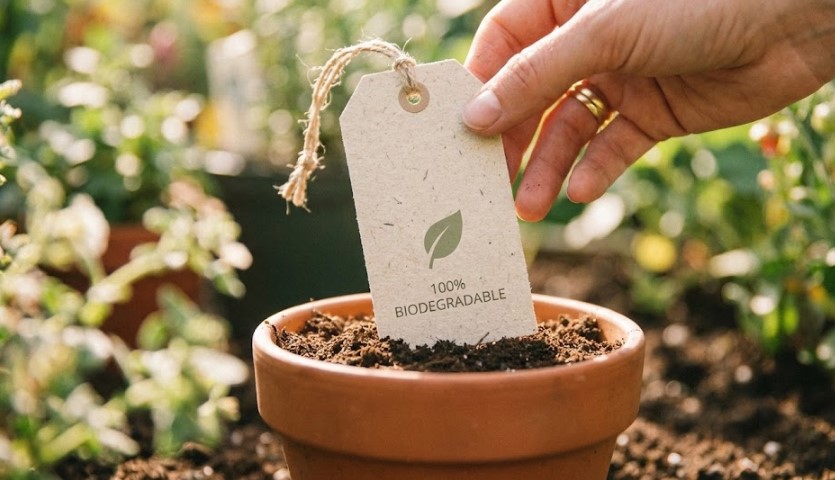
When shoppers discover eco-friendly hang tags attached to your products, they’re witnessing your commitment to environmental responsibility before they even make a purchase. These small but powerful branding elements have evolved beyond simple price indicators—they now serve as tangible proof that your company prioritizes sustainability alongside style. In an era where consumers actively seek brands aligned with their values, choosing recycled paper tags and biodegradable labels isn’t just good ethics; it’s essential business strategy that resonates with the conscious consumer movement shaping retail in 2026.
The shift toward sustainable packaging represents more than a passing trend. Retailers who embrace ethical retail branding discover that customers not only appreciate environmentally responsible choices but actively share their positive experiences through social media and word-of-mouth recommendations. Beyond customer loyalty, you’ll find that modern eco-friendly materials often cost less than traditional options while delivering superior quality that withstands handling throughout the supply chain.
Understanding the Environmental Impact of Traditional Hang Tags
Before we explore sustainable alternatives, it’s worth examining why conventional hang tags create environmental challenges that forward-thinking brands are working to solve. Traditional tags typically rely on virgin paper stock treated with chemical coatings, synthetic dyes, and plastic string attachments that contribute to landfill waste. When you multiply these materials across thousands or millions of products, the cumulative impact becomes staggering—yet entirely preventable through thoughtful material selection and design choices that don’t compromise visual appeal.
Manufacturing processes for conventional tags often involve bleaching agents, petroleum-based inks, and energy-intensive production methods that release significant carbon emissions. While these tags might appear innocuous, their lifecycle from forest to landfill carries an environmental cost that today’s consumers increasingly reject. The good news is that switching to eco-friendly hang tags doesn’t require sacrificing quality, durability, or aesthetic sophistication that your brand identity demands.
Materials That Define Modern Eco-Friendly Hang Tags
Selecting the right sustainable material forms the foundation of your environmental commitment, and today’s options offer remarkable versatility that adapts to virtually any brand aesthetic or budget constraint.
Recycled Paper Tags
Recycled paper tags crafted from post-consumer waste deliver the familiar texture and printability of traditional stock while diverting materials from waste streams. These papers accept digital and offset printing beautifully, allowing you to maintain brand consistency without any visual compromise that might concern design-conscious teams.
Seed Paper Innovations
Seed paper represents one of the most innovative developments in sustainable packaging, transforming your hang tags into plantable gifts that grow into wildflowers, herbs, or vegetables after customers remove them from purchased items. Made from biodegradable fibers embedded with non-GMO seeds, these tags create memorable unboxing experiences that customers photograph and share online, essentially turning your packaging into organic marketing content. While seed paper costs slightly more than recycled options, the brand storytelling value and customer engagement potential often justify the investment for boutique retailers and conscious luxury brands.
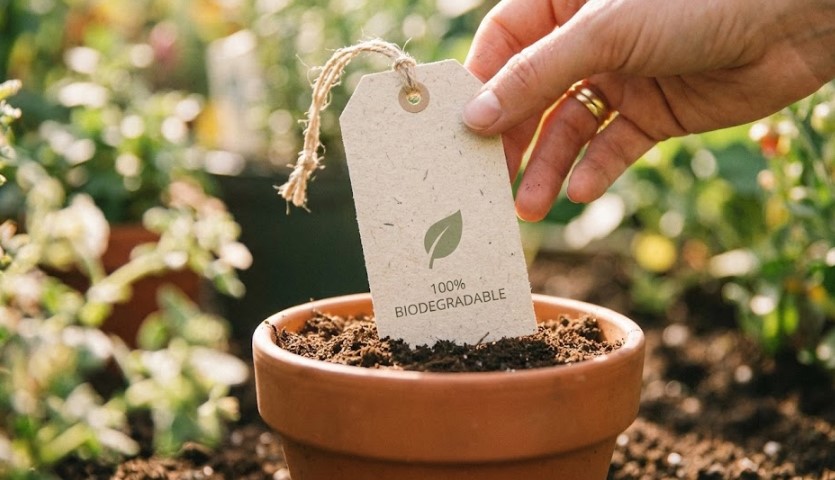
Hemp fiber tags bring exceptional durability and natural antimicrobial properties to your packaging strategy. This rapidly renewable resource requires minimal water and no pesticides during cultivation, making it one of the most environmentally sound choices available. The texture offers a distinctive tactile quality that communicates premium positioning while remaining fully biodegradable at end-of-life. Retailers in the outdoor, wellness, and natural beauty sectors particularly favor hemp for its authentic connection to earth-conscious values their customers embrace.
Cotton paper derived from textile manufacturing scraps provides another compelling option that prevents industrial waste while creating luxuriously soft hang tags with exceptional longevity. This material works especially well for high-end fashion brands seeking to convey sophistication through tactile experience. The natural fibers accept letterpress and foil stamping beautifully, enabling elegant finishes that rival any conventional luxury packaging approach.
Design Strategies That Amplify Your Sustainability Message
Your commitment to eco-friendly hang tags deserves design execution that clearly communicates environmental values without overwhelming the aesthetic sensibility your brand has carefully cultivated. Minimalist layouts with generous white space allow the natural beauty of recycled or seed paper to shine through, creating visual interest through material choice rather than excessive ink coverage that would undermine sustainability goals. Typography selection matters here—clean, modern fonts convey contemporary environmental consciousness while ornate scripts can suggest heritage craftsmanship, depending on your brand positioning.
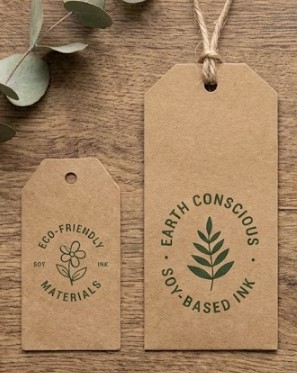
Color selection significantly impacts both environmental footprint and visual impact. Soy-based and vegetable inks offer eco-friendly alternatives to petroleum-based options, delivering vibrant colors that don’t fade during handling or exposure to light. Earth tones like sage green, terracotta, warm brown, and ocean blue naturally complement sustainable materials while psychologically reinforcing environmental messaging. That said, don’t feel constrained to stereotypical “eco” colors if your brand identity calls for bold, energetic palettes—modern sustainable inks reproduce virtually any hue you envision.
Incorporating transparency about your materials builds trust and educates customers simultaneously. A simple line like “Printed with soy inks on 100% recycled paper” or “Plant these tags to grow wildflowers” transforms your hang tag into a mini sustainability lesson that customers appreciate and remember. This educational approach positions your brand as a thought leader in ethical retail branding rather than merely following trends because market research suggested you should.
Attachment Methods That Complete Your Sustainable Approach
Even the most environmentally responsible hang tag loses credibility if attached with plastic fasteners or synthetic ribbon that contradicts your sustainability message. Cotton twine, hemp cord, and recycled fabric strips provide attractive attachment options that complement natural paper fibers while maintaining complete biodegradability. These materials come in various colors and thicknesses, allowing you to match or contrast with your tag design for added visual interest that catches attention on crowded retail displays.
Safety pins crafted from recycled metal offer durability for heavier items while remaining fully recyclable at end-of-life. This traditional fastening method has experienced renewed popularity among vintage-inspired and heritage brands that appreciate the nostalgic aesthetic. For lightweight items, small wooden clips made from sustainably harvested bamboo provide a unique attachment point that customers often repurpose for photos, plants, or kitchen organization—extending your brand presence beyond the initial purchase.
Some forward-thinking brands have eliminated separate attachment hardware entirely by incorporating perforated tabs directly into their hang tag designs. This integrated approach reduces material usage and simplifies production while creating a sleek, modern appearance that appeals to minimalist sensibilities. The tearaway section can even include care instructions or product information, maximizing functionality within a smaller environmental footprint.
Production Considerations for Eco-Friendly Hang Tags
Partnering with printers who prioritize sustainable practices ensures your environmental commitment extends throughout the entire supply chain rather than ending with material selection. Look for facilities powered by renewable energy, those implementing water recycling systems, and operations that properly manage waste streams through composting or recycling programs. Many specialized sustainable printers now offer carbon-neutral production options where unavoidable emissions are offset through verified environmental projects.
Order quantities significantly impact both cost-per-unit and environmental efficiency. While larger runs typically offer better pricing, they also risk overproduction that ultimately wastes resources if market demand doesn’t materialize as projected. Working with printers who accommodate smaller minimum orders allows you to test new sustainable materials or designs without committing to excessive inventory that might eventually require disposal.
Digital printing technologies have revolutionized short-run production by eliminating the setup waste associated with traditional offset printing. For eco-friendly hang tags ordered in quantities under 1,000 pieces, digital processes often deliver superior environmental performance alongside faster turnaround times. The technology excels at reproducing photographic images and subtle color gradations on recycled papers, opening creative possibilities that offset printing sometimes struggles to achieve on textured sustainable substrates.
Cost Analysis: Investing in Sustainable Packaging
Budget-conscious retailers sometimes hesitate when considering eco-friendly hang tags, assuming sustainable options automatically command premium pricing that smaller operations can’t absorb. The reality proves more nuanced and often more encouraging than these assumptions suggest. Recycled paper stock now costs virtually the same as virgin paper in many markets, especially when ordered through printers specializing in sustainable materials who benefit from volume purchasing power. Your incremental cost might amount to just a few cents per piece—negligible when weighed against the brand differentiation and customer loyalty benefits sustainable packaging delivers.
Seed paper represents the higher end of sustainable options, typically costing 30-50% more than conventional tags depending on seed variety and paper thickness. However, this investment creates marketing opportunities that traditional hang tags simply cannot match. Customers eagerly share plantable packaging on social media, generating organic brand awareness that would cost significantly more through paid advertising channels. Some retailers calculate that a single viral post featuring their seed paper tags delivers more value than months of conventional digital marketing expenditure.
The long-term financial picture becomes even more compelling when you factor in evolving regulations and consumer expectations. Jurisdictions worldwide are implementing extended producer responsibility legislation that holds brands accountable for packaging waste. Investing in sustainable packaging now positions your business ahead of regulatory curves while building the infrastructure and supplier relationships that will become increasingly valuable as environmental requirements tighten throughout the 2020s.
Communicating Your Sustainability Story
Your decision to use eco-friendly hang tags deserves prominent placement in brand communications that help customers understand the thoughtful choices behind their purchases. In-store signage explaining your sustainable packaging commitments educates shoppers while shopping, transforming a routine transaction into an opportunity for values alignment that strengthens emotional connections. These explanations need not be lengthy—a simple shelf talker stating “Our hang tags are made from 100% recycled paper and printed with vegetable-based inks” effectively communicates commitment without overwhelming busy customers.
Digital channels offer expanded opportunities for sustainability storytelling that contextualizes your eco-friendly hang tags within broader environmental initiatives. Behind-the-scenes content showing your tag production process, interviews with sustainable paper suppliers, or videos demonstrating how to plant seed paper tags create engaging content that resonates with environmentally conscious audiences. This transparency builds trust while differentiating your brand from competitors who merely make vague sustainability claims without substantive evidence.
Product packaging itself can reference your sustainable hang tags in ways that reinforce environmental messaging throughout the unboxing experience. A small printed note on tissue paper or a sticker on shipping boxes that says “Even our hang tags grow wildflowers” creates delightful discovery moments that customers remember and share. These coordinated touchpoints compound your sustainability message, ensuring it registers even with shoppers who might otherwise overlook individual packaging elements.
Industry-Specific Applications for Sustainable Hang Tags
Fashion and Apparel
Fashion retailers have emerged as early adopters of eco-friendly hang tags, recognizing that clothing customers increasingly scrutinize the environmental impact of their purchases from fiber cultivation through packaging disposal. Boutique clothing brands often combine recycled paper tags with information about sustainable fabric sourcing, creating a cohesive narrative about ethical production that appeals to conscious consumers. The tags themselves become part of the garment’s story, with some customers deliberately leaving them attached as visible statements about their values-driven purchasing decisions.
Home Goods and Wellness
Home goods retailers find that biodegradable labels perfectly complement products positioned around natural living and wellness themes. Candles, soaps, kitchen textiles, and decorative items gain authenticity when paired with hang tags that reflect the same environmental care as the products themselves. This consistency between product and packaging creates psychological coherence that reinforces brand identity more powerfully than any advertising campaign could achieve.
Artisans and Jewelry Designers
Jewelry designers and artisan makers particularly benefit from sustainable packaging that matches the handcrafted nature of their products. A delicate necklace attached to a seed paper tag communicates that both the jewelry and its presentation received thoughtful attention to detail and environmental impact. These tags often include space for personalized messages or care instructions handwritten by the maker, adding intimacy that strengthens customer relationships and encourages repeat purchases.
Certification and Verification for Credibility
Third-party certifications provide independent validation of your sustainability claims, offering customers assurance that your eco-friendly hang tags meet rigorous environmental standards rather than representing superficial greenwashing. The Forest Stewardship Council (FSC) certification guarantees that paper products originate from responsibly managed forests, while Cradle to Cradle certification evaluates materials and production processes across multiple environmental and social criteria. Displaying these certification logos on your hang tags adds credibility while educating customers about recognized sustainability frameworks.
Carbon-neutral certification documents that your production process has measured, reduced, and offset greenhouse gas emissions through verified environmental projects. This comprehensive approach addresses climate concerns beyond material selection alone, demonstrating that your commitment extends throughout the entire lifecycle. Many customers specifically seek carbon-neutral products, making this certification a valuable discovery tool for environmentally motivated shoppers browsing retail environments or online marketplaces.
Transparency about certification costs and renewal processes helps smaller retailers determine which verifications align with their budgets and sustainability priorities. Some certifications require annual audits and fees that make sense for larger operations but may overwhelm bootstrapped startups. In these cases, clearly explaining your sustainable practices and material choices—even without formal certification—still communicates environmental commitment more effectively than remaining silent about your eco-friendly hang tags.
Future Trends Shaping Sustainable Packaging
Innovation in sustainable materials continues accelerating, with researchers developing novel options that will further expand possibilities for eco-friendly hang tags throughout the coming decade. Mushroom-based papers derived from mycelium offer intriguing potential, combining rapid growth cycles with complete biodegradability and unique textural qualities that create memorable tactile experiences. While currently expensive for widespread commercial use, economies of scale will likely make mycelium papers increasingly accessible as adoption grows.
Algae-based papers represent another frontier material that addresses environmental concerns while creating entirely new aesthetic possibilities. These papers can incorporate vibrant natural pigments from the algae itself, reducing or eliminating ink requirements while delivering colors impossible to achieve through conventional means. Early adopters in the luxury beauty and wellness sectors have begun experimenting with algae papers for their distinctive appearance and compelling sustainability narrative.
Digital technologies may eventually enable virtual hang tags accessed through smartphone apps or QR codes, though physical tags will likely remain important for tactile brand experiences that digital interfaces cannot replicate. Hybrid approaches combining minimal physical tags with expanded digital content offer interesting middle ground—a small recycled paper tag with embedded NFC chip could trigger rich multimedia storytelling when tapped with a phone, satisfying both tangible and digital engagement preferences.
Measuring Impact and Continuous Improvement
Quantifying the environmental benefits of your eco-friendly hang tags helps justify investment while identifying opportunities for further improvement across your sustainable packaging portfolio. Calculate carbon savings by comparing the emissions associated with your current recycled or plant-based tags against conventional alternatives you’ve replaced. Many paper suppliers provide lifecycle analysis data that simplifies these calculations, allowing you to translate material choices into concrete metrics like kilograms of CO2 avoided or liters of water conserved.
Customer feedback surveys reveal how your target audience perceives and values sustainable packaging initiatives, informing future decisions about material selection and environmental messaging. You might discover that customers particularly appreciate certain aspects of your eco-friendly approach—perhaps the plantable seeds or the tactile quality of hemp paper—insights that can guide product development and marketing priorities. This data proves especially valuable when presenting sustainability initiatives to stakeholders who need evidence of customer engagement and competitive differentiation.
Setting incremental improvement goals maintains momentum toward ever-lower environmental impact without requiring immediate perfection that might paralyze decision-making. Perhaps this year you transition to recycled paper for all hang tags, next year you add seed paper options for premium lines, and the following year you achieve carbon-neutral production. This phased approach manages costs while demonstrating genuine commitment through consistent progress that customers and employees alike can observe and celebrate.
Taking the First Step Toward Sustainable Packaging
Transitioning to eco-friendly hang tags begins with honest assessment of your current packaging and identification of quick wins that deliver meaningful environmental improvements without overwhelming operational capabilities. Many retailers start by requesting sample kits from sustainable paper suppliers, allowing design teams to evaluate materials firsthand before committing to production runs. These samples reveal how recycled papers accept your specific printing requirements and whether textural qualities align with brand aesthetics you’ve carefully cultivated.
Pilot programs limited to a single product line or seasonal collection provide valuable learning opportunities while containing risk if unexpected challenges emerge during initial implementation. You’ll discover practical considerations about attachment methods, durability during shipping, and customer responses that inform broader rollout across your full catalog. This measured approach also gives your team time to develop effective messaging about your sustainable packaging that educates customers and maximizes marketing value from your environmental investment.
The most successful sustainable packaging initiatives integrate eco-friendly hang tags within comprehensive environmental strategies addressing multiple touchpoints throughout the customer journey. Your tags gain amplified impact when coordinated with recycled shipping materials, reusable shopping bags, and in-store recycling programs that demonstrate holistic commitment. This systems thinking transforms individual sustainable choices into powerful brand narratives that attract like-minded customers while inspiring industry peers to elevate their own environmental standards.
Ready to Transform Your Brand with Sustainable Packaging?
Discover how eco-friendly hang tags can elevate your brand while protecting the planet. Request free samples of recycled paper, seed paper, and hemp fiber options to find the perfect sustainable solution for your products.Get Your Free Sample Kit
Published: January 15, 2026 | Last Updated: January 15, 2026
Sarah Martinez
Sustainable Packaging Consultant
Sarah Martinez has spent over 12 years helping retail brands transition to environmentally responsible packaging solutions. With a background in materials science and sustainable design, she has consulted for over 200 companies on reducing packaging waste while enhancing brand identity.

Pantone – pantone.com/color-bridge-guide