


More businesses than ever are looking at every piece of their brand, asking the same important question: what impact does this leave behind? And business cards, as small as they are, add up. Billions of business cards are printed every year. That is a lot of paper stock, a lot of ink, and a lot of printing energy. The good news is that the printing industry has genuinely stepped up, and there are now some excellent options for getting beautiful, professional business cards in a way that is much kinder to the environment.
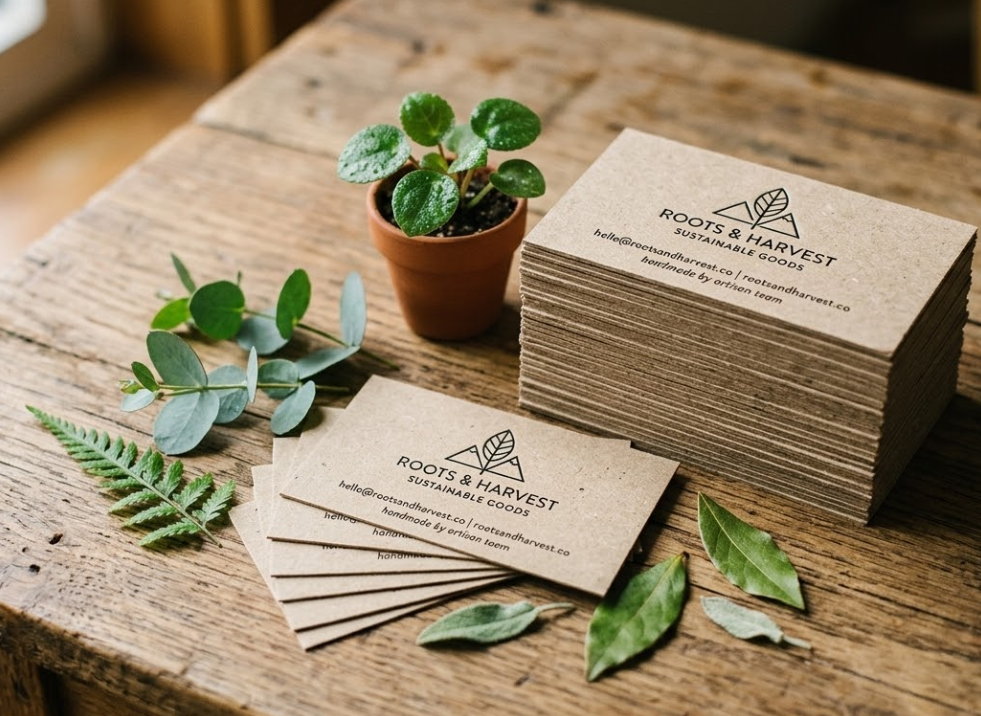
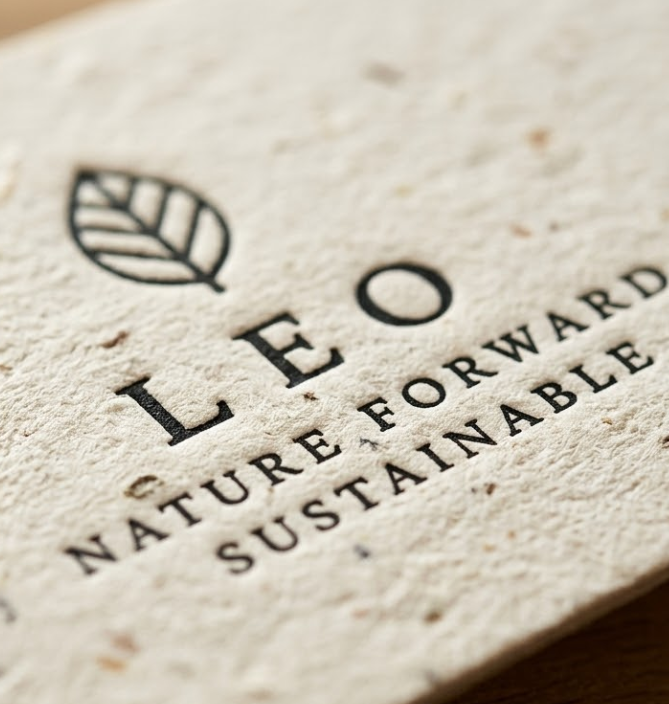
This is not just about sustainability for its own sake. Eco-friendly cards often look and feel different in a way that people notice and remember. The natural texture of recycled fiber paper stock, the warmth of kraft, the authenticity of soy-based ink colors: these are tactile and visual qualities that communicate something meaningful about a brand that chooses them intentionally.
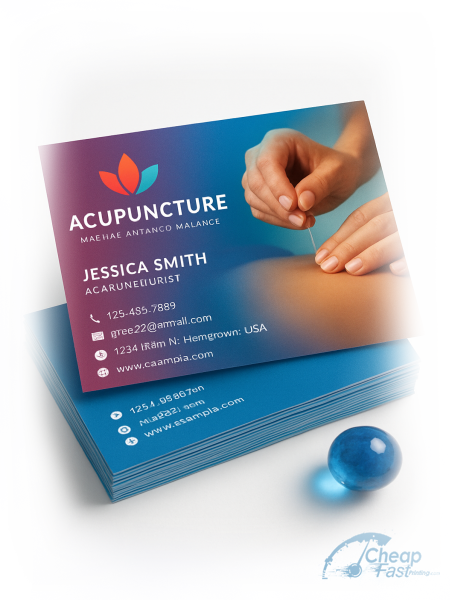
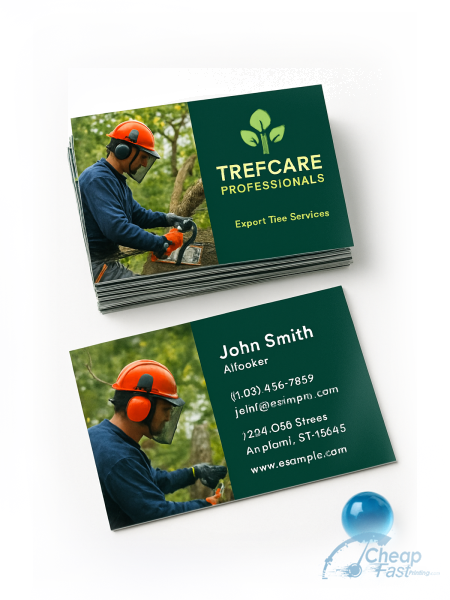
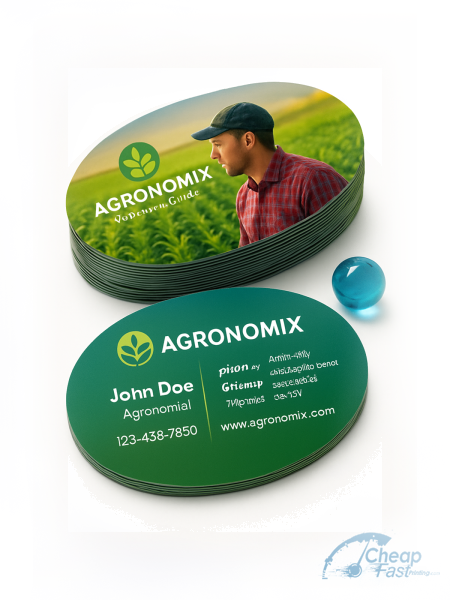
Eco-friendly printing gets easier when the layout is already handled. We have 7,000+ free editable business card templates, so you can pick a design direction first and then match it to kraft, recycled, uncoated, or matte stock. You can browse the business card template hub, scan the industry gallery, and even look at good style references like graphic designer business cards, organic farmer business cards, and yoga instructor business cards if you want a more natural and tactile visual direction.
Eco-friendly business cards are not only about recycled paper percentages. They are also about whether the final piece feels honest, warm, tactile, and aligned with the kind of business you run. Templates help with that because they show what an organic, natural, softer visual direction actually looks like before you print.
Kraft and matte stocks often look better with cleaner spacing, less visual clutter, and more thoughtful contrast choices.
Eco style works naturally for wellness, artisan, farm, handmade, and sustainable brands, but it can also be adapted well for many other niches.
If you want the card to feel more natural without looking unfinished, we can help tighten the layout before the proof stage.
Why More Businesses Are Going Green With Their Cards
This is not just a trend. It is a real shift in how brands think about their physical materials and what those materials say about them. Customers notice. Partners notice. And honestly, when you hold a business card made from recycled fibers with soy-based inks, there is something genuinely different about the feel of it. It is earthy, tactile, real in a way that standard coated stock is not. That physical quality actually works in your favor, specially if sustainability is part of your brand story.
But beyond brand perception, there is a straightforward values-based reason: if you care about environmental impact in your operations, your marketing materials should reflect that. A business card is a small thing, but it is a visible thing that ends up in people’s hands. Making it eco-friendly is a consistent, coherent choice that says you apply your values even in the details that most people would never notice.
The Environmental Cost of Traditional Business Card Printing
Traditional business card printing uses virgin wood pulp paper, petroleum-based inks, and chemical coatings that are difficult to recycle. Most conventional cards end up in landfills because the heavy UV lamination or gloss coating makes them non-recyclable through standard paper recycling streams. The production process is energy-intensive, and the supply chain often involves long-distance shipping that adds carbon miles.
| Process | Traditional Approach | Eco-Friendly Alternative | Impact Difference |
|---|---|---|---|
| Paper Source | Virgin wood pulp, unmanaged forests | FSC/SFI certified or 100% recycled PCW | Dramatically reduces deforestation |
| Ink Type | Petroleum-based inks, high VOC emissions | Soy-based or vegetable inks, low VOC | Lower emissions, easier paper recycling |
| Coating | Heavy UV chemical laminate | Aqueous matte coating or uncoated | Makes card recyclable vs non-recyclable |
| Energy Source | Standard grid electricity | Wind, solar, or offset renewable | Carbon footprint reduction of 60-80% |
| End of life | Landfill due to coating | Recyclable through standard paper streams | Closed-loop vs waste |
What Makes a Business Card Truly Eco-Friendly?
Not everything marketed as “green” actually is. There is greenwashing in the industry, meaning some services use eco language without eco substance. Here is exactly what to look for when evaluating whether a business card printing service is genuinely sustainable.
Paper Certifications to Look For: FSC, SFI, and Recycled Content
The Forest Stewardship Council (FSC) certification is the most recognized and respected standard for responsible paper sourcing. FSC certification means the paper comes from responsibly managed forests where trees are replanted, ecosystems are protected, and worker rights are respected throughout the supply chain. When you see the FSC logo, you can trust that the fiber in your cards was sourced with genuine environmental accountability.
The Sustainable Forestry Initiative (SFI) certification carries similar standards and is particularly common in North American paper production. Both FSC and SFI are reliable indicators, and either is acceptable for genuinely eco-conscious purchasing.
Post-Consumer Waste (PCW) recycled content is the other major indicator. PCW means the fiber in the paper was previously used by consumers and recycled, rather than fresh wood pulp. 100% PCW recycled paper stock is available for business cards and prints beautifully. It often has a slightly more textured, organic feel compared to virgin stock, which actually reads as premium and intentional on an eco-conscious card.
Soy-Based Inks vs. Petroleum Inks: The Complete Comparison
| Factor | Petroleum Inks | Soy-Based Inks | Winner |
|---|---|---|---|
| Raw material source | Fossil fuels, non-renewable | Soybean oil, annually renewable crop | Soy-based |
| VOC emissions during printing | High, contributes to air quality issues | Significantly lower, safer working environment | Soy-based |
| Color quality and saturation | Good, industry standard | Equal or better saturation, more vibrant | Soy-based |
| Paper recyclability | Ink is difficult to remove during recycling | Much easier de-inking process in recycling | Soy-based |
| Cost impact | Standard industry base cost | Minimal to no premium in most applications | Tie |
| Availability | Universal | Increasingly common, not yet universal | Petroleum (wider) |
Best Eco-Friendly Business Card Printing Services in 2026
Let’s look at who is actually delivering genuine sustainability for business card orders. This comparison is based on their stated practices, certifications, and real customer experiences.
| Service | Certifications | Eco Paper Options | Soy Inks | Price Tier | Free Design |
|---|---|---|---|---|---|
| MOO | FSC certified | Recycled + FSC options | Yes | Premium | No |
| GreenPrinting | FSC, wind powered | 100% recycled available | Yes, standard | Mid | No |
| PrintingForLess | FSC available | FSC and recycled on request | On request | Mid-High | No |
| Overnight Prints | FSC option | Recycled stock available | On request | Low-Mid | No |
| CheapFastPrinting.com | Eco options available | Recycled fiber stocks | Yes | Affordable | YES |
MOO’s Eco Options: Quality Meets Sustainability
MOO has made genuine commitments to sustainability with transparent environmental reporting and FSC-certified paper stock options across their product range. Their eco cards maintain MOO’s characteristically premium finish and feel. The trade-off remains price: MOO sits in the premium tier, which means eco-friendly cards cost noticeably more per unit than standard options elsewhere. For small quantities where quality takes priority over cost, MOO is an excellent choice.
Specialist Eco Printers Worth Knowing
GreenPrinting built their entire model around sustainable production from the ground up. They use 100% wind power, FSC-certified stocks, and soy-based inks as standard practice, not as an upsell. Their pricing is in the mid-range and their quality is genuinely good. If sustainability is your primary decision factor and you want a printer whose core identity is environmental, GreenPrinting is worth a serious look.
At CheapFastPrinting.com, we offer eco-friendly paper stock options using recycled fibers and soy-based inks, with our completely free Design Setup service so you can make your sustainable cards look as outstanding as any premium option. We will send you a digital email proof and make any edits completely free until you are satisfied.
How to Design an Eco Card That Looks Amazing
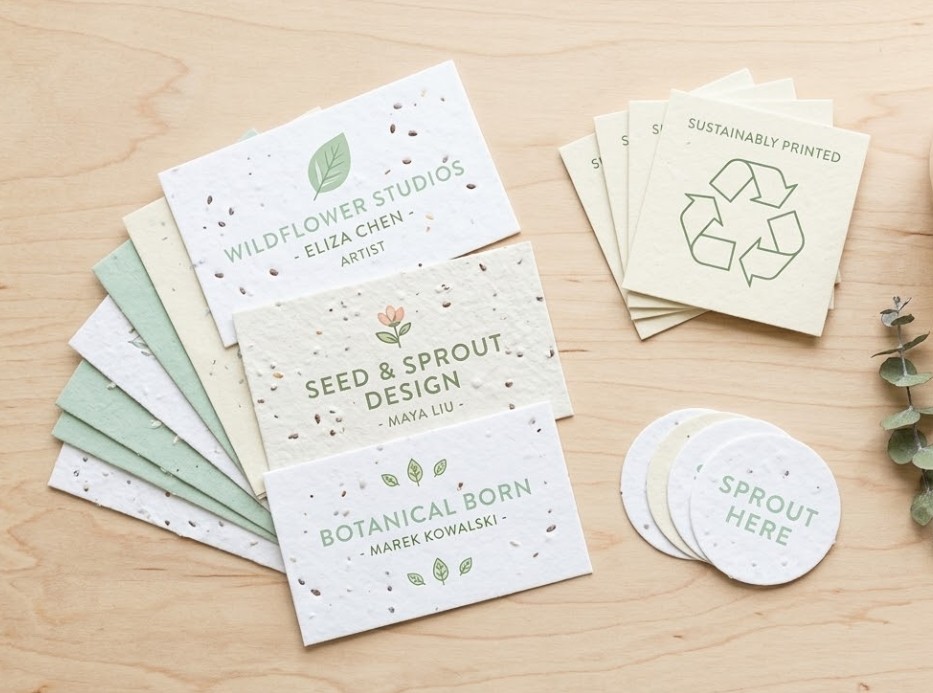
Here is a misconception we want to address directly. Eco-friendly does not mean boring. In fact, the opposite is often true. The natural texture of recycled or kraft paper stock creates a distinctive tactile quality that standard coated stock simply cannot replicate. Here is how to leverage that quality in your design:
Kraft and recycled stock have warm, slightly yellowed undertones. Design in earthy palettes that complement this base rather than fighting against it with bright white areas that the paper cannot deliver.
Deep navy, forest green, burgundy, dark brown, and charcoal all look spectacular on natural fiber stock. The slight texture of the paper adds depth to these colors that looks genuinely premium.
White ink printed on dark brown kraft paper creates a striking, artisan aesthetic that has become increasingly popular in food, wellness, and craft industries. It is genuinely distinctive.
If you want your card to remain recyclable, avoid heavy UV gloss coatings. Aqueous matte coating provides protection and a refined finish while keeping the card recyclable in standard paper streams.
Eco card aesthetics suit clean, purposeful design. Heavy ornamentation and dense information compete with the natural paper character. Less is genuinely more on sustainable stock.
- Recycled fiber paper stocks available on business card orders
- Soy-based ink printing for lower VOC emissions and better recyclability
- Aqueous matte coating option: protective and fully recyclable
- Free Design Setup for your eco card, including color matching to natural stock tones
- Digital email proof before printing, so you see exactly how colors work on the eco stock
Cost Comparison: Is Sustainable Printing More Expensive?
The honest answer: sometimes slightly, but less than you think, and the gap is closing every year as demand increases and production scales. Here is a practical cost comparison based on current market pricing:
| Order Quantity | Standard 14pt Gloss (est.) | Eco Recycled Stock (est.) | Dollar Difference |
|---|---|---|---|
| 250 cards | $20-$28 | $24-$33 | $4-$7 |
| 500 cards | $30-$42 | $36-$50 | $6-$10 |
| 1,000 cards | $44-$60 | $52-$72 | $8-$14 |
When you factor in free design setup (completely free at CheapFastPrinting.com) and efficient production, the total cost of eco-friendly business cards is much more accessible than most people assume. A difference of $8-$14 on a 1,000-card order is genuinely minimal when you consider what those cards communicate about your values.
Eco-friendly paper stock paired with a thoughtful, intentional design consistently gets more comments and reactions than standard cards. The natural texture creates a tactile surprise that people respond to positively. Budget for 16pt recycled stock with aqueous matte coating and let our free design team create something that matches the quality of the material.