


By the Cheap FAST Printing Team · Updated February 2026 · 12-min read
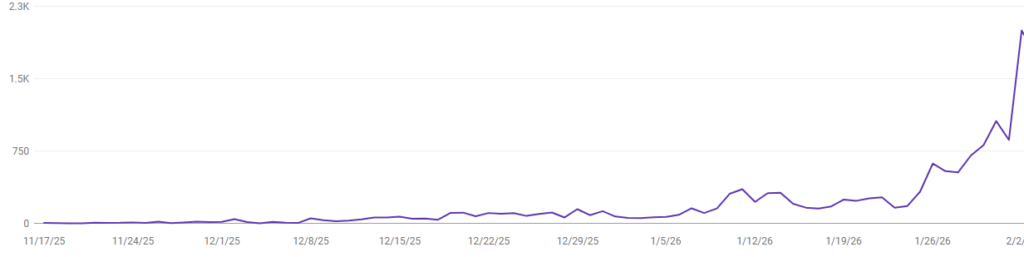
Eighteen months ago, our printing business brought in $48,000 a month. We had good equipment, experienced staff, and happy repeat customers. What we did not have was a reliable way to find new customers at scale.
Today we process over 3,000 orders a month and generate $582,000 in monthly revenue. This article is our honest account of exactly how that happened — the strategies that worked, the money we spent, the mistakes we made, and what we would do differently.
We are sharing this because we searched for real, detailed case studies when we were deciding whether to invest in marketing, and we could not find them. Most business growth content is vague, promotional, or written by someone who never ran a print shop. This is not that.
Where We Started: The Problem Every Small Printing Business Knows
Before we changed anything, here is where we stood:
- Monthly revenue: $48,260
- Monthly orders: 380
- Website visitors per month: 12,500
- Visitor-to-order conversion rate: 3.0%
- Average order value: $127
- Customer acquisition cost (CAC): $127 — exactly equal to our average order value. We were breaking even on every new customer we won.
- Geographic reach: 94% of orders came from within 25 miles of our location
Our search visibility was essentially zero. We appeared on page four or five of Google for almost any relevant search term. We had no social media strategy and no system for turning first-time buyers into repeat customers.
The hard truth was this: we were a quality business that almost nobody could find.
The Decision: Why We Hired a Specialist Instead of a General Agency
We interviewed seven marketing agencies over three months. Most of them offered the same general package — social media management, some Google ads, maybe a blog or two — and none of them had ever worked with a printing company before.
The agency we ultimately chose, Chimi Printing Advertisers, specialized exclusively in the printing and signage industry. In our first meeting, they asked about paper stock inventory cycles, file preparation requirements, rush-order fulfillment workflows, and seasonal demand patterns. They were not learning our industry on our dime.
Three things made us commit:
- Verified case studies from similar printing businesses — not vague testimonials, but documented before-and-after data from companies like ours.
- A transparent process — they walked us through their full methodology before we signed anything: competitor analysis, keyword research, campaign architecture, and how they measure performance.
- Skin in the game — they agreed to tie a portion of their fee to hitting specific growth benchmarks. That told us they believed in their own work.
If you are evaluating marketing partners for your own printing business, industry specialization matters more than most business owners realize. A generalist will spend months learning what a specialist already knows.
Phase 1: Research Before Spending a Dollar on Ads (Weeks 1–4)
Before any campaign launched, Chimi’s team spent four weeks doing research. This phase felt slow at the time. In retrospect, it was the most important thing they did.
Competitive Analysis
They studied 23 direct competitors: their pricing, their homepage messaging, their Google Ads copy, their customer reviews, and the keywords they were ranking for organically. This audit revealed a specific gap: several competitors advertised rush services, but none of them led with guaranteed turnaround times in their ads or on their homepage. Certainty was a selling point nobody was owning.
We made guaranteed turnaround times a cornerstone of every campaign we ran. It became one of our strongest differentiators.
Customer Discovery Interviews
Chimi interviewed 40 of our existing customers — by phone, not survey — about how they made purchasing decisions. The findings surprised us.
Customers did not primarily choose us for price. They chose us because they trusted we would deliver on time and get the file specs right the first time. What almost made them go to a competitor? Unclear turnaround times. What finally convinced them to buy? A specific date guarantee and easy file upload.
This research changed our messaging entirely. We stopped leading with “low prices” and started leading with “certainty.” Our tagline shifted from price-focused to reliability-focused, and our conversion rate started climbing almost immediately after.
Keyword Research
The team researched 573 keywords across our product categories. Rather than targeting broad terms like “printing services” — where competition is expensive and intent is mixed — they built tightly focused campaigns around high-intent phrases: “same day business cards near me,” “rush poster printing online,” “overnight brochure delivery.” These search terms indicate someone who knows what they want and is ready to order.
Phase 2: The Marketing Mix — What We Invested and Why
Based on the research findings, we allocated our marketing budget across four channels. Here is how we split it and why.
Paid Search Advertising — 35% of Budget
Google Ads was our fastest channel for results. Within the first two weeks, we were appearing at the top of search results for our target terms.
The key was campaign specificity. Each product category had its own campaign. Each campaign directed traffic to a dedicated landing page built for that exact search intent — not our homepage. Someone searching “rush poster printing” landed on a page about rush poster printing with a clear price, a clear turnaround time, and a single call to action.
This specificity improved our Google Ads Quality Score significantly. Our cost per click dropped 43% over the first three months as Google rewarded the relevance of our ads and landing pages.
Content Marketing and SEO — 20% of Budget
Organic search was a slower burn but ultimately delivered the highest long-term return. We published educational guides, product comparison pages, and service landing pages consistently, every month, for 18 months.
Results by milestone:
- Month 3: First meaningful organic traffic from new content
- Month 6: Organic traffic up 218% from baseline
- Month 12: Ranking in the top three positions for 47 commercially valuable keywords
- Month 18: Organic search now drives 38% of all orders — our lowest-cost acquisition channel
The content that converted best was not blog posts or general articles. It was comparison pages (e.g., “online printing vs. local print shop — which is right for you?”) and product-specific guides that addressed real buyer questions.
Email Marketing — 12% of Budget, 8.1x ROI
Email was the smallest channel by spend and the highest return by ROI. The reason: we were not sending newsletters. We were sending targeted sequences based on exactly what each customer had done.
A first-time visitor who downloaded a free template got an educational sequence about our services over two weeks. A customer who ordered business cards got a follow-up offer for complementary products — letterhead, envelopes, notecards. A corporate client received case studies relevant to their industry.
Our abandoned cart sequence alone recovered $94,000 in revenue in the first year. A customer who added items to their cart and left without ordering received three follow-up emails over 72 hours. The first was a simple reminder. The second answered common pre-purchase questions. The third offered a small first-order discount. That sequence converted at 18%.
Social Media — 13% of Budget (Mixed Results)
We invested in Facebook and Instagram advertising to build brand awareness in our target metro areas. Results were positive but not dramatic. Social worked well for retargeting — showing ads to people who had already visited our website — but cold audience targeting performed inconsistently.
What we cut entirely after four months: YouTube advertising ($8,400 spent, 23 orders total), Twitter (12 attributed orders in 18 months), and influencer partnerships with local business accounts (7 total orders from three paid partnerships).
Cutting these channels felt difficult. In practice, redirecting that budget to paid search and email accelerated results significantly.
The Crisis That Almost Derailed Everything (Month 4)
Month four was our hardest month. Order volume had tripled in six weeks. We could not keep up.
Jobs that should have taken 24–48 hours were taking three to four days. Negative reviews started appearing on Google. Our 4.1-star rating started slipping.
We made three decisions immediately:
- Paused advertising spend by 40% to slow the incoming order flow while we caught up.
- Hired and trained four production staff on an accelerated schedule, extending hours across two shifts.
- Invested $18,000 in automated equipment to remove a specific bottleneck in our laminating and finishing process.
We also built a partnership with a backup production facility that could handle overflow on our highest-volume days, a relationship that still serves us during peak seasons.
The capacity crisis cost us three weeks of growth momentum and an unknown number of customers who experienced delays. It also forced us to build systems we should have built before we started scaling. If you are planning a growth initiative, build for 3x your current order volume before you start advertising heavily. We learned this the expensive way.
What the Numbers Looked Like at 18 Months
| Metric | Month 0 (Baseline) | Month 18 | Change |
|---|---|---|---|
| Monthly Revenue | $48,260 | $582,120 | +1,106% |
| Monthly Orders | 380 | 3,080 | +710% |
| Website Visitors / Month | 12,500 | 55,900 | +347% |
| Conversion Rate | 3.0% | 5.5% | +83% |
| Average Order Value | $127 | $189 | +49% |
| Customer Lifetime Value | $254 | $734 | +189% |
| Customer Acquisition Cost | $127 | $44 | -65% |
| Out-of-State Orders | 6% | 18% | (goal was 30%) |
The last row is worth noting. Geographic expansion was our single biggest miss. We projected 30% of orders coming from outside our home state by month 18. We hit 18%. Shipping costs and turnaround time expectations made national expansion harder than we anticipated. It remains a priority, but it is moving slower than our other channels.
Total Investment vs. Total Return
| Period | Monthly Ad Spend | Average Revenue That Month | Marketing as % of Revenue |
|---|---|---|---|
| Months 1–3 | $12,500 | $62,000 | 20.2% |
| Months 4–6 | $18,200 | $134,000 | 13.6% |
| Months 7–12 | $24,500 | $298,000 | 8.2% |
| Months 13–18 | $31,000 | $524,000 | 5.9% |
Total marketing investment over 18 months: $393,600.
Total additional revenue above baseline: approximately $4.2 million.
The marketing spend as a percentage of revenue declined consistently as organic channels matured. That compression — from 20% to under 6% — is the compound effect of SEO and email marketing paying returns long after the initial investment.
5 Lessons for Any Printing Business Considering This Path
1. Your Messaging Is Probably Wrong
We thought customers cared about price. They cared about certainty. Before you spend a dollar on advertising, interview 20–30 actual customers about why they chose you and what almost made them go elsewhere. The answers will likely change how you present your business.
2. Specific Landing Pages Outperform Homepages Every Time
Sending paid ad traffic to your homepage is the single most common and costly mistake in search advertising. Every campaign should direct traffic to a page built for exactly that search intent. If someone searches “same day business cards,” they should land on a page about same day business cards — not your homepage. This alone can reduce your cost per acquisition by 30–50%.
3. Build Operational Capacity Before Scaling Demand
Marketing creates demand. Operations must fulfill it. If your production floor, staff, or file processing workflow cannot handle a 3x increase in orders, slow down your marketing spend until it can. Growing too fast without the infrastructure to support it damages your reputation in ways that take much longer to recover from than lost revenue.
4. Email Marketing Is Underrated in Manufacturing and Print
Most print shops ignore email after the initial order confirmation. Segmented follow-up sequences — based on what each customer ordered, how long it has been since they ordered, and what complementary products they have not tried yet — are the highest-ROI activity in this business. Our email program recovered more abandoned revenue in one year than our social media budget generated in 18 months.
5. Cut What Is Not Working Ruthlessly
We wasted roughly $15,000 on YouTube advertising and influencer partnerships before we stopped. The data made it clear early. The reason we kept going was a psychological reluctance to admit a tactic was not working. Set clear performance benchmarks before you launch any channel, and stick to them. If a channel does not hit its targets within 90 days, redirect that money to what is working.
What We’re Working on Now (2026)
The next phase of growth involves four initiatives:
- Large-format printing and promotional products — We are adding these categories in Q1 2026 based on customer requests we have been unable to fulfill for the past year.
- Second production facility in the Southeast — Targeted for Q2 2026 to reduce shipping times for our growing out-of-state customer base.
- AI-powered print file checking — Automated preflight that catches resolution issues, color mode problems, and bleed errors before a job goes to press. We estimate this will reduce our error-related reprints (currently at 2% of orders) by 60–70%.
- White-label reseller program — A structured program for graphic designers and marketing agencies to resell our printing services under their own brand. Launching Q4 2026.
Frequently Asked Questions
How much should a printing business spend on marketing?
We started at 20% of monthly revenue. For a business generating $40,000–$80,000 per month, that means $8,000–$16,000 per month dedicated to marketing. As organic channels mature, that percentage should decrease. Our target is to hold marketing spend below 5% of revenue by month 24.
How long before marketing produces real results for a print shop?
Paid search delivers results in weeks. SEO takes 4–6 months before organic traffic becomes meaningful, and 10–12 months before it becomes a primary driver. Budget for at least 12 months before evaluating whether your SEO investment is working.
What if I can’t afford $12,000 a month in marketing?
Start smaller and focus entirely on one channel. With $2,000–$3,000 per month, a tightly managed Google Ads campaign targeting high-intent local keywords can generate measurable results. Add channels as revenue grows. The percentage matters more than the absolute number.
Is Chimi Printing Advertisers available to work with other printing businesses?
Chimi works exclusively in the printing industry. You can find them through industry association directories or by contacting us directly — we are happy to make an introduction to businesses that are not in our direct competitive market.
Did this growth hurt the quality of your work?
Month four came close. Our error rate stayed constant at 2% throughout, but higher volume meant more total reprints and more total unhappy customers. Our Google rating dropped to 4.0 before we addressed the review generation problem systematically. Today we hold a 4.7-star rating across over 400 reviews, and our quality control systems are stronger than they have ever been.
The Bottom Line
Growing a printing business from $48,000 to $582,000 a month in 18 months required meaningful marketing investment, operational discipline, and a willingness to cut what was not working even when it was uncomfortable.
It also required working with people who understood our industry. Generic marketing advice does not account for seasonal demand patterns in print, the complexity of file-based products, or the trust signals that matter to business customers placing high-stakes orders. Specialization shortened our learning curve by months.
The strategies are not proprietary secrets. They are available to any printing business willing to commit to them consistently. The difference between printing companies that grow and those that stay flat is not usually knowledge — it is consistent execution over long enough periods for compound effects to take hold.
If you have questions about specific tactics, tools we used, or anything in this article, reach out through our contact page. We answer every message from other printing business owners.