


Ever stumbled across an ad promising “9 cent color copies” and wondered if it’s too good to be true? You’re not alone. In a world where printing costs can devour a marketing budget faster than you can say “CMYK,” the idea of affordable color copies sounds like finding a unicorn in your local print shop. The truth is a bit more nuanced, and understanding how discount printing actually works will save you from sticker shock at checkout.
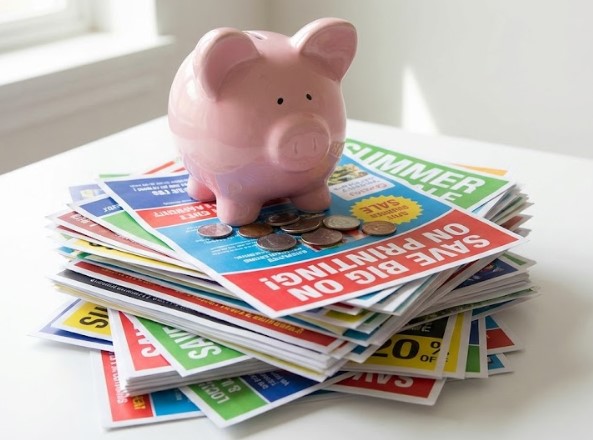
Let me walk you through the real story behind budget printing, what “cheap color copies” actually means in 2026, and how to get the best deal without sacrificing quality. Because here’s the thing: low-cost printing exists, but the path to finding it requires knowing where to look and what questions to ask.
The Cheapest Way to Print Color Copies in Bulk
The magic number everyone chases (9 cents, 10 cents, sometimes even 7 cents per copy) only appears when you’re ordering in serious volume. Think hundreds, not dozens. Most printing companies structure their pricing in tiers, rewarding customers who print in larger quantities with dramatically lower per-unit costs.
When you order 50 color copies from a local office supply store, you might pay anywhere from 49 cents to 79 cents per page. That same order placed online for 500 copies could drop to 12-15 cents per copy. Scale up to 2,500 copies, and suddenly those magical single-digit prices start becoming reality. The math is simple: printing presses don’t care if they’re running 100 sheets or 1,000 sheets through the machine. Setup costs stay the same, so the more you print, the more those fixed costs get distributed across your entire order.
But here’s where it gets interesting. The “cheapest way to print color copies” isn’t always about finding the absolute lowest price per sheet. You need to factor in paper quality, color accuracy, turnaround time, and shipping costs. A 9 cent copy printed on flimsy 20lb paper with washed-out colors isn’t going to impress anyone at a trade show. Meanwhile, a 15 cent copy on premium 100lb gloss stock with calibrated color might convert three times as many leads.
Understanding Tiered Pricing and Discounts
Let’s break down how tiered pricing actually works at most print shops. Imagine you’re ordering full-color flyers for a grand opening event. Here’s what the pricing structure might look like:
Quantity 1-99: 45 cents per copy
Quantity 100-499: 22 cents per copy
Quantity 500-999: 14 cents per copy
Quantity 1,000-2,499: 11 cents per copy
Quantity 2,500-4,999: 9 cents per copy
Quantity 5,000+: 7 cents per copy
Notice how the price drops dramatically between the first tier and the second? That initial jump from 45 cents to 22 cents represents the moment you’ve crossed the threshold where commercial-grade equipment becomes cost-effective. Beyond that point, each tier represents economies of scale kicking in harder.
The sweet spot for most small businesses falls somewhere between 500 and 1,000 copies. You’re getting a significant discount from retail pricing, but you’re not stuck with 5,000 flyers gathering dust in your closet for the next two years. The key is calculating your actual need, then rounding up to the next pricing tier if it makes financial sense.
Some online printing companies also offer what I call “invisible discounts.” These are promotions that aren’t advertised loudly but appear when you’re actually configuring your order. Free shipping over $75, first-time customer discounts of 15-20%, or bundle deals where ordering business cards and flyers together unlocks better pricing on both. Always check for these before hitting the checkout button.
How “Affordable Color Copies” Can Still Be High Quality
There’s this persistent myth that discount color copies must look cheap. That was true 15 years ago when budget printers were using entry-level copiers that produced grainy, inconsistent results. Today’s commercial digital presses (the machines that power affordable online printing) are sophisticated pieces of equipment capable of stunning color reproduction.
The difference between a 9 cent color copy and a 45 cent color copy often isn’t the printing technology at all. It’s the business model. High-volume online printers run 24/7 automated production lines, purchase paper and ink in massive bulk quantities, and optimize every step of their workflow for efficiency. They’re passing those operational savings directly to you, while your local print shop is running smaller batches on equipment that sits idle 60% of the time.
What you should care about when hunting for cheap colour copies is the actual paper stock being used and whether the company calibrates their presses regularly. A reputable discount printer will offer multiple paper options (usually 70lb, 80lb, and 100lb text weights) and will clearly state their color-matching process. If the website doesn’t mention paper brightness ratings or show sample photos of finished products, that’s a red flag.
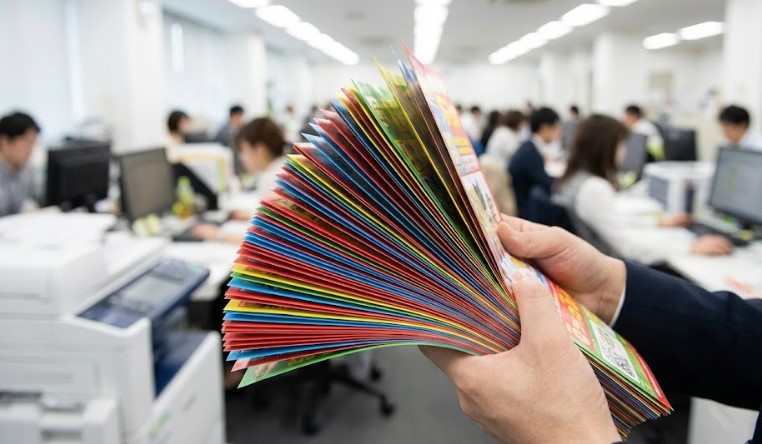
I’ve seen gorgeous marketing materials printed at 12 cents per copy that rival work from premium design studios charging five times as much. The secret? The client provided print-ready files at 300 DPI, chose appropriate paper stock for their design (100lb gloss for photo-heavy content, 80lb matte for text-heavy pieces), and worked with a printer that actually invests in equipment maintenance and color calibration.
Online vs. Local: Where to Find Discount Color Copies
The battle between online printing services and local print shops has been raging for over a decade, and the landscape has shifted dramatically. Local shops still have advantages (immediate turnaround, face-to-face consultation, last-minute rush jobs), but when it comes to pure cost efficiency for color copies, online printers dominate.
Online printing companies operate at scale. They’re consolidating orders from hundreds of customers into single production runs, which means their presses never sit idle. That efficiency translates directly into lower prices. A company processing 50,000 color copies per day can negotiate ink contracts that a local shop printing 500 copies per day simply cannot match.
But here’s what people miss: not all online printers are created equal. Some achieve low prices by cutting corners on customer service, using outdated equipment, or playing games with shipping costs. You’ll see a 9 cent per copy price that looks amazing until you add $40 in “expedited production fees” and $25 shipping charges to your 200-copy order. Suddenly that bargain doesn’t look so attractive.
The smartest approach combines both worlds. Use online services for planned projects where you have a week or two of lead time. Take advantage of their bulk discounts and automated workflows. Reserve your local print shop for emergencies, complex projects requiring hand-holding, or situations where you need to physically approve proofs before the full run begins.
One advantage online printers rarely advertise but consistently deliver: predictability. When you order from a company running industrial-grade digital presses with automated color calibration, your 2,500-copy order will look nearly identical to the 2,500-copy reorder you place six months later. Local shops using smaller equipment and manual adjustments can vary more significantly between batches.
I recently ran a price comparison across five popular online printing services and three local shops for a straightforward job (1,000 full-color flyers on 100lb gloss text, single-sided). The range was shocking. Local quotes ran from $280 to $450. Online quotes ranged from $119 to $210. The quality, when I ordered samples from the top three, was virtually indistinguishable. The cheapest provider delivered in 4 business days. The most expensive promised 3-day turnaround but missed their deadline by two days.
Tips to Print Color Copies Cheap
Getting the absolute best deal on discount color copies requires a bit of strategy. First, always request quotes for multiple quantities. Sometimes the difference between 900 copies and 1,000 copies is only $8, but that extra hundred copies might push you into the next discount tier and actually lower your per-unit cost.
Second, be flexible with turnaround time. Many online printers offer “economy” or “standard” shipping options that add 2-3 business days but slash 20-30% off your total cost. Unless you’re rushing for a specific event deadline, those extra days are worth hundreds of dollars in savings.
Third, provide print-ready files. This cannot be overstated enough. When you upload a properly formatted PDF with correct bleed settings, appropriate resolution, and CMYK color mode, you eliminate the need for pre-press work. Many printers charge $25-50 for file setup and adjustments. That fee disappears when your files are perfect from the start.
Fourth, consider paper strategically. The difference between 70lb and 100lb paper stock might only be $15 per thousand copies, but the perceived value difference is enormous. If you’re handing materials directly to potential clients at a trade show, that upgraded paper stock will make your company appear more professional and established.
Finally, join email lists and watch for seasonal promotions. Most online printing companies run aggressive sales during slower periods (January after holiday rush, late summer before back-to-school season). I’ve seen 40% off promotions that make already-cheap printing absurdly affordable.
Hidden Fees to Watch Out For
Let’s talk about the fine print that turns a “9 cent color copy” into a 19 cent color copy by the time you’re done. The most common gotcha is the difference between “printing cost” and “total cost.” That advertised price usually reflects the absolute base price with the cheapest possible options selected: slowest shipping, lightest paper stock, no finishing options, and often single-sided printing only.
Shipping costs deserve special attention. Some budget printers advertise rock-bottom printing prices then hit you with $35 ground shipping charges that would make a premium service look competitive. Always check the shipping calculator before getting excited about a deal. A few companies offer free shipping thresholds (typically $50-100 orders), which can be leveraged by combining multiple small projects into one order.
File setup fees are another sneaky charge. If your file isn’t print-ready (wrong color mode, insufficient resolution, missing fonts, incorrect dimensions), many printers will either reject it outright or charge $30-75 to fix it. This is why learning basic print file preparation saves you money repeatedly over time.
Rush fees can be brutal. The difference between 5-day turnaround and 2-day turnaround might be $50 or more, effectively doubling or tripling your per-copy cost on smaller orders. Plan ahead whenever possible. Your future self will thank you when that rush fee money stays in your budget.
Then there are the finishing options people forget to account for: folding, binding, hole punching, shrink wrapping. These services sound cheap individually ($0.03 per fold, $0.02 per hole punch) but multiply across 2,000 copies and suddenly you’ve added $100 to your order.
Final Verdict on Budget Printing
So are 9 cent color copies real? Yes, but with caveats. You’ll hit that price point when ordering in volume (typically 2,500+ copies), using standard paper stocks, accepting longer turnaround times, and working with online printers that operate at massive scale. For smaller quantities, realistic expectations fall somewhere between 12-20 cents per copy for quality work.
The more important question isn’t whether you can find the absolute cheapest printing, but whether you’re getting genuine value for your money. A 9 cent copy that looks washed out and feels flimsy might cost you customers. A 16 cent copy printed on premium stock with accurate color might generate enough additional business to pay for itself ten times over.
My recommendation after years of navigating the printing industry: shop smart, not just cheap. Find an online printer with transparent pricing, good reviews, and consistent quality (PCMag’s guide to online printing services at https://www.pcmag.com/picks/the-best-online-printing-services is an excellent starting point for comparisons). Order samples before committing to huge quantities. Build relationships with 2-3 reliable vendors so you’re not scrambling when deadlines loom.
The era of truly affordable color copies is here, but it requires you to be an informed buyer. Understand tiered pricing, prepare your files correctly, plan ahead to avoid rush fees, and choose appropriate materials for your specific use case. Do those things consistently, and yes, you absolutely can access professional-quality color printing at prices that would have seemed impossible just a decade ago.
Editor’s Note: Printing technology and pricing change rapidly. The estimates in this article reflect 2026 market conditions for online printing services. Always request current quotes from multiple vendors for your specific project. Consider ordering sample packs from new printers before committing to large orders to verify quality standards meet your expectations.
Quick Reference: When to Use Different Print Options
| Print Volume | Best Option | Expected Price Range | Typical Use Case |
|---|---|---|---|
| 1-50 copies | Local print shop or office supply | $0.39-$0.79 per copy | Last-minute presentations, small meetings |
| 50-250 copies | Online economy printing | $0.18-$0.29 per copy | Small event handouts, limited mailings |
| 250-1,000 copies | Online standard printing | $0.12-$0.18 per copy | Trade show materials, community outreach |
| 1,000-5,000 copies | Online bulk printing | $0.09-$0.14 per copy | Large events, direct mail campaigns |
| 5,000+ copies | Wholesale or offset printing | $0.07-$0.11 per copy | Major marketing pushes, annual materials |
Note: Prices assume standard 8.5×11″ single-sided flyers on 100lb gloss text stock with 5-7 business day turnaround.
Frequently Asked Questions
Q: Can I really get color copies for 9 cents each?
A: Yes, when ordering in bulk quantities (typically 2,500+ copies) from online printing services using standard paper stocks and normal turnaround times. Smaller quantities will cost more per copy.
Q: What’s the difference between digital printing and offset printing for color copies?
A: Digital printing works like a high-end photocopier and is cost-effective for runs under 5,000 copies. Offset printing requires plate setup but becomes cheaper per unit at higher volumes. For most “color copy” needs, digital printing is the right choice.
Q: How can I make sure my cheap color copies still look professional?
A: Use 300 DPI resolution files, choose appropriate paper weight (100lb gloss or matte for marketing materials), and order samples from new vendors before committing to large runs. Paper quality matters more than most people realize.
Q: Why do local print shops charge so much more than online services?
A: Local shops have higher overhead costs (storefront rent, smaller bulk purchasing power, equipment that sits idle between jobs) and typically run smaller batches. You’re paying extra for convenience, immediate service, and face-to-face consultation.
Q: What hidden fees should I watch out for when ordering discount printing?
A: Shipping charges, rush production fees, file setup costs, and finishing services (folding, binding, hole punching) can significantly increase your final cost. Always review the complete order summary before checking out.