


The 2026 Complete Guide for Product Hang Tags Design
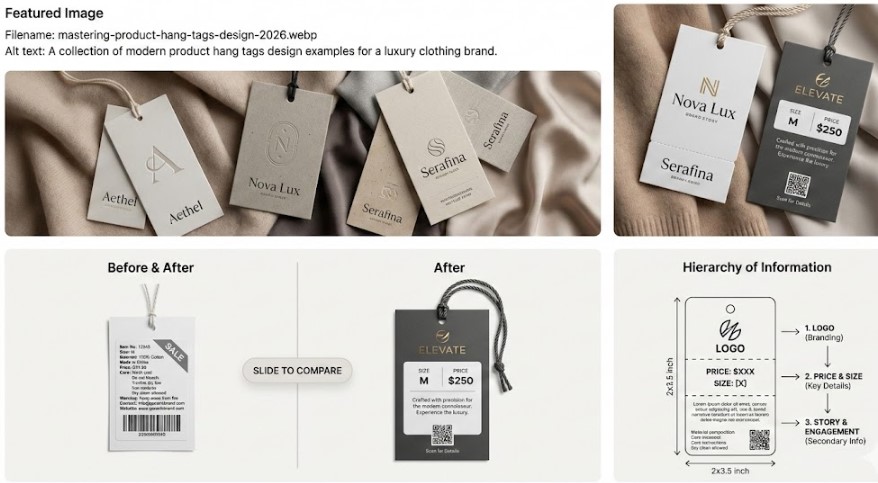
In the competitive landscape of modern retail, mastering product hang tags design is no longer optional for brands seeking to justify premium pricing. While the garment draws a customer in, the tag serves as the final, tactile handshake that converts a curious browser into a loyal advocate of your brand’s unique lifestyle and quality.
In This Guide
- 1. The Psychology of the Silent Salesman
- 2. Core Product Hang Tags Design Principles
- 3. Mastering Typography and Legibility
- 4. Material Innovation and Tactile Marketing
- 5. The Professional Technical Checklist
- 6. Future Trends in Retail Branding
Why Strategic use of this product is Your Silent Salesman
Think back to the last time you browsed a high-end boutique. Before you even checked the price, you likely reached for the tag to feel the weight of the paper and the texture of the print. This instinctual reaction is exactly why a strategic tags design is vital; it provides a tangible confirmation of the quality your marketing promises online. Beyond just conveying a brand name, it anchors the item in reality.
While digital marketing is excellent for reach, physical retail relies on the “two-second rule.” This rule suggests that a customer decides whether to keep an item or put it back based on their very first physical interaction with it. If your tag feels flimsy or looks cluttered, that perception instantly transfers to the product itself, regardless of how well-made the garment actually is.
Ultimately, high-end brands understand that the tag is a signature of authority. A well-executed tags design acts as a seal of approval, whispering to the customer that every detail—down to the smallest piece of cardstock—has been considered with care and intentionality. It is this attention to detail that builds long-term trust and justifies a premium positioning in the marketplace.
Core Product Hang Tags Design Principles
Success in retail branding is rarely an accident; it is the result of applying proven design hierarchies. When you approach hang tags, you must balance visual flair with functional clarity. A tag that is “too artistic” may fail to communicate the price or size, while a tag that is too clinical may fail to inspire the customer’s imagination or evoke an emotional response.
We recommend the following information hierarchy to ensure your message is received loud and clear:
- The Visual Anchor: Your brand logo must be the first thing a shopper sees. It establishes identity and professional credibility immediately upon contact.
- The Emotional Hook: Use a single, powerful sentence to describe the “Why” behind the product. This creates a narrative that goes beyond simple utility.
- The Social Proof: Including a QR code or social handle invites the customer into your community, extending the relationship far beyond the checkout counter.
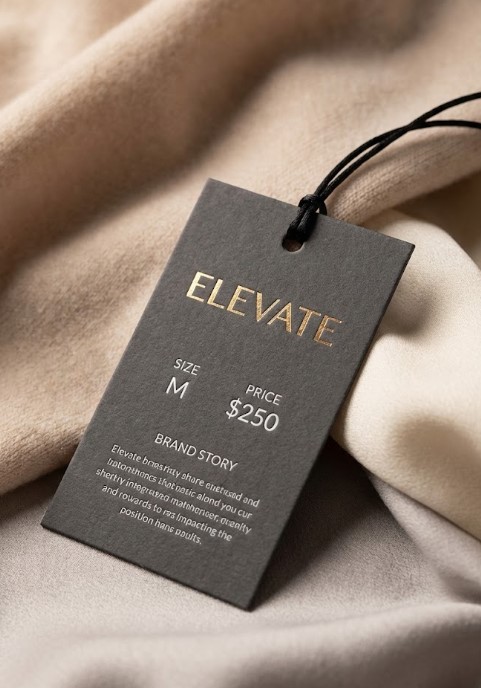
Beyond the layout, the use of white space is a critical component of product hang tags design. Overcrowding a small 2×3.5 inch space with too much text or multiple images creates visual noise that overwhelms the eye. By allowing your logo and primary message to “breathe,” you signal a sense of luxury and confidence that cluttered budget brands often lack.
Mastering Typography in Product Hang Tags Design
Typography is the voice of your brand. In product hang tags design, choosing the right font is about more than just aesthetics; it is a matter of practical legibility. While a delicate script might look elegant on a full-page magazine ad, it often becomes a blurry mess when printed on a small, textured clothing tag. We advise sticking to high-contrast weights that remain crisp under store lighting.
Varying your sentence length helps maintain interest. Do not write short, robotic sentences. Instead, weave together detailed descriptions of your craftsmanship with punchy, authoritative statements that command attention. For instance, explaining the heritage of your materials provides a depth of character that simple bullet points cannot match.
Consider the difference between a serif and a sans-serif font in your product hang tags design. Serifs are often associated with tradition, heritage, and academic authority, making them perfect for luxury tailoring or high-end watches. Sans-serifs, conversely, suggest a modern, minimalist, and forward-thinking attitude, which is why they dominate the streetwear and tech-accessory sectors.
Material Innovation and Tactile Marketing
The material choice of your product hang tags design is your primary tool for tactile marketing. When a customer touches a 32pt extra-thick cardstock, their brain immediately registers it as “heavy,” which is psychologically linked to “expensive.” Conversely, a recycled, rough-textured kraft paper communicates a brand that is organic, humble, and deeply committed to the environment.
We have seen a significant shift toward specialty finishes in 2026. A spot UV coating not only adds a professional gloss but also protects your labels from the wear and tear of being handled by hundreds of shoppers. This ensures that the last person to touch the item in the store has the same premium experience as the first. Embossing and debossing are also powerful tools, adding a 3D physical dimension that encourages the customer to literally “feel” the brand logo.
Pro-Tip: The Weight of Authority
For luxury brands, we suggest never going below a 16pt cardstock. The increased weight provides a physical “presence” that justifies a higher price point and makes the product hang tags design feel like a keepsake rather than disposable trash.
Sustainability is also a core pillar of modern product hang tags design. Beyond just using recycled paper, brands are now exploring stone paper, bamboo fibers, and even seed-infused tags that customers can plant in their garden. This turns the tag from a piece of waste into a gift, creating a positive emotional loop with your brand that lasts long after the clothing is worn.
Technical Checklist for Your Product Hang Tags Design
Even the most beautiful product hang tags design will fail if the technical execution is flawed. Before you hit the “print” button, you must ensure your files are optimized for the physical reality of the printing press. This involves more than just a quick spell-check; it requires a deep dive into bleed lines, color profiles, and structural integrity.
Follow this checklist to ensure your production run is flawless:
- CMYK vs. RGB: Always design in CMYK. While RGB looks vibrant on your laptop, the physical printer uses cyan, magenta, yellow, and black inks. Converting early prevents dull or shifted colors in your final product hang tags design.
- Hole Placement: Ensure your drill hole is at least 0.25 inches away from any text or logos. There is nothing more amateurish than a tag where the string hole cuts through your brand name.
- The Bleed Zone: Extend your background colors or images at least 0.125 inches beyond the final trim line. This provides a safety margin for the cutting machine, preventing unsightly white slivers on the edges.
- Vector Graphics: Ensure your logo is a vector file (like an AI or EPS). This keeps the edges razor-sharp at any size, whereas pixel-based images can look “muddy” on a small tag.
A professional product hang tags design also considers the method of attachment. While a simple plastic barb is cheap, a custom-dyed cotton cord or a branded metal safety pin elevates the entire presentation. These small hardware choices are the final touch that tells the customer they are holding a piece of artisanal craft, not just a mass-produced commodity.
Future Trends in Retail Product Hang Tags Design
As we move further into 2026, the boundaries between physical and digital retail continue to blur. Your product hang tags design is the gateway to this omnichannel future. We are seeing a massive increase in the use of NFC chips embedded directly into the cardstock, allowing customers to tap their phone against the tag to instantly verify the authenticity of the product on the blockchain.
While technology is advancing, we also see a return to “maximalist textures.” This involves mixing multiple finishes on a single product hang tags design—for example, a matte black card with a holographic foil logo and a velvet-touch coating. This sensory overload is designed to break the customer’s “scrolling trance” and force them to engage with the physical object in their hand.
Beyond the visuals, the “Storytag” is becoming a staple for high-end brands. Instead of a single piece of paper, these are multi-page booklets that tell the story of the artisans who made the garment. This depth of information hierarchy in product hang tags design satisfies the modern consumer’s hunger for transparency and ethical production. It proves that you have nothing to hide and everything to celebrate.
ED
Written by the Editorial Team
Our collective of print specialists and brand strategists have over 20 years of experience in high-end retail packaging and professional brand identity development.
Resources: FSC (Forest Stewardship Council) – fsc.org