

By Maria Chen | Updated: January 12, 2026 | Topic: Entrepreneurship & Branding
In the startup world, “cheap” is an insult. But “lean”? Lean is a badge of honor.
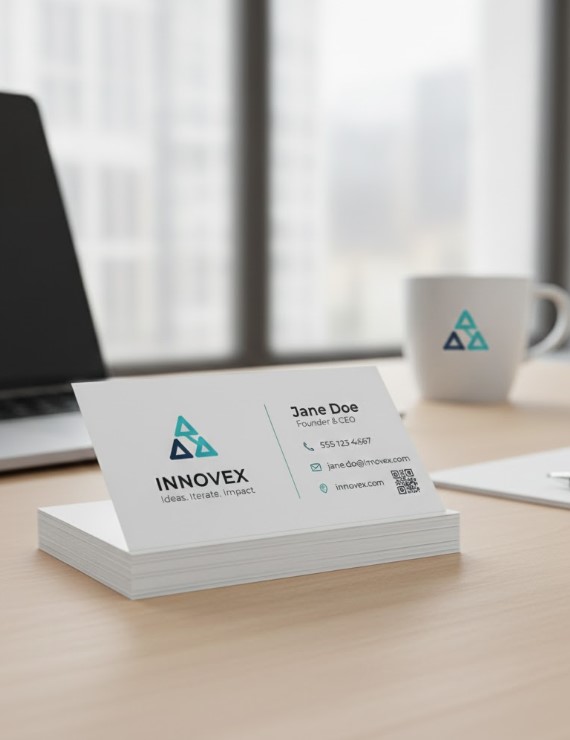
When launching a new venture, spending $200 on gold-foil business cards isn’t just expensive—it’s strategically dangerous. Your title might change next week. Your website URL might shift. Your tagline will evolve.
Using budget-friendly business cards isn’t about being broke; it is about agility. It provides an accessible entry point for entrepreneurs to A/B test their messaging, pivot quickly, and build connections without burning capital.
In this guide, we will move beyond basic “printing tips” and explore how to turn a $20 stack of cards into your most powerful ROI engine.Table of Contents:
- The MVP Strategy: Why Perfection is the Enemy
- Design Hacks: Making “Budget” Look “Boutique”
- The A/B Testing Method
- Guerrilla Distribution Tactics
- Real Entrepreneur Case Studies
1. The MVP Strategy: Why Perfection is the Enemy
The “Minimum Viable Product” (MVP) concept applies to your marketing materials too. A business card has one job: transfer information and trigger a memory.
Unlike digital contacts that get buried in a phone list (which research shows we rarely check again), a physical card occupies real estate in a pocket or on a desk. It is a physical reminder of a conversation.
🚀 The “Burn Rate” Rule
Never order more than 250 cards for a new business. Why? Because if you order 1,000 to “save money,” you are psychologically less likely to change your card when you realize your logo needs tweaking. Small batches keep you agile.
2. Design Hacks: Making “Budget” Look “Boutique”
You don’t need a $500 designer. You need whitespace. The biggest mistake rookies make is clutter.
| The “Cheap” Way (Avoid) | The “Lean” Way (Do This) |
|---|---|
| Full Color Backgrounds: On cheap paper, heavy ink looks muddy and chips at the edges. | White Backgrounds: Looks crisp, professional, and ensures the edges stay clean even if the cutting blade is dull. |
| Tiny Text: Trying to fit every service you offer on a 3.5×2 card. | QR Codes: Use the card as a gateway. Put your logo and a QR code linking to a “LinkTree” or portfolio. |
| Glossy Finish: Looks like a takeout flyer and can’t be written on. | Matte Finish: Feels more modern and allows you (or the client) to write notes on the card. |
3. The Secret Weapon: A/B Testing
This is where the pros separate themselves from the amateurs. Because your cards are affordable, you can run experiments.
The Experiment: Order 100 cards with “Tagline A” (e.g., Premium Dog Walking) and 100 cards with “Tagline B” (e.g., Canine Fitness Trainer).
The Method: Hand them out at different events. Which title gets a raised eyebrow? Which one gets a question? You are using $20 worth of paper to conduct market research that could define your brand for years.
4. Guerrilla Distribution Tactics
Possessing the cards is step one; strategic deployment is step two.
- The “Two-Handed” Exchange: Borrowed from Japanese business etiquette (Meishi), handing a card with two hands signals: “This object has value.” It subconsciously forces the recipient to treat it with respect, rather than shoving it in a pocket.
- The “Memory Hook”: Before handing the card over, write a quick note on it in front of them. E.g., “Disc: 10% off first month.” This turns a generic card into a customized coupon they won’t throw away.
- Passive Partnering: Don’t just leave a stack at a coffee shop. Partner with complementary businesses. If you are a painter, leave cards with a local realtor, not a bakery.
5. Real Entrepreneur Success Stories
The $30 Empire: Michael Rodriguez
Michael launched his handyman service in Austin with a budget of just $200. He spent $30 on 500 basic, black-and-white cards on 14pt stock.
His Strategy: He didn’t just hand them out. He left three cards with every satisfied client. He said: “One for you, and two for neighbors who might need help.”
The Result: By turning his clients into distributors, he built a six-week backlog of work within three months—all from that initial $30 print investment.
Ready to start your lean journey? Browse our collection of economy business cards optimized for startups.
Resources: